Assess suppliers systematically and make confident sourcing decisions.

Why Standard Corrugated Boxes Fail: The Physics of Heavy-Duty Shipping
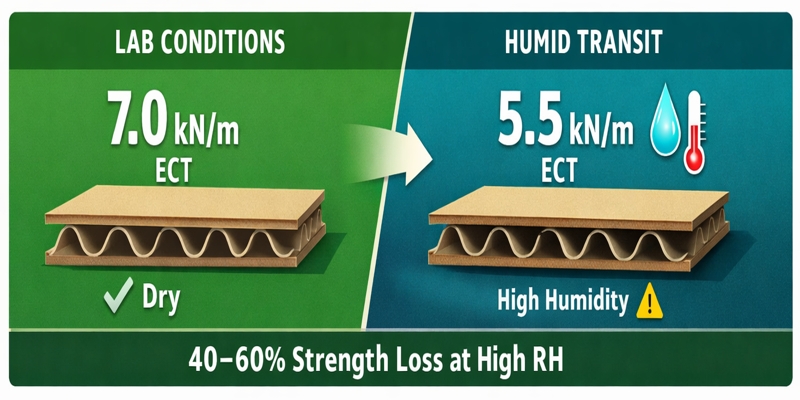
📌 Key Takeaways Heavy-duty box failures follow predictable physics—compression, moisture, and puncture—that proper specification prevents before the shipment leaves the dock. Specify for the load, not the catalogue. Procurement managers and operations leaders sourcing corrugated boxes for heavy industrial shipments will understand why standard packaging fails, preparing them for the ... Read More
From Guesswork to Governance: A Framework for Sourcing Heavy-Duty Corrugated Boxes
📌 Key Takeaways Heavy-duty corrugated box failures typically stem from weak sourcing systems, not weak corrugated fiberboard—governance prevents recurring damage. Governed sourcing = consistent boxes from month one through month twelve. Procurement managers and packaging engineers sourcing corrugated boxes for heavy industrial loads will gain a structured qualification framework here, ... Read More
Why Corrugated Box Damage on Arrival Is a Sourcing Failure, Not a Logistics Issue
📌 Key Takeaways Recurring corrugated box damage traces to specification gaps and supplier control failures, not carrier handling alone. Prevention converts incident learnings into enforceable sourcing controls, not reactive claim filing. Procurement managers and packaging engineers responsible for corrugated box sourcing will gain diagnostic frameworks and specification improvement strategies here, ... Read More
How to Vet Corrugated Box Suppliers for Technical Competence (Before You Send an RFQ)
📌 Key Takeaways Technical vetting before RFQs eliminates quote-only suppliers and prevents costly quality failures after contract award. Proof before paperwork = fewer line stoppages and disputes. Procurement managers sourcing corrugated packaging will gain a repeatable qualification framework here, preparing them for the technical screening checklist and evidence evaluation guide ... Read More
The “False Economy” of Low-Bid Corrugated Boxes: Why Unit Price Spikes Your TCO
📌 Key Takeaways Unit-price savings on corrugated boxes disappear when hidden failure costs—damage, downtime, rework, expediting—scatter across operations, customer service, and finance budgets procurement never sees. Decision-grade clarity beats accounting-grade precision when tiny exception-rate changes overwhelm unit-price differences. Procurement managers sourcing corrugated packaging will gain a defensible framework for justifying ... Read More
The Quality Blueprint: Defining and Enforcing Corrugated Box Specs
📌 Key Takeaways Enforceable corrugated specifications prevent “meets spec” disputes by defining performance requirements, naming test methods with conditioning protocols, and establishing documented acceptance criteria before problems occur. Specification discipline transforms vague board-grade callouts into enforceable governance systems. Procurement managers and operations leaders sourcing corrugated packaging will gain copy-ready RFQ ... Read More
Stop Buying on Price: A Strategic Framework for Resilient Corrugated Box Sourcing
📌 Key Takeaways Corrugated box sourcing becomes resilient when specifications reflect real-world operational stress, suppliers prove repeatable capability through evidence gates, and governance detects drift before failure. Five layers transform corrugated from commodity firefighting into controlled infrastructure. Procurement managers and operations leaders responsible for automated packaging lines will gain systematic ... Read More
From Specs to Sourcing: A Strategic Roadmap for Resilient Procurement
📌 Key Takeaways Resilient corrugated box sourcing requires converting technical specifications into verifiable supplier evidence before awarding contracts—not just comparing unit prices. Spec-to-sourcing systems convert compliance requirements into defensible supplier decisions. Procurement managers, packaging engineers, and quality leads in regulated industries will gain a repeatable verification framework here, preparing them ... Read More
The Hidden Risk of Unverified Suppliers: Protecting Your Pharmaceutical Supply Chain
📌 Key Takeaways Supplier verification failures surface during QA release or audits when evidence cannot be produced—not during initial procurement decisions. Structured onboarding, documented evidence, and continuous monitoring prevent downstream failures before they reach production lines. Procurement managers and quality professionals in pharmaceutical packaging will gain practical verification workflows here, ... Read More
Why PaperIndex Is the Switzerland of the Paper Trade
📌 Key Takeaways Platform business models determine whether incentives align with yours—commission-based structures can bias supplier visibility, while non-transactional connectors eliminate that conflict. Neutral ground plus clear rules equals fairer direct trade. Procurement managers and sourcing professionals evaluating B2B marketplaces will gain a framework for auditing platform incentives, preparing them ... Read More
Structuring Your Compliance Audit Checklist for Packaging Suppliers
📌 Key Takeaways Effective packaging supplier audits require evidence trails and gating logic—not generic yes/no questions—to verify that documented controls actually function under production pressure. Defensible decisions require weighting modules by risk—not question count. Procurement managers and QA leaders qualifying corrugated, carton, and other packaging suppliers in regulated environments will ... Read More
Invoice/Label Mismatches in Pharma Logistics: How to Catch Them Before They Trigger Quarantine
📌 Key Takeaways Invoice/label mismatches break traceability chains in pharma logistics, triggering quarantine holds until documentation integrity can be restored through systematic verification. Traceability breaks caught at receiving are inconveniences; breaks caught at audit are compliance findings. Procurement managers and quality teams in regulated industries will find the five-step response ... Read More
Beyond the Certificate: A Governance Model for Pharmaceutical Packaging Compliance
📌 Key Takeaways Certificates prove a supplier had a system once; governance proves the system still functions today through evidence, accountability, and change control. Evidence beats promises; governance beats assumptions. Pharmaceutical procurement and QA professionals managing multi-tier packaging supply chains will gain implementation-ready frameworks here, preparing them for the 90-day ... Read More
The Cost of Non-Compliance in Pharma Packaging: Why Cheap Corrugated Boxes Become Expensive
📌 Key Takeaways In pharmaceutical packaging, a low corrugated box price often signals hidden compliance risks that surface as audit findings, shipment holds, and production interruptions. Qualification discipline protects patient safety; unit price comparisons do not. Pharmaceutical procurement professionals and packaging engineers managing supplier qualification will gain a practical verification ... Read More
Why Traditional RFQs Fail: The Hidden Cost of Opacity in Pharma Packaging Procurement
📌 Key Takeaways Traditional pharma packaging RFQs fail because they hide compliance-critical supplier signals behind unstructured responses, creating audit risk that far exceeds any unit-cost savings. Defensible sourcing decisions require asking different questions and treating supplier evidence as a deliverable, not an afterthought. Pharma packaging procurement managers facing audit anxiety ... Read More
From Chaos to Compliance: A Strategic Framework for Enterprise Corrugated Box Sourcing for Pharmaceuticals
📌 Key Takeaways Enterprise corrugated sourcing becomes audit-ready when requirements are separated into performance-critical controls and compliance-critical governance, quotes are normalized before price comparison, supplier qualification follows an evidence ladder from claims to verification, and monitoring replaces one-time approvals. Systematic verification filters out weak suppliers before they embed—not after audits ... Read More
Specifying G-Force Protection in Corrugated Box Packaging RFQ
📌 Key Takeaways Subjective packaging requirements like “robust” or “strong” create incomparable quotes because suppliers interpret protection differently, making contract enforcement impossible when damage occurs. Measurable performance clauses transform packaging disputes from negotiations into verifications. Procurement managers and packaging engineers sourcing corrugated boxes will gain enforceable RFQ language here, preparing ... Read More
How to Read Corrugated Box Drop Test Reports: A Guide for Procurement Managers
📌 Key Takeaways A drop test report becomes usable procurement evidence only when it states the test method, exact configuration tested, drop schedule, and acceptance criteria—without these four elements, “PASSED” means nothing defensible. Comparable evidence beats vendor promises every time. Procurement managers qualifying corrugated box suppliers for electronics packaging will ... Read More
Molded Pulp vs. Die-Cut Corrugated: Which Cushioning Protects Better?
📌 Key Takeaways Protection depends on matching insert geometry to distribution hazards, then validating through testing—not on material superiority claims. Geometry, clearance, and validated testing determine protection—material choice follows from those decisions. Packaging engineers and procurement managers selecting cushioning for electronics shipments will gain decision frameworks and validation workflows here, ... Read More