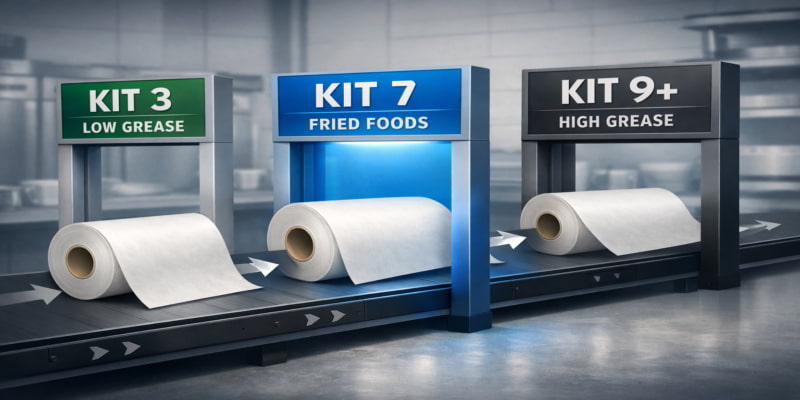
Assess suppliers systematically and make confident sourcing decisions.
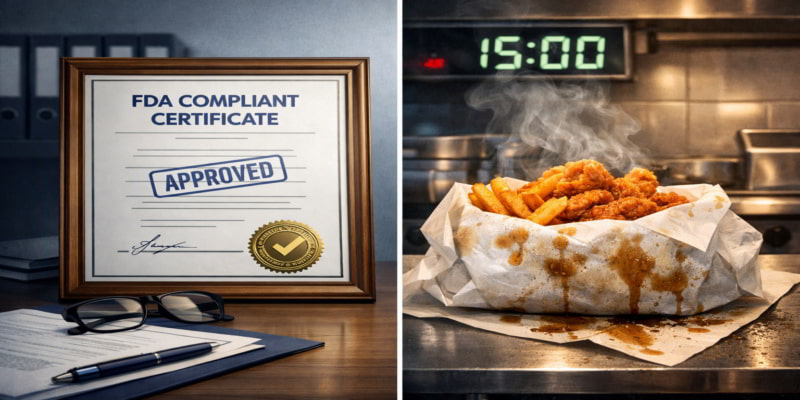
Why “FDA Compliant” Isn’t Enough: The Hidden Gaps in Food-Grade Packaging Paper Testing Protocols
📌 Key Takeaways An FDA compliance certificate proves your packaging paper is legally safe to use—it doesn’t prove the paper will actually stop grease from soaking through during a busy lunch rush. Compliant means allowed. Validated means it works. QA managers and procurement leads sourcing food packaging paper will find ... Read More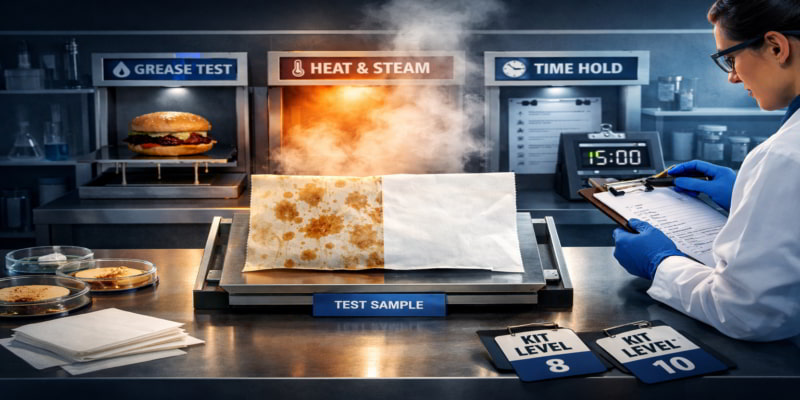
Preventing Wrapper Failures: A Complete Guide to Food-Grade Packaging Paper Testing Protocols
📌 Key Takeaways Wrapper failures happen because paper meets stresses it wasn’t designed for—test your highest-risk menu items before they reach customers. Food service operators, QA managers, and procurement professionals sourcing food-grade packaging paper will find a practical testing framework below, preparing them for the step-by-step protocol that follows. ~ ... Read More
Demystifying TAPPI T 559 for Food Packaging Paper: How to Read Kit Level Thresholds Before Changing Suppliers
📌 Key Takeaways A supplier’s “greaseproof” claim means nothing without a TAPPI T 559 test result you can verify and enforce. A clear threshold beats a vague promise—every time. Procurement managers and QA professionals evaluating food packaging suppliers will find a ready-to-use verification framework here, preparing them for the detailed ... Read More
SKU Consolidation Chart for Food Packaging Paper: A Practical Guide to Reducing Packaging Waste Across Multiple Locations
📌 Key Takeaways Wrapper waste across multiple locations drops when you map real food conditions to a small set of tested performance tiers. Fewer SKUs = simpler training, cleaner forecasts, and wrappers that actually work. QA managers, procurement directors, and franchise operators managing multi-unit food packaging will find a step-by-step ... Read More
Specification Alignment First: How to Normalize Vendor Data Across Global Food Packaging Paper Suppliers
📌 Key Takeaways Comparing supplier quotes from different countries only works when you first translate them into the same format. One worksheet, filled the same way for every supplier, ends the guessing. Procurement managers and operations teams sourcing packaging paper from multiple countries will find a ready-to-use comparison framework here, ... Read More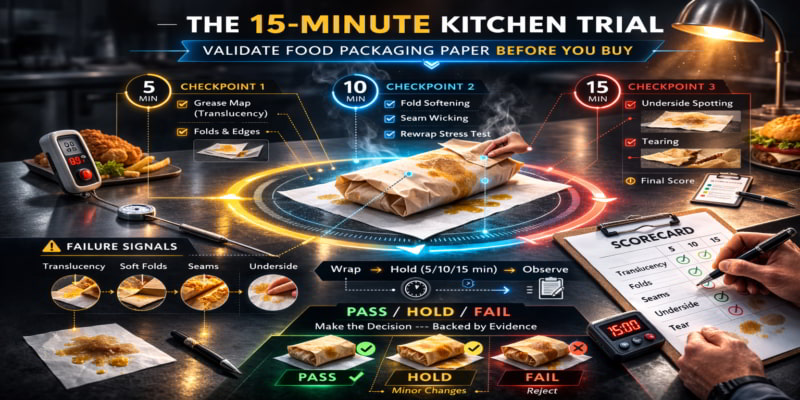
The 15-Minute Kitchen Trial: A Protocol for Validating New Food Packaging Paper Specifications
📌 Key Takeaways A 15-minute kitchen trial reveals whether food packaging paper actually works under real service conditions—specefication sheets alone cannot. Watch the wrapper survive your kitchen before trusting the specification sheet. Food service operators and procurement teams qualifying new packaging suppliers will gain a repeatable validation method here, preparing ... Read More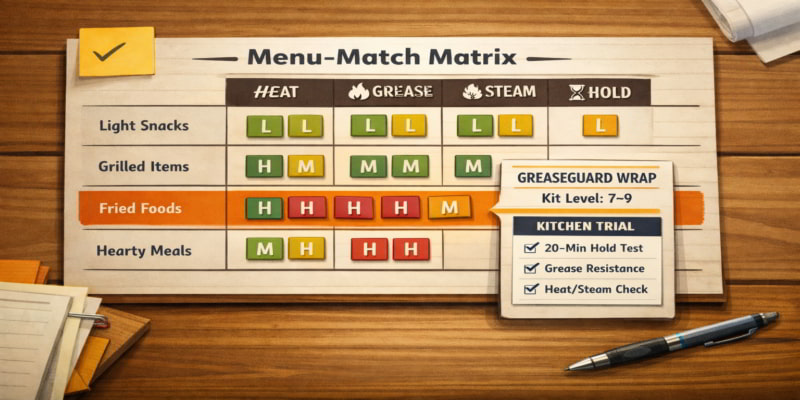
Stop Over-Engineering Wrappers: How to Build a Menu-Match Matrix for Food Packaging Paper
📌 Key Takeaways A simple one-page matrix linking menu items to wrapper requirements stops the cycle of overspending on food packaging paper while still seeing failures on your greasiest items. Right wrapper for each item class = lower costs, fewer complaints, and decisions you can explain. Food-service operators juggling wrapper ... Read More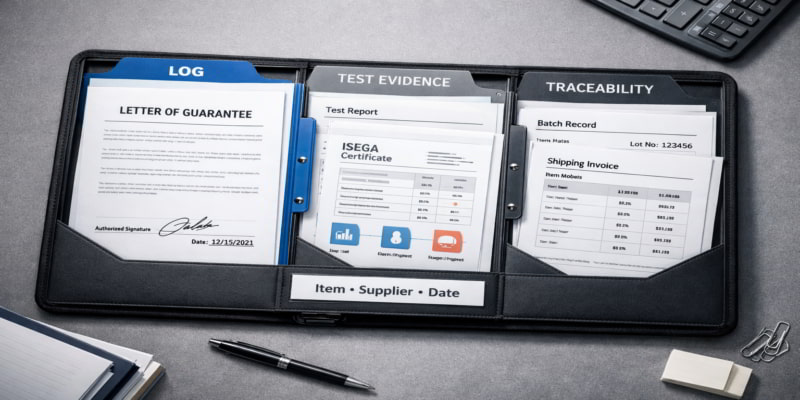
How to Request a Letter of Guarantee (LOG) from Food Packaging Paper Supplier
📌 Key Takeaways A Letter of Guarantee turns “they said it’s food safe” into dated, signed proof you can find in minutes. One email today prevents the 9:00 AM scramble tomorrow. Food service operators and procurement managers building audit-ready packaging files will find a ready-to-send email template and filing system ... Read More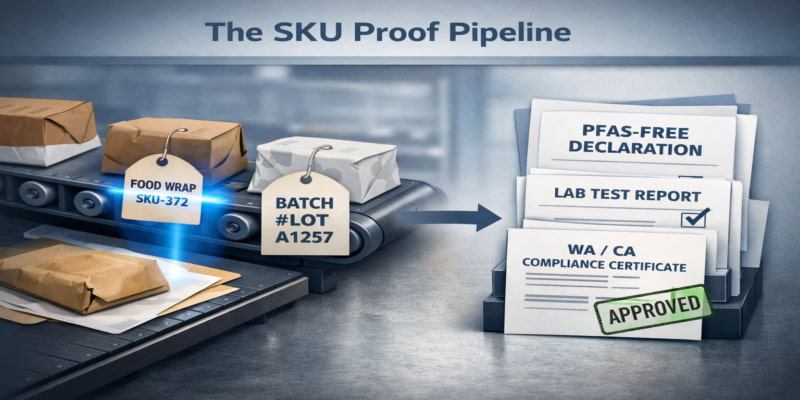
Food Packaging Paper and PFAS Regulations: What Small Business Owners Need to Clearly Understand About the New Rules
📌 Key Takeaways PFAS rules are changing fast, and “food safe” labels don’t prove your packaging is compliant—only supplier documentation does. Build a verification habit that survives rule changes, not a one-time compliance fix. Small business owners and restaurant operators sourcing food packaging will find a ready-to-use supplier verification script ... Read More
Food Packaging Paper Brand Safety 101: Why Compliance Is Your Strongest Protection Policy
📌 Key Takeaways Food packaging paper compliance protects your brand on two fronts: passing inspections and preventing the viral photo of a greasy, failed wrapper. The right paperwork today prevents the wrong headline tomorrow. Restaurant owners, food service managers, and procurement teams responsible for packaging decisions will find practical compliance ... Read More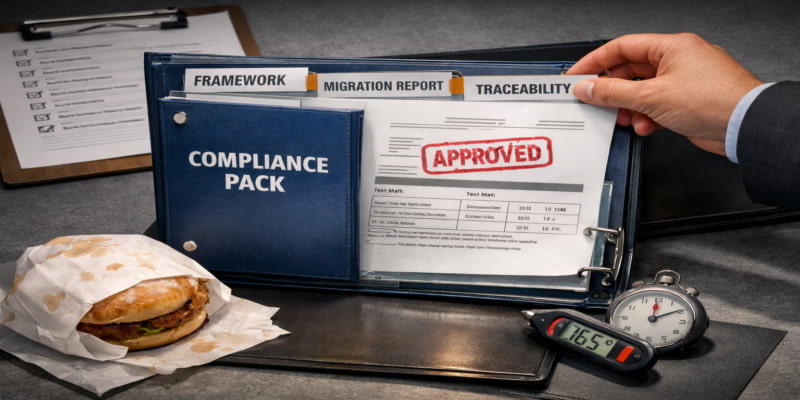
Food Packaging Paper Guide: Clearly Understanding Food Grade vs. Food Safe for Health Inspection Success
📌 Key Takeaways “Food grade” describes the raw material; “food safe” proves the finished product works for your specific food, temperature, and contact time. Proof beats labels—document your packaging the way an inspector would check it. Food service operators and procurement managers preparing for health inspections will gain immediate clarity ... Read More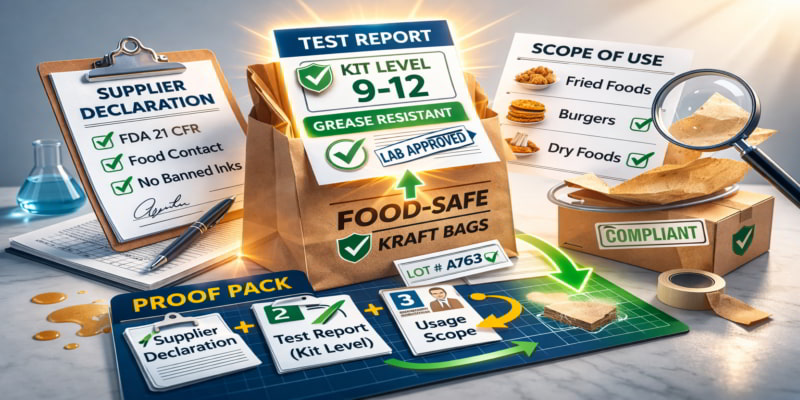
The “Brown Kraft Paper” Trap and Why Generic Bag Paper May Not Be FDA Compliant
📌 Key Takeaways Brown Kraft paper bags are not automatically food safe—proof comes from documentation that matches your actual use conditions, not from color or thickness. Documentation you can retrieve in minutes beats hoping your packaging holds up. Food service operators and procurement managers sourcing takeout packaging will gain a ... Read More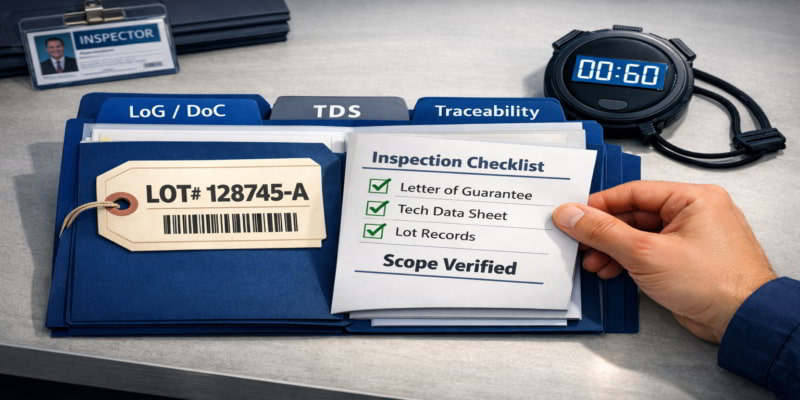
Audit-Ready Food Packaging Paper: Understanding FDA & ISEGA Safety Standards for Food Service
📌 Key Takeaways Audit-ready food packaging paper means having proof documents that match how you actually use the packaging—not just a “food safe” label. Proof that matches reality beats paperwork that looks official. Food service operators and procurement managers sourcing food packaging paper for hot or greasy foods will find ... Read More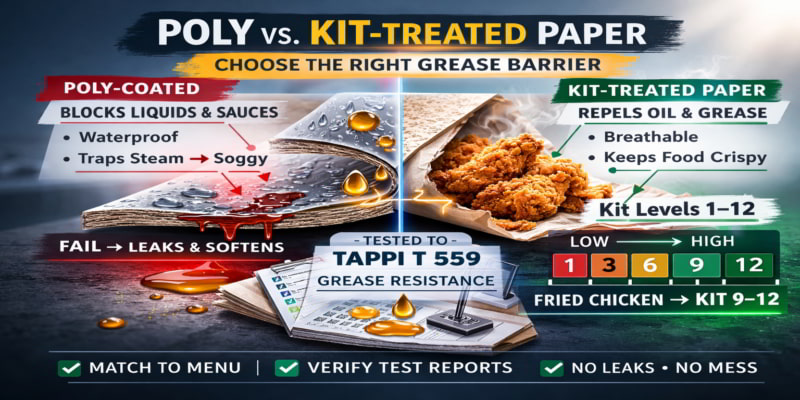
Poly-Coated vs. Kit-Treated (Greaseproof) Paper: Which Grease Barrier is Right for Your Delivery?
📌 Key Takeaways Fixing soggy delivery bags starts with matching the right grease barrier to your food—poly for wet sauces, kit-treated for fried foods. Choose barriers based on what makes food messy—not what makes paper thick. Food service operators and QSR procurement managers troubleshooting delivery packaging failures will find actionable ... Read More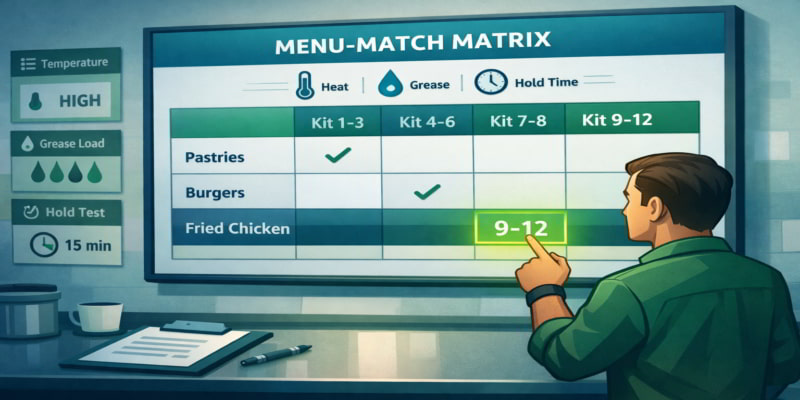
The Hidden Cost of Grease Stains: How Food Packaging Paper Failures Hurt Customer Retention
📌 Key Takeaways Grease stains on food wrappers cost you customers—not because the food is bad, but because stains make people think your kitchen is dirty. Match your wrapper specifications to your menu, and customers stop seeing stains that make them doubt your standards. Food service operators and QSR managers ... Read More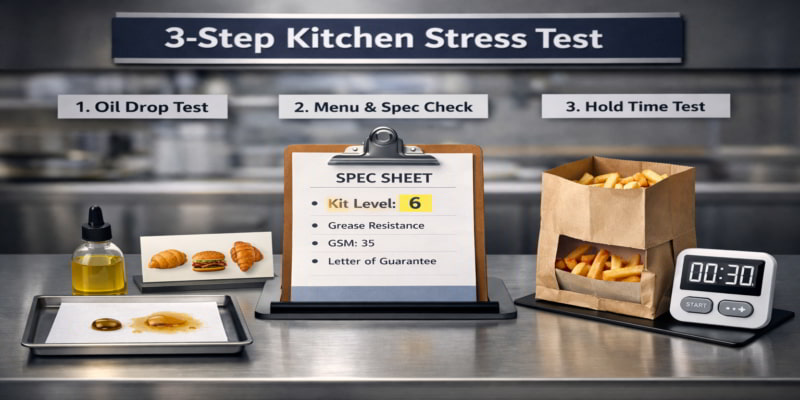
Understanding Food Packaging Paper Failures: The “Soggy Bag” Audit and How to Prevent Leaks
📌 Key Takeaways Greasy, leaking food bags fail because paper thickness (GSM) doesn’t block oil—only a chemical grease barrier (Kit Level) matched to your menu’s fat content and hold time will stop the leak. • Kit Level Beats GSM: Heavier paper still soaks through without a chemical barrier; grease resistance ... Read More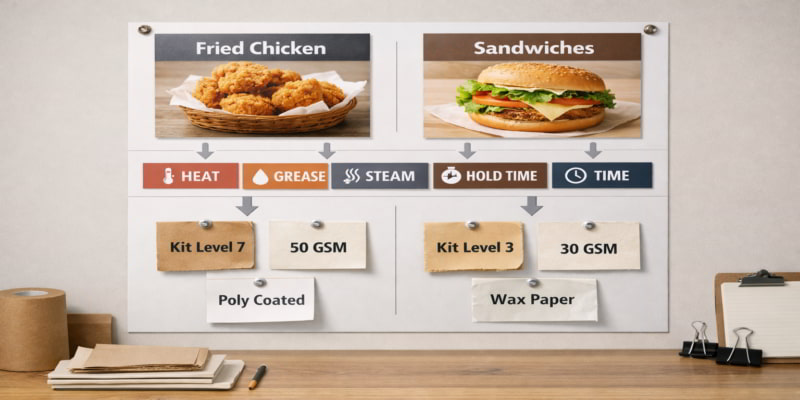
Food Packaging Paper Menu-Specific Specification Mapping: Choosing the Right Paper for Fried Chicken vs. Sandwiches
📌 Key Takeaways Fried chicken and sandwiches fail packaging for opposite reasons—matching the wrapper to the menu stops surprises during service. Right wrapper + right menu item = no more soggy bread or greasy fingers. Food service operators and food packaging paper buyers sourcing wrappers for mixed menus will gain ... Read More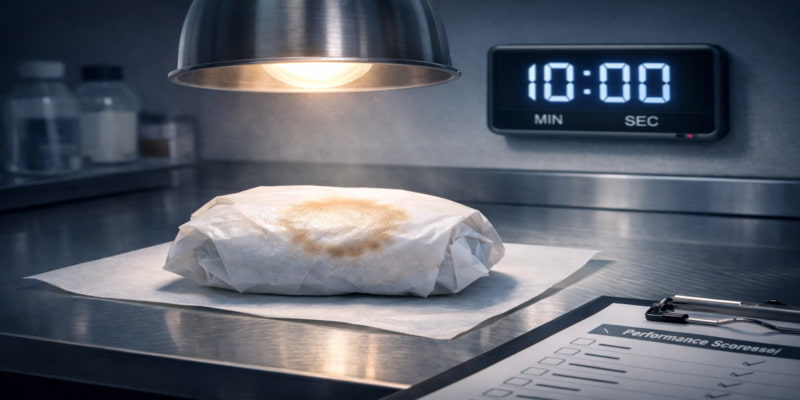
Food Packaging Paper Customer Perception: How Grease Stains Impact Your Brand’s Premium Image
📌 Key Takeaways Grease stains on food wrappers make customers judge your brand as cheap and careless—before they even taste the food. The right wrapper protects the premium image you’ve built everywhere else. Food service operators and procurement teams sourcing packaging will find a practical scorecard and supplier questions here, ... Read More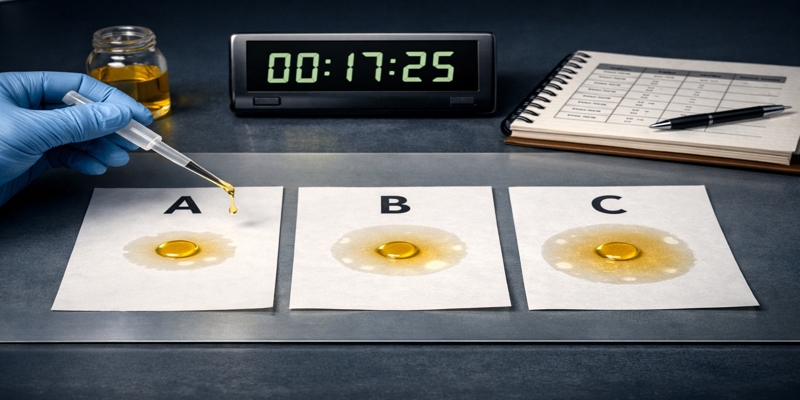
Testing Your Food Packaging Paper: A DIY Oil Drop Test for Verifying Grease Resistance
📌 Key Takeaways A simple oil-drop test reveals which paper samples resist grease long enough for your menu—before you commit to a full order. Screen first, specify second, surprise never. Food service operators and procurement managers evaluating food packaging paper samples will gain a repeatable testing method here, preparing them ... Read More