
📌 Key Takeaways
Effective packaging supplier audits require evidence trails and gating logic—not generic yes/no questions—to verify that documented controls actually function under production pressure.
- Evidence Beats Paperwork: Every audit answer must link to a specific artefact (calibration certificate, batch record, deviation log) to withstand compliance review scrutiny.
- Supplier Type Determines Depth: Manufacturers require full production chain verification, converters need in-process control focus, and traders demand chain-of-custody oversight across multiple sources.
- Gating Questions Trigger Inspection: Subcontracting, manual data entry, specification changes, or shared production lines automatically expand traceability and process control modules.
- Three Layers Prevent Drift: Desk review filters suppliers before site visits, on-site walkthrough validates floor reality against documents, and post-audit governance defines change control expectations.
- Red Flags Stop Qualification: Traceability breaks, undisclosed subcontracting, calibration gaps on critical equipment, or uncontrolled rework justify immediate audit termination or supplier rejection.
Defensible decisions require weighting modules by risk—not question count.
Procurement managers and QA leaders qualifying corrugated, carton, and other packaging suppliers in regulated environments will gain a modular checklist framework here, preparing them for the detailed template and approval criteria that follow.
The supplier looks solid on paper. Certificates are current, the capability list is long, and the sales team answers quickly. Then a simple question lands—”Show the record that proves this control actually happens”—and the room goes quiet.
That pause is the moment a checklist either protects the business or becomes paperwork.
A strong compliance audit checklist for packaging suppliers is not a single flat list of questions. It’s a modular system: start with a desk-based evidence pack to verify the supplier’s documented controls, validate those controls on-site by observing how materials, processes, and records actually work, and then close the loop with post-audit mechanisms like CAPA follow-up, change control expectations, and ongoing re-qualification triggers. The goal is an audit trail that is defensible in a compliance review: every “yes” is backed by a specific artefact (record, log, report, or procedure), and every risk signal—subcontracting, manual data entry, frequent spec changes—triggers deeper questions rather than a superficial pass.
Why Most Supplier Audit Checklists Fail in Regulated Packaging
Consider a packaging supplier who presents ISO certificates and a thick quality manual. The audit proceeds smoothly—until you discover undocumented rework on the production floor and calibration logs that show critical equipment is three months past its expiration date. The paperwork looked fine. The process controls did not.
Generic audit checklists share three structural weaknesses that enable this disconnect.
They’re too binary. Yes/no questions produce tidy audit reports but don’t capture whether controls actually work. A supplier can answer “yes” to “Do you have a calibration program?” while their burst tester sits uncalibrated. The question passed. The control didn’t exist.
They don’t adapt to supplier types. A corrugated box manufacturer who controls the entire process from paper receipt to finished goods requires different audit depth than a trader sourcing from multiple converters. When the supplier has subcontracted steps, frequent spec changes, or weak data integrity controls, a generic checklist hides the highest risks. This disconnect occurs when audits prioritize documentation over physical process verification, allowing critical failures to remain hidden during peak demand.
They skip the evidence requirement. Without specifying what artefact supports each answer—a calibration certificate, a batch record, a deviation log—findings aren’t defensible when your QA team or a customer auditor asks how you verified the supplier’s claims.
The checklist’s real power is not the number of questions. It’s the evidence trail and gating logic that turns a supplier visit into a defensible compliance decision.
The Three-Layer Structure for a Packaging Supplier Compliance Audit

Effective supplier audits follow a three-layer architecture aligned with quality system principles outlined in frameworks like the ICH Q10 Pharmaceutical Quality System and audit methodologies referenced by organizations such as ISPE:
Layer A: Pre-audit desk review. Before arrival, collect and review documented evidence of the supplier’s quality management system (QMS), certifications, material specifications, and performance history. This filters out suppliers with obvious gaps and focuses on-site time on verification rather than discovery.
Layer B: On-site verification. Walk the floor. Observe how incoming materials are received, how production controls are executed, how testing actually happens, and how deviations are handled. Match what you see to what the documents claim.
Layer C: Post-audit governance. Define expectations for change control notification, CAPA closure, periodic review cadence, and triggers requiring re-qualification. The audit doesn’t end when you leave the site.
Each layer feeds the next. Desk review shapes on-site focus areas. On-site findings inform post-audit monitoring requirements. For guidance on determining appropriate audit depth before committing resources, see virtual vs. on-site: choosing the right factory audit depth.
Pre-Audit Desk Review: Building the Evidence Pack
A desk review prevents “tour bias”—the tendency to accept what looks orderly on the factory floor without first defining what must be proven.
Lock the Audit Scope Before You Request Evidence
Start by writing down four scope anchors so the supplier cannot “answer a different question”:
- Packaging category: primary / secondary / tertiary (and which products/lines are in-scope).
- Supplier role: manufacturer vs converter vs trader (and any subcontractors).
- Materials and critical characteristics: grades/specs that matter to you (e.g., paper grades, inks/coatings, adhesives, barrier properties, print requirements).
- Regulatory/compliance context: what your internal QA/regulatory team expects for this supplier relationship.
When the supplier role is unclear, treat that as a risk signal and expand the evidence pack. For pharmaceutical packaging, 21 CFR Part 211, Subpart G establishes strict packaging and labeling control expectations. For food-contact packaging, controls must align with 21 CFR Part 117 (FSMA) and relevant material safety standards (e.g., 21 CFR 174–190). While direct regulatory burden often sits with the finished product manufacturer, these standards set the baseline for supplier verification regardless of supplier type, though verification depth varies based on which process steps the supplier actually controls.Primary packaging audits should align with ISO 15378:2017 standards.
Request a Desk Review Evidence Pack
Request these documents before scheduling the site visit. The point is not to collect a binder; it’s to collect enough primary records to test whether the QMS functions.
QMS and certification scope. ISO 9001 or ISO 15378:2017 certificates (the latter applies specifically to primary pharmaceutical packaging materials), with scope statements confirming coverage of products and processes relevant to your supply. A certificate for “warehouse operations” doesn’t cover manufacturing controls.
Document control evidence. A sample controlled SOP list showing revision history, approval signatures, and examples of superseded documents removed from use. This reveals whether they have formal document control or ad-hoc procedures updated inconsistently.
Training records structure. Not individual records initially, but the training matrix format showing how job roles link to required competencies, how completion is tracked and verified, and evidence of re-training after SOP revision.
Calibration program overview. Equipment list with calibration intervals, responsible parties, documented procedures for handling out-of-tolerance findings, and impact assessment workflow for when instruments fail calibration.
Material specifications and traceability model. Documentation showing how incoming raw materials link to finished packaging lots. Request a sample batch record structure if available, demonstrating lot/batch linkage from incoming materials through work-in-process to finished goods.
Subcontractor list. Any outsourced processes—printing, laminating, die-cutting—with subcontractor identification, oversight evidence, and incoming verification procedures for subcontracted work.
Deviations and CAPA history. Sample deviation log entries, CAPA investigations showing root cause analysis, effectiveness checks, and closure timelines.
Change control examples. Recent approved changes (materials/tooling/process/site) with customer notification and approval workflow documentation.
If the supplier cannot provide these basics within a reasonable timeframe, reconsider whether an on-site audit is worthwhile. Missing desk review documents often predict on-site control gaps. For additional verification approaches before committing to site visits, the trust protocol: a system for supplier verification provides a structured framework.
Pre-Build Your Acceptance Logic
Before the site visit, decide what “pass” means in three bands:
Acceptable: Objective evidence supports the control, and records are complete and consistent.
Conditionally acceptable: The control exists but needs a time-bound CAPA and follow-up evidence (typically 30 to 90 days depending on finding severity).
Not acceptable: Evidence is missing for a critical control, or traceability/change control breaks make outcomes unreliable.
This is the same discipline used in regulated quality systems: you are not auditing for “good intentions,” you are auditing for controlled execution.
Supplier Classification: Why Type Changes the Checklist

Supplier type determines which modules require deeper inspection:
The manufacturer (integrated) controls raw material receipt through finished goods. Audit all process modules with full depth. Focus on incoming material controls, production consistency, and in-house testing capability. These suppliers own the most process steps, so evidence requirements span the full production chain.
Converter receives semi-finished materials (printed sheets, pre-cut blanks) and performs conversion steps like die-cutting, folding, and gluing. Add depth to incoming inspection of semi-finished goods and traceability linkage to upstream suppliers. Verify they maintain quality agreements with their material suppliers and can demonstrate lot-to-lot linkage through their portion of the process. Emphasize in-process controls, line clearance, print/label controls where relevant, and rework/nonconformance handling.
Trader/Distributor sources finished packaging from multiple converters or manufacturers. The audit shifts toward supply chain oversight: how do they qualify their sources, verify incoming quality, and maintain traceability across multiple origins? Request evidence of their supplier qualification process, incoming inspection protocols, and chain-of-custody documentation. The risk here is visibility—traders may not have direct access to manufacturing controls. Emphasize traceability across handoffs and verification of original manufacturer controls.
On-Site Verification Modules
The on-site visit is where desk review claims get stress-tested. The simplest rule: pick one real product or order and follow it end-to-end.
Walk One Job Through the Factory—Records in Hand
Choose a recent lot/batch and verify:
- Incoming material identity and disposition (inspection status, CoA/CoC where applicable).
- In-process control points (what gets measured, how often, and where it is recorded).
- Handling of nonconforming material (segregation, disposition, rework controls).
- Final release checks and shipment records.
When you hear “we always do that,” ask for the record from last week.
Incoming Materials Controls and Traceability
Observe: Receiving area layout, quarantine practices, sampling procedures, identification and labeling of incoming materials, storage conditions, FIFO/FEFO rotation evidence.
Ask: How do you verify incoming material against the CoA/CoC? What happens when an incoming inspection fails? Can you demonstrate a lot of linkage from an incoming material to a finished packaging lot?
Evidence to collect: Sample receiving log entries, incoming inspection records with accept/reject decisions, quarantine release documentation, CoA/CoC files with verification annotations.
Production Process Controls
Observe: Work instruction availability at workstations, setup verification practices, in-process checks being performed (not just documented), line clearance between jobs, segregation of approved/rejected/in-process materials, rework and scrap handling procedures.
Ask: How do operators verify correct specification before starting a run? What in-process checks occur and at what frequency? How is rework controlled and documented?
Evidence to collect: Sample work instructions with revision dates, setup verification checklists, in-process inspection records, line clearance logs, rework authorization forms if applicable.
Quality Control Testing and Calibration
Observe: Testing equipment condition and calibration status indicators, test method execution if possible, sample retention practices, data recording methods (electronic vs. manual). Physically spot-check a few instruments against the calibration list and certificates.
Ask: What test methods apply to critical parameters? What acceptance criteria exist and how were they established? How do you handle out-of-specification (OOS) results?
Evidence to collect: Calibration certificates and schedule, sample test reports with raw data, OOS investigation examples, inspection sampling plans. For corrugated packaging specifically, understanding how to interpret supplier test documentation—such as Edge Crush Test (ECT), Box Compression Test (BCT), or Mullen Burst certification—strengthens audit effectiveness—see how to read corrugated box drop test reports.
Deviations, CAPA, and Complaint Handling
Observe: Deviation log accessibility and currency, CAPA tracking system functionality, complaint file organization, evidence of trend analysis.
Ask: Walk through how a recent deviation was handled from detection to closure. How do you verify CAPA effectiveness? What complaint trends have you identified in the past twelve months and what actions resulted?
Evidence to collect: Sample deviation reports with root cause analysis, CAPA effectiveness verification records, complaint log with response timelines, trend analysis documentation.
Validate Control Points That Commonly Drift
These are recurring proof points across many packaging supplier audits:
Line clearance and segregation: Controls that prevent mix-ups and unintended use of outdated specs.
Label/print control (where relevant): Version control, approval steps, and prevention of unauthorized changes.
Equipment condition and maintenance: Planned maintenance evidence for equipment that affects critical quality attributes.
Sampling/AQL (if used): Confirm how acceptance sampling is selected, applied, and recorded—and what happens when results are borderline.
Treat Data Transcription as a Controllable Risk
Manual data entry is not automatically wrong, but it is a predictable failure point. On-site, verify:
- Who can make corrections, and how corrections are documented.
- Whether calculations are checked and by whom.
- Whether records are legible, attributable, contemporaneous, and complete (general data integrity principles).
Post-Audit Module: Change Control and Ongoing Monitoring
Supplier qualification is not a one-time decision. Define these expectations before closing the audit:
CAPA That Is Measurable, Time-Bound, and Verifiable
For each nonconformance:
- Require a root cause method appropriate to the issue severity.
- Define corrective action, preventive action, owner, due date, and verification method.
- Require an effectiveness check (not just “training completed”).
Change Control Expectations
Define what requires notification and what requires approval:
Change notification requirements: Specify what changes require customer notification or approval: material source changes (paper grade, adhesive, inks/coatings), process changes, equipment changes affecting product quality, tooling or process changes affecting fit, strength, print quality, or barrier performance, site changes, subcontractor changes. Document these expectations in a quality agreement.
Ongoing Monitoring and Re-Qualification Triggers
Periodic review cadence: Establish annual supplier performance review timing and re-audit frequency based on risk classification and performance history.
Re-qualification triggers: Define events requiring immediate re-assessment: new subcontractor introduction, major equipment changes, repeated deviations of similar type, patterned customer complaints, regulatory observations, significant complaint trends, evidence gaps discovered during routine performance monitoring, or process/equipment changes.
Gating Questions: Triggers for Deeper Inspection
These questions identify risk signals requiring expanded inspection modules:
Does the supplier subcontract any process steps? If yes, expand traceability review, request subcontractor oversight evidence, verify quality agreements exist with subcontractors, and consider whether subcontractor qualification is adequate.
Is there any critical data transcription manual? If yes, expand data integrity review, check correction practices for manual records, verify independent verification of critical data entries.
Has the supplier experienced recalls, major deviations, or regulatory observations in the past three years? If yes, request details, verify CAPA effectiveness for those specific issues, assess whether problems were systemic or isolated.
Have specifications for your products changed in the past twelve months? If yes, verify change control records, confirm customer notification occurred as required, check validation of changes.
Does the supplier share production lines with significantly different product types? If yes, expand line clearance and contamination control review, verify segregation procedures.
Is there any history of repeated customer complaints tied to traceability, labeling/print control, or uncontrolled rework? If yes, conduct deeper sampling of recent records and request trend analysis.
When gating questions reveal risk signals, the appropriate response is expanding into deeper traceability, process control, and records-review modules—not accepting superficial answers. For broader supplier verification principles, sourcing safety checklist: when to audit vs. when to trust provides additional decision frameworks.
Modular Checklist Template
| Module | Purpose | Key Questions | Evidence to Collect | Pass Criteria | Supplier Type Depth | Notes/Findings |
| Scope & supplier role | Prevent mismatched audits | What is the supplier role (manufacturer/converter/trader)? What sites/lines are in scope? | Org chart, site list, process map, subcontractor list | Scope and role are explicit; subcontracting is disclosed | All types: Full | |
| QMS overview | Establish system backbone | What QMS standard(s) are claimed and what is the scope? | QMS certificate(s), scope statement, quality manual index | Scope matches supplied products/processes | All types: Full | |
| Desk Review | Verify documented QMS before visit | Certifications in scope? Document control formal? Training tracked? | ISO certificate with scope, SOP list with revision history, training matrix | Documents complete, current, and relevant to your products | All types: Full | |
| Document control | Ensure procedures are controlled | How are SOPs issued, revised, and removed from use? | Controlled SOP list, revision history samples, approval workflow, superseded document removal evidence | Document version control is demonstrated with records | All types: Full | |
| Training & competency | Prove people are trained | How is training assigned and verified for critical tasks? | Training matrix, training records, re-training after SOP change | Records show current training for sampled roles | All types: Full | |
| Incoming Materials | Verify receipt and quarantine controls | CoA verification process? Quarantine release? Lots of linkage demonstrated? | Receiving logs, incoming inspection records, CoA files with verification, traceability demonstration | Can trace incoming lot to finished goods; material disposition recorded | Manufacturer: Full; Converter: Full; Trader: Focus on incoming from multiple sources | |
| Specifications & change history | Prevent spec drift | How are product specs defined, approved, and updated? | Current specs, spec approval records, change log samples | Controlled specs match supplied goods; changes are documented | All types: Full | |
| Production Controls | Verify process consistency | Work instructions available and current? In-process checks performed? Rework controlled? | Setup records, in-process logs, line clearance docs, rework authorizations | Controls match documented procedures; evidence of execution | Manufacturer: Full; Converter: Full for owned steps; Trader: N/A or limited | |
| Nonconforming material | Ensure defects are contained | How is nonconforming material segregated and disposed of? | NCR logs, segregation area walkthrough evidence, disposition records | Nonconformance handling is documented and consistent | All types: Adjust depth by control ownership | |
| Rework controls | Prevent undocumented rework | When is rework allowed and how is it approved/recorded? | Rework SOP, sample rework records, approval evidence | Rework is documented; no “informal” rework | All types: Full where applicable | |
| Equipment maintenance | Reduce equipment-driven variability | Is maintenance planned and executed for critical equipment? | PM schedule, work orders, breakdown logs | Maintenance evidence exists for sampled equipment | Manufacturer: Full; Converter: For owned equipment | |
| QC/Testing | Verify testing capability and calibration | Methods documented? Equipment calibrated? OOS handling defined? | Calibration certificates and schedule, test reports, OOS investigations | Equipment current; OOS process defined and followed | Manufacturer: Full; Converter: For owned testing; Trader: Incoming inspection focus | |
| Laboratory/testing controls | Validate test credibility | Are test methods defined and consistently used? | Test SOPs, method references, recent test reports | Method alignment and record completeness demonstrated | Manufacturer: Full; Converter: For owned labs; Trader: Limited | |
| Traceability (lot/batch) | Prove the chain of custody | Can one lot be traced from incoming to shipped goods? | Traceability exercise pack, batch/lot records, shipment docs | End-to-end traceability is demonstrated on a real example | All types: Full (chain-of-custody critical) | |
| Line clearance / mix-up prevention | Reduce cross-job risk | How are materials/labels/specs cleared between jobs? | Line clearance SOP, clearance check records | Clearance records exist; floor matches documented control | Manufacturer: Full; Converter: Full; Trader: N/A | |
| Subcontractors & shared operations | Surface hidden risk | What steps are subcontracted or shared, and how are they controlled? | Approved subcontractor list, audits/oversight evidence, incoming checks | Subcontracting is disclosed and governed with evidence | All types: Expand when subcontracting present | |
| Deviations/CAPA | Verify corrective action effectiveness | Root cause methods used? CAPA verified effective? Trends monitored? | Deviation reports, CAPA closure records, effectiveness checks, trend analysis | CAPA system active; effectiveness verified | All types: Full | |
| Change Control | Verify change management and notification | What triggers notification? Customer approval obtained? Changes validated? | Change control SOP, sample change records, notification workflow, validation evidence | Changes controlled; notification requirements met | All types: Full | |
| Data integrity (paper/electronic) | Protect record reliability | Who can edit records and how are corrections managed? | Access controls/audit trail (if electronic), correction SOPs | Corrections are attributable; no uncontrolled edits | All types: Expand if manual systems present | |
| Storage, handling, shipping | Preserve quality to dispatch | Are storage and handling conditions controlled and recorded? | Warehouse SOPs, inspection records, dispatch checks | Handling controls exist and are followed | All types: Adjust by control ownership | |
| Post-Audit Governance | Define ongoing expectations | Quality agreement in place? Review cadence defined? Re-qualification triggers clear? | Signed quality agreement, monitoring plan, review cadence records | Mutual expectations documented; trigger logic exists | All types: Full |
Strategic Variations by Supplier Type
Use the same spine, but adjust depth where the risk sits:
Manufacturer: Emphasize material specs, test method alignment, lab controls, lot traceability from raw input, and incoming material controls spanning the full production chain.
Converter: Prioritize the verification of in-process safeguards and the integrity of the handoff from semi-finished inputs, and incoming inspection of semi-finished goods with traceability linkage to upstream suppliers.
Trader: Emphasize chain-of-custody, subcontractor disclosure, traceability across handoffs, verification of original manufacturer controls, and supply chain oversight including source qualification and incoming verification.
Red Flags: Stop-the-Line Signals
These findings indicate serious control breakdowns warranting audit termination or immediate supplier rejection:
Traceability failure. Cannot link a finished packaging lot to incoming material lots. This breaks recall capability and root cause investigation foundations.
Undisclosed subcontracting. Discovery of outsourced processes not declared during desk review indicates transparency issues and uncontrolled supply chain risk.
Calibration gaps on critical equipment. Testing equipment operating without current calibration renders test data unreliable. Decisions based on that data are unsupportable.
Uncontrolled rework. Reworked product re-entering the process without documentation, authorization, or re-inspection masks quality problems and breaks traceability chains.
Data integrity concerns. Evidence of backdated records, unauthorized corrections without explanation, or missing audit trails in electronic systems undermines confidence in all documented evidence.
When these show up, the fastest path forward is usually not “more questions,” but a targeted CAPA with verification evidence and a defined re-audit trigger.
Approve, Conditionally Approve, or Reject
A defensible decision links evidence to risk:
Weight modules by risk. Traceability, change control, calibration, and nonconformance handling tend to carry more decision weight than generic policy statements.
Define thresholds in advance:
Approved. No critical findings. Minor observations (documentation formatting, minor procedure clarifications) noted but do not affect product quality or traceability. Suppliers can be used without restrictions.
Conditionally Approved. Moderate findings requiring corrective action within a defined period. Examples: calibration slightly overdue but no OOS history indicating impact, incomplete training records for recently hired employees, minor traceability documentation gaps. Define specific CAPA requirements and verification timeline—typically 30 to 90 days depending on finding severity. The control exists but needs a time-bound CAPA and objective follow-up evidence.
Rejected. Critical findings indicating systemic control failures: traceability breaks, undisclosed subcontracting, significant data integrity concerns, calibration gaps on critical equipment affecting product release decisions, or evidence contradicted by floor reality. Do not approve until the root cause is addressed and re-audit confirms correction.
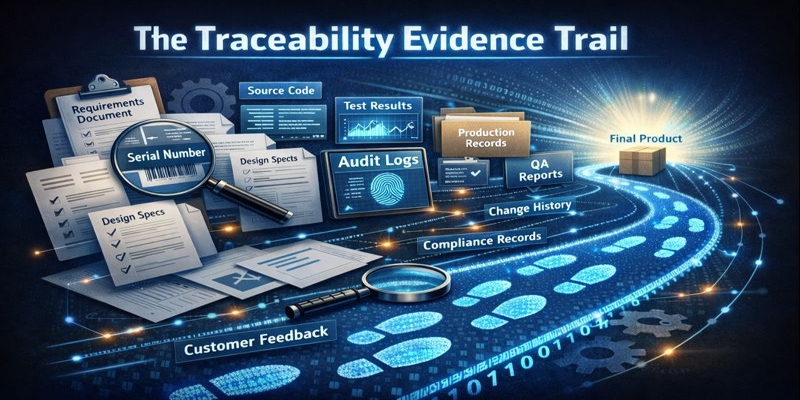
Document the evidence trail. Store the specific artefacts that support each “pass,” and attach the traceability exercise pack and CAPA verification outcomes. Document the evidence supporting each decision. For conditional approvals, specify what corrective actions are required, the timeline for completion, and how you will verify closure before or during initial supply. That record is what stands up during an internal QA review—or an external compliance review.
Related Resources
- 21 CFR Part 211, Subpart G — Packaging and Labeling Control
- ISO 15378:2017 — Primary packaging materials for medicinal products
- ICH Q10 — Pharmaceutical Quality System
- ISPE — GMP audit checklist resources
- The Trust Protocol: A System for Supplier Verification
- Virtual vs. On-Site: Choosing the Right Factory Audit Depth
- Sourcing Safety Checklist: When to Audit vs. When to Trust
- How to Read Corrugated Box Drop Test Reports
- Safe Trading Guidelines
Once audit requirements and checklist structure are defined, the next step is shortlisting suppliers by capability and compliance signals before booking audits. Find corrugated box suppliers through the PaperIndex marketplace and contact them directly to begin the qualification process.
Disclaimer:
This content is for educational purposes only and does not constitute legal, regulatory, or quality assurance advice. Compliance requirements vary by product, packaging category (primary/secondary/tertiary), supplier role, and jurisdiction. Always consult your internal QA/regulatory team and applicable standards/regulations before using this checklist for supplier qualification decisions.
Our Editorial Process:
Our expert team uses AI tools to help organize and structure our initial drafts. Every piece is then extensively rewritten, fact-checked, and enriched with first-hand insights and experiences by expert humans on our Insights Team to ensure accuracy and clarity.
About the PaperIndex Insights Team:
The PaperIndex Insights Team is our dedicated engine for synthesizing complex topics into clear, helpful guides. While our content is thoroughly reviewed for clarity and accuracy, it is for informational purposes and should not replace professional advice.