
Plan production schedules and reduce supply chain delays.

How to Align Kraft Paper Reorder Timing With Storage Capacity and Packaging Demand
📌 Key Takeaways Smart kraft paper reorder timing starts with real usage data, storage limits, and supplier lead times — not last order size or a fixed calendar. Real reorder discipline means fewer emergency orders, less dead stock, and better use of warehouse space and working capital. Procurement coordinators and ... Read More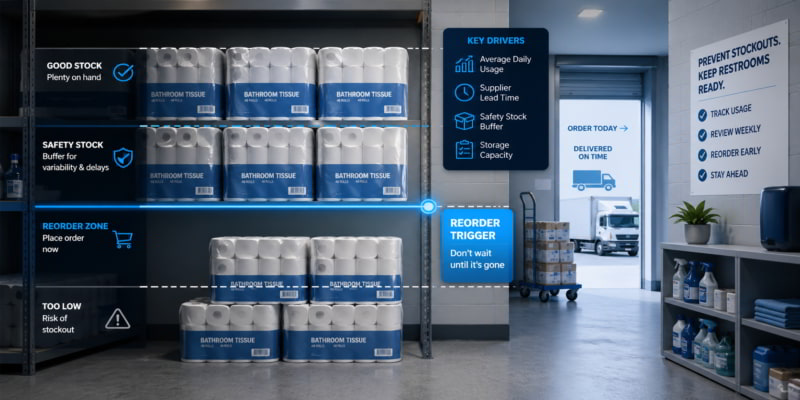
How to Set AFH Toilet Tissue Reorder Points and Replenishment Cycles
📌 Key Takeaways A simple reorder point — based on actual usage and supplier delivery time — prevents both empty dispensers and overstuffed closets. Clear reorder rules and consistent counting are the only two things standing between reactive scrambling and predictable restroom supply. AFH procurement buyers and facility managers responsible ... Read More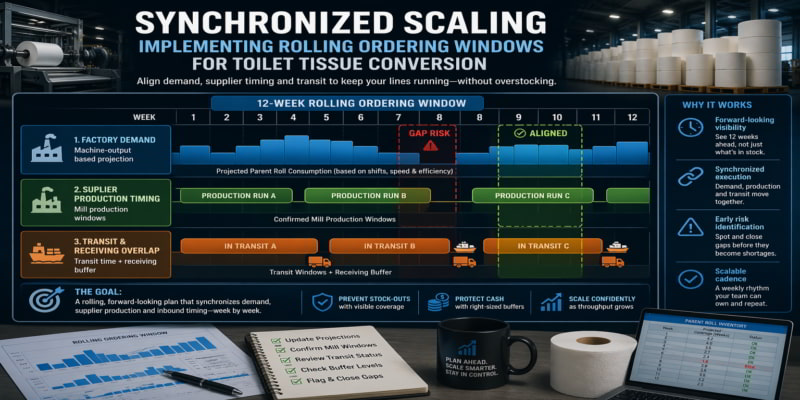
Synchronized Scaling: Implementing Rolling Ordering Windows for Toilet Tissue Conversion
📌 Key Takeaways A 12-week rolling ordering window keeps parent roll buying in step with factory output so growing toilet tissue plants avoid stock-outs without trapping cash. Cadence replaces chaos—discipline replaces hope. Toilet tissue converting founders and operations leads scaling past a single shift will find a ready-to-use planning method ... Read More
The JIT Fallacy: Why Traditional Buffering Fails Growth-Stage Toilet Tissue Converters
📌 Key Takeaways Growth-stage toilet tissue converters fail not from too little stock, but from outdated ordering habits that can’t keep pace with faster production. A better ordering rhythm protects production more than a bigger pile of rolls ever will. Operations leads and procurement managers at scaling toilet tissue converting ... Read More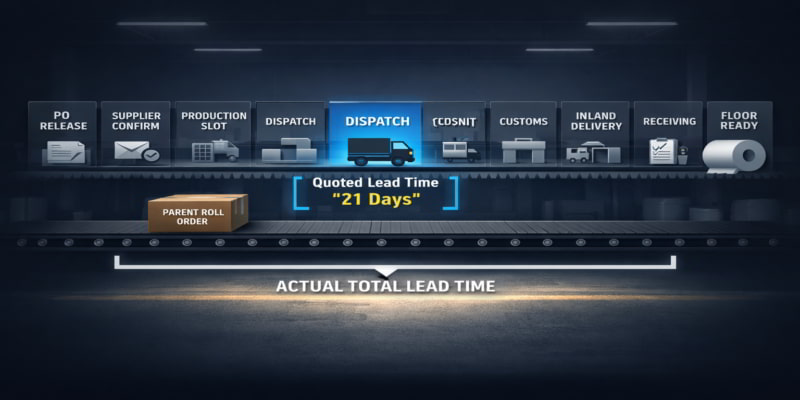
The First 72 Hours: How to Map Your Current Toilet Tissue Raw Material Lead-Time Windows
📌 Key Takeaways Most toilet tissue converters plan around a single supplier quote that hides the real time between ordering and floor-ready stock. Visible stages replace guesswork — and guesswork is what shuts down the line at 4:00 PM. Procurement managers and operations leads at growing toilet tissue converting businesses ... Read More
The Failure of Reactive Ordering: Using the Rolling Procurement View to Build a Scalable Toilet Tissue Converting Cadence
📌 Key Takeaways A 12-week rolling view replaces gut-feel reordering with a weekly rhythm tied to your actual machine output and transit windows. A repeatable weekly rhythm beats a bigger warehouse every time. Procurement managers, operations leads, and founders at growing toilet tissue converting businesses will gain a clear framework ... Read More
Toilet Tissue Parent Roll: A First-48-Hours Decision Framework for Aligning Lead-Time Planning with Supplier Vetting
📌 Key Takeaways Vet the supplier and plan the first order at the same time — not in separate meetings. One shared decision pack beats two separate approvals every time. Procurement managers, operations leads, and founders at small toilet tissue converting businesses will gain a usable 48-hour approval sequence here, ... Read More
How to Calculate Your True Box Usage to Avoid Stockouts
📌 Key Takeaways True box usage measures every carton consumed—including waste, rework, and internal pulls—not just customer shipments, preventing the phantom consumption that causes surprise stockouts. Hope is not an inventory strategy; math is. Food and beverage operations managers struggling with packaging continuity will gain a practical calculation framework here, ... Read More
Inventory Management 101: Preventing Paper Bag Stockouts During Peak Retail Seasons
📌 Key Takeaways A reorder point formula eliminates stockout guesswork by calculating exactly when to place your next bag order based on usage, lead time, and safety buffer. Formula discipline replaces panic with predictable restocking. Small retail owners and operations managers responsible for checkout supplies will gain an immediately implementable ... Read More
Seasonal Forecasting to Reduce Lead Time Risk: How to Align Forward Buys with Supplier Cycle Times
📌 Key Takeaways Seasonal peaks don’t fail because of demand uncertainty—they fail because purchase orders are released too late to respect the full supplier cycle. Prepared procurement teams hit launch dates while reactive teams pay expediting premiums. Procurement managers, sourcing specialists, and supply chain planners in packaging and converting operations ... Read More
Kraft Paper Lead Time Management: A 5-Step Cadence Discipline Checklist to Cut Expedites
📌 Key Takeaways Expedites drain margin not because of capacity shortages, but because lead time management operates as disconnected handoffs instead of a unified discipline. Cadence = predictability. Structure the rhythm, and the timeline follows. Procurement managers, supply chain coordinators, export sales teams, and documentation specialists across the kraft paper ... Read More
From Expediting to Cadence: Kraft Paper Lead Time Management that Stabilizes OTIF and Cuts Fire-Drills
📌 Key Takeaways Lead time chaos isn’t a supplier problem—it’s a planning problem that upstream discipline can solve. Upstream engineering beats downstream heroics every time. SMB packaging converter procurement and operations teams will find a practical implementation roadmap here, preparing them for the detailed methodology that follows. Friday afternoon. Your ... Read More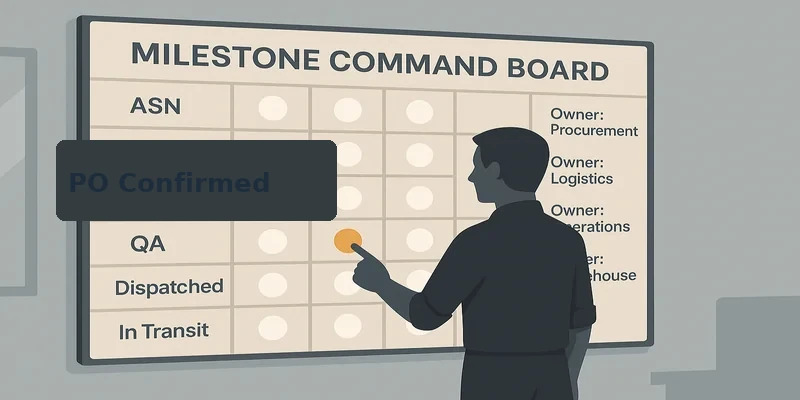
Lead Time Management vs. Expediting: Why Cadence Wins for OTIF Reliability
📌 Key Takeaways Unreliable lead times force you to choose between excess inventory and stockouts—expediting feels like control, but it only masks the problem. Systematic cadence reduces variance, improves supplier trust, and frees your team from constant firefighting. Small and mid-sized packaging converters sourcing kraft paper internationally will find a ... Read More