

Paper Bag Packaging Copy Review: Where Sustainability Claims Need Sign-Off
📌 Key Takeaways Sustainability claims on paper bags can shift in meaning as they pass between teams — sign-off at each stage keeps wording accurate before it goes public. One controlled sign-off process beats fixing claim problems after packaging and listings are already live. Procurement managers, packaging leads, and brand ... Read More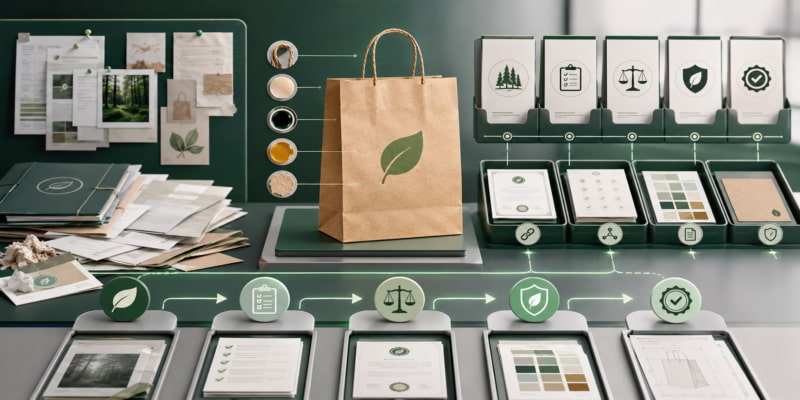
Supplier Documentation Gaps That Can Delay Paper Bag Sustainability Claims
📌 Key Takeaways Sustainability claims on paper bags stall not because the claim is wrong, but because suppliers send marketing language instead of structured proof. Structured evidence collection is a sourcing control — treat it like price and lead time, not like an afterthought. Procurement managers and packaging sourcing teams ... Read More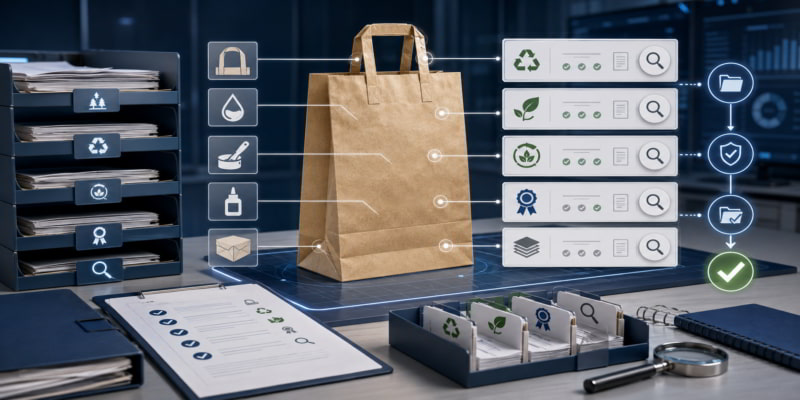
Paper Bag RFP Language That Supports Sustainability Claim Governance
📌 Key Takeaways RFPs that ask for “sustainable paper bags” without defining what evidence is needed create claim problems that procurement, legal, and marketing all pay for later. Structured evidence requests turn vague supplier promises into claims your reviewers can actually assess. Procurement, sustainability, and brand compliance teams sourcing paper ... Read More
How Procurement Can Spot Weak Sustainability Claims in Paper Bag Supplier Materials
📌 Key Takeaways Procurement teams can stop weak sustainability claims from spreading by flagging vague supplier language before it reaches brand, legal, or marketing teams. Flag the wording, request the proof, and let the right team decide. Procurement professionals managing paper bag supplier evaluations will gain a practical screening workflow ... Read More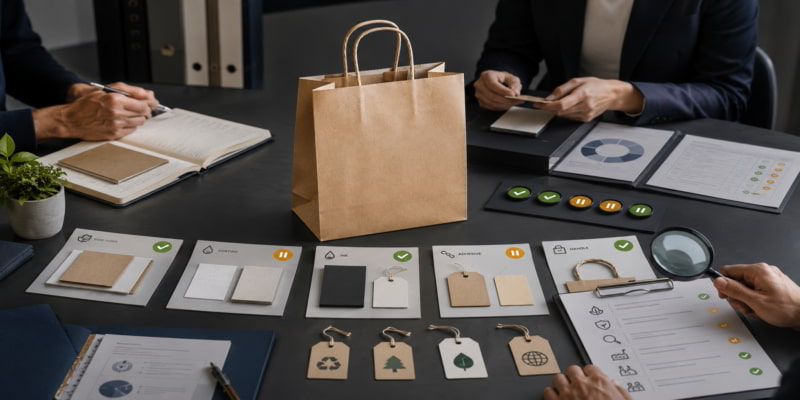
Paper Bag Supplier Questionnaires for Sustainability Claim Review
📌 Key Takeaways A structured supplier questionnaire catches weak sustainability claims early — before they reach packaging, brand copy, or customer-facing materials. Narrower claims backed by real evidence beat broad language built on incomplete proof. Procurement and sustainability professionals managing paper bag sourcing will gain a clear intake-to-approval framework here, ... Read More
When “Sustainable Paper Bags” Is Too Broad for Brand Packaging Claims
📌 Key Takeaways Calling a paper bag “sustainable” without specifics creates review problems — break the claim into exact attributes before it reaches packaging copy. Specific claims are not weaker claims — they are claims your team can actually prove. Procurement leads, brand managers, and sustainability teams reviewing paper bag ... Read More
Recycled Content Claims on Paper Bags: Questions Brand Teams Should Ask Before Use
📌 Key Takeaways Recycled-content claims on paper bags need cross-functional review before artwork approval — not after printing. Review the claim before the deadline — not after the bags ship. Brand, sustainability, procurement, and legal teams managing paper bag packaging claims will gain a practical review framework here, preparing them ... Read More
Paper Bag Claim Evidence Packs: What Procurement Teams Can Request From Suppliers
📌 Key Takeaways Supplier sustainability claims for paper bags are starting points for review, not finished copy you can put on packaging or marketing materials. Consistent evidence review turns vague supplier claims into statements your team can stand behind. Procurement and sustainability professionals managing paper bag sourcing will gain a ... Read More
How Paper Bag Sustainability Claims Can Be Substantiated Before Brand Approval
📌 Key Takeaways A paper bag sustainability claim needs product-specific evidence, not just a supplier’s word, before it belongs on any brand material. Link every claim to the evidence behind it — or hold it until you can. Procurement, sustainability, and brand teams evaluating paper bag suppliers will find a ... Read More
Paper Bag Sustainability Claims Across Packaging, E-commerce, and Sales Materials
📌 Key Takeaways Paper bag sustainability claims need a single source of truth that every team — packaging, e-commerce, sales — works from. Controlled claims aren’t weaker claims — they’re claims you can actually defend. Procurement managers, packaging leads, and sustainability teams managing paper bag claims across channels and markets ... Read More
How to Build a Paper Bag Sustainability Claim Checklist for Global Brand Teams
📌 Key Takeaways A shared checklist stops paper bag sustainability claims from traveling faster than the evidence behind them. One checklist, shared early, beats a dozen last-minute legal reviews. Procurement managers, sustainability leads, and brand teams overseeing global paper bag packaging will find a ready-to-adapt review framework below, guiding them ... Read More
How to Build an Internal Business Case for Paper Bag Durability Assessment
📌 Key Takeaways Paper bag durability problems are best solved by matching the bag to real store conditions, not by defaulting to a heavier or pricier option. Match the bag to the real load, workflow, and store conditions — not to assumptions on a spec sheet. Retail procurement, operations, and ... Read More
When Heavier Paper Bags May Not Solve Load-Performance Problems
📌 Key Takeaways When paper bags keep breaking, ordering thicker paper often skips the real problem—finding where and why the bag actually failed. Diagnosis before upgrade protects both budgets and bag performance. Procurement managers, packaging engineers, and QA leads evaluating paper bag failures will gain a structured diagnostic approach here, ... Read More
How Mid-Market Retailers Can Balance Paper Bag Durability, Cost, and Storage Constraints
📌 Key Takeaways Choosing the right paper bag means balancing durability, cost, and storage together — not picking the cheapest quote. The right bag fits what stores actually need — not just what the budget prefers or the spec sheet promises. Mid-market retail procurement teams managing paper bag programs across ... Read More
How Paper Bag Breakage Can Affect Checkout-recovery Workflows and Customer Experience
📌 Key Takeaways Paper bag breakage at checkout creates hidden recovery work — repacking, queue delays, and staff workarounds — that adds up when failures repeat. Document the pattern before you blame the bag — or the supplier. Retail operations leaders, quality teams, and procurement professionals will find a practical ... Read More
How to Document Paper Bag Breakage Reports Across Store Locations
📌 Key Takeaways Consistent reporting fields — not just awareness — turn scattered bag breakage complaints into evidence teams can actually compare and act on. Structured observation replaces scattered complaints with decisions backed by evidence. Retail operations, QA, and procurement teams managing paper bag quality across multiple store locations will ... Read More
Paper Bag Quality Checks to Include Before Reordering at Scale
📌 Key Takeaways A good past order does not guarantee the next batch will perform the same — check before you reorder at scale. One repeat order without evidence can scale a small quality gap into a chain-wide problem. Procurement managers, QA teams, and retail operations leads responsible for paper ... Read More
How Procurement Teams Can Compare Paper Bag Samples Without Relying Only on Unit Price
📌 Key Takeaways Comparing paper bag samples starts with defining what the bag must do — not with the price quote. Fit the bag to the job first, and the price falls into place. Procurement teams comparing paper bag suppliers will gain a repeatable evaluation method here, preparing them for ... Read More
Supplier Questions That Help Paper Bag Buyers Evaluate Load-Performance Risk
📌 Key Takeaways Asking suppliers “what was this bag designed for?” matters more than asking “how strong is it?” Better questions turn vague “heavy-duty” promises into evidence you can compare and defend. Procurement managers and packaging engineers evaluating paper bag suppliers will gain a ready-to-use question framework here, guiding them ... Read More