Optimize your sourcing strategy for competitive advantage.

How to Choose Comparable Locations for a New-Site Paper Cup Forecast
📌 Key Takeaways Pick reference locations based on what drives their cup demand — not just which store is closest. Explainable similarity beats convenient proximity. Foodservice operators and supply planners forecasting paper cup needs for a new location will find a structured comparison method and post-launch review process below. ~ ... Read More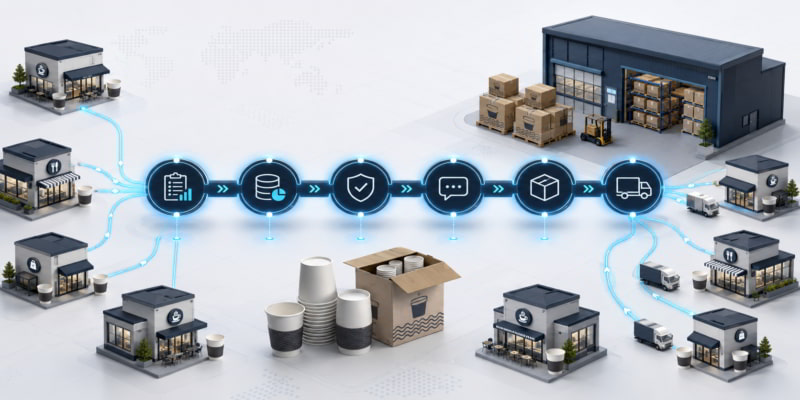
Centralized, Local, or Hybrid Paper Cup Ordering: A Decision Framework for Multi-Location Operators
📌 Key Takeaways Multi-location paper cup ordering works when every handoff has a named owner — the model structure matters less than the controls behind it. The model doesn’t fail — the handoffs do. Operations and procurement leaders managing multi-location paper cup supply will find a structured way to diagnose ... Read More
What Paper Cup Volume Information Should Buyers Share With Suppliers?
📌 Key Takeaways Buyers who break their paper cup forecast into seven detail areas give suppliers enough structure to plan production, not just guess at scale. Detail turns a guess into a plan suppliers can actually use. Foodservice buyers preparing their first supplier volume pack will find a ready-to-use information ... Read More
Questions to Ask Before Standardizing Paper Cup Sizes Across Locations
📌 Key Takeaways Before cutting cup sizes across locations, map each size to its actual job — the menu item, lid, dispenser, and workflow it supports. Standardize requirements first — SKU cuts follow. Operations and procurement teams managing multi-location cup assortments will find a structured review framework in the detailed ... Read More
When Too Many Paper Cup Variants Make Volume Planning Harder
📌 Key Takeaways A restaurant chain can hit its total cup order and still run short — because the mix of sizes and specs across locations is wrong. Controlled complexity beats blind simplification. Procurement and operations teams managing multi-location foodservice packaging will find a ready-to-use diagnostic framework and documentation checklist ... Read More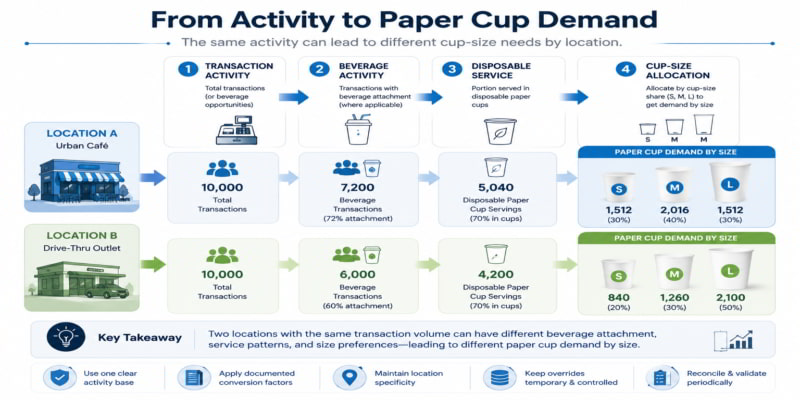
How to Model Paper Cup Demand When Beverage Mix Varies by Location
📌 Key Takeaways Two locations with the same number of orders can need very different paper cup quantities and sizes — plan by location, not just network totals. One matrix, verified inputs, and only the detail that changes a decision. Procurement and operations teams planning paper cup volumes across multiple ... Read More
How Store Format and Beverage Mix Affect Paper Cup Volume Estimates
📌 Key Takeaways Locations with similar sales can need very different paper cup orders because what drives cup use is beverage mix, cup sizes, and how orders are served — not revenue or transaction totals. Same sales, different cups — plan by what drives the pour. Foodservice procurement and operations ... Read More
Grouping Foodservice Locations for Paper Cup Demand Forecasting
📌 Key Takeaways Group foodservice locations by shared cup-use behavior — not by labels like region or size — so every planning assumption ties back to an observable, repeatable demand driver. Fewer cohorts, clearer rules, better cup-demand plans. Foodservice procurement and operations teams planning paper cup purchases will find a ... Read More
How Much Historical Data Is Useful for Paper Cup Volume Planning?
📌 Key Takeaways The right historical data window for paper cup planning is the longest recent period that is complete, comparable, and still matches how your business runs today. Better baselines start with qualifying the data, not just collecting more of it. Multi-site food-service planners and procurement teams will sharpen ... Read More
Paper Cup Purchases Versus Actual Usage: Which Data Should Volume Plans Use?
📌 Key Takeaways A defensible paper cup volume plan tracks when cups enter stock, move between sites, and get used — not just when they were ordered. Better data roles mean fewer surprise shortages and less dead stock. Procurement managers and inventory planners running multi-location cup programs will find a ... Read More
How to Build a Paper Cup Consumption Baseline Across Multiple Foodservice Locations
📌 Key Takeaways A reliable paper cup baseline tracks what each location actually used, not what it ordered. What left the shelf matters more than what hit the loading dock. Procurement managers and foodservice operators planning multi-site cup volumes will find the reconciliation framework and worksheet fields covered below. ~ ... Read More
When to Reforecast Paper Cup Demand After a New Location Opens
📌 Key Takeaways Don’t reforecast paper cup demand at a new location just because time has passed — wait until the data actually makes sense. Change the forecast when the evidence is clear, not when the calendar says so. Operations, procurement, and planning teams opening new locations will find a ... Read More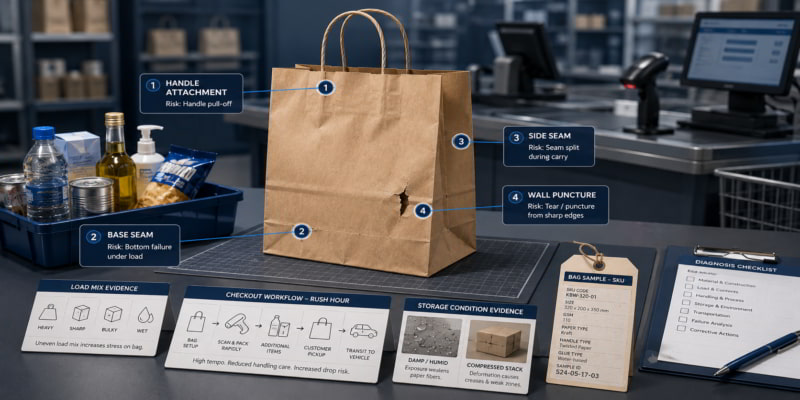
Common Paper Bag Failure Points in High-Volume Checkout Operations
📌 Key Takeaways When paper bags fail at checkout, the real cause is often how they were packed, stored, or handled — not weak paper. Fix the pattern first — stronger paper cannot solve a packing, storage, or sizing problem. Retail operations leaders and quality teams managing high-volume checkout environments ... Read More
How to Build a Paper Bag Changeover Scope Before Replacing Plastic Bags Across Locations
📌 Key Takeaways Define what every bag must do across every location before asking suppliers for quotes — that internal clarity is what makes pricing comparable. A clear internal scope turns a messy multi-location transition into a structured, comparable, and lower-risk process. Operations managers, procurement leads, and retail teams planning ... Read More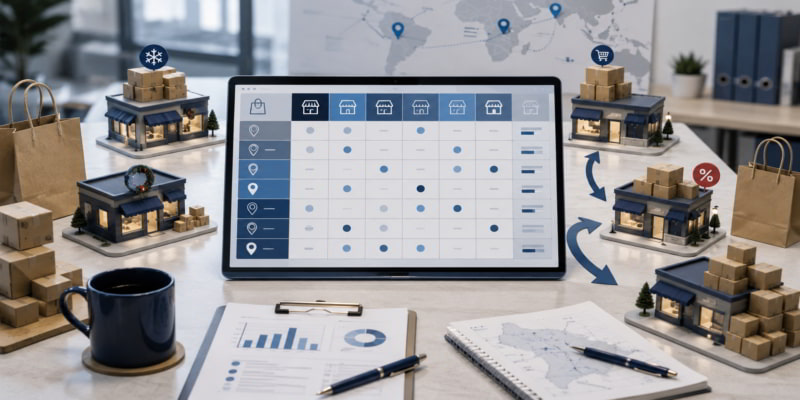
How Regional Store Chains Can Coordinate Paper Bag Stock When Seasonal Demand Varies by Location
📌 Key Takeaways Seasonal paper bag shortages at regional chains happen because stock is split equally across stores with unequal demand—not because the total order was too small. Better distribution beats bigger orders. Procurement and operations teams at small regional chains will gain a ready-to-use coordination framework here, guiding them ... Read More
Using Store and Operator Feedback to Refine Paper Bag Material Specifications
📌 Key Takeaways Store and operator feedback reveals real-world bag failures that sample reviews and specification sheets alone cannot predict. Smarter feedback loops build specification confidence without over-spending on materials. Procurement professionals, store operations managers, and packaging buyers managing paper bag rollouts will gain a practical framework for turning frontline ... Read More
AI for Paper Procurement Timing: What It Can Support and What It Cannot Decide for You
📌 Key Takeaways AI helps paper buyers organize scattered data — but the actual buying decision still needs human judgment. Document the reasoning, review the outcomes, and the next decision gets sharper. Procurement managers juggling supplier quotes, inventory risk, and internal approvals will gain a repeatable decision-making structure here, preparing ... Read More
How Paper Buyers Can Use AI to Track Price Signals Without Guessing the Market
📌 Key Takeaways AI helps paper buyers act on pricing signals they already have — not predict where the market is heading. Better buying discipline beats better market predictions every time. Paper procurement teams juggling multiple suppliers and tight timelines will gain a repeatable signal-tracking method here, guiding them into ... Read More
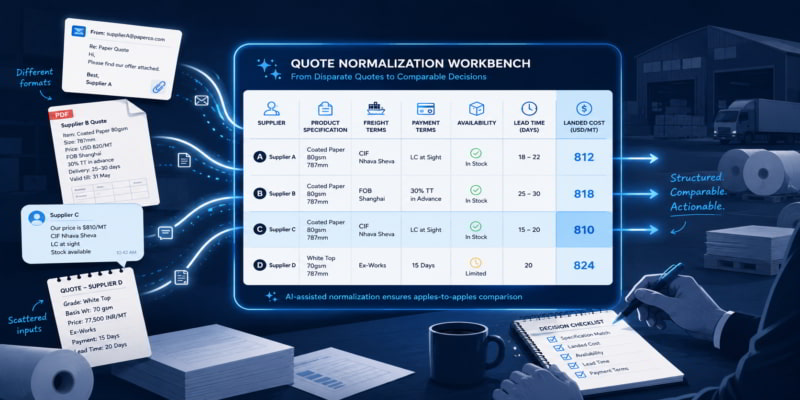
How to Standardize Paper Supplier Quotes Before Using AI to Compare Them
📌 Key Takeaways Comparing paper supplier quotes starts with asking every supplier the same structured questions — not with better tools. Comparable data — not faster software — is what makes quote decisions reliable. Procurement teams, sourcing coordinators, and operations managers comparing multi-supplier paper quotes will gain a repeatable normalization ... Read More