Plan procurement budgets and optimize cost.

Corrugated Box Storage for Slow-Moving Packaging Stock in SMB Warehouses
📌 Key Takeaways Slow-moving corrugated boxes lose strength based on where they sit, not just how long they’ve been stored. Condition-aware storage beats calendar-based rotation every time. SMB warehouse managers and packaging procurement teams coordinating on storage and reorder decisions will gain a practical inspection framework here, guiding them into ... Read More
How to Align Kraft Paper Reorder Timing With Storage Capacity and Packaging Demand
📌 Key Takeaways Smart kraft paper reorder timing starts with real usage data, storage limits, and supplier lead times — not last order size or a fixed calendar. Real reorder discipline means fewer emergency orders, less dead stock, and better use of warehouse space and working capital. Procurement coordinators and ... Read More
Kraft Paper Bulk Buying: Shelf-Life Trade-Offs Procurement Managers Should Consider
📌 Key Takeaways Buying kraft paper in bulk only pays off when your warehouse can keep it usable until production needs it. Bulk savings are only real savings when the material stays fit for use. Procurement managers and packaging buyers balancing cost pressure with material quality will gain a practical ... Read More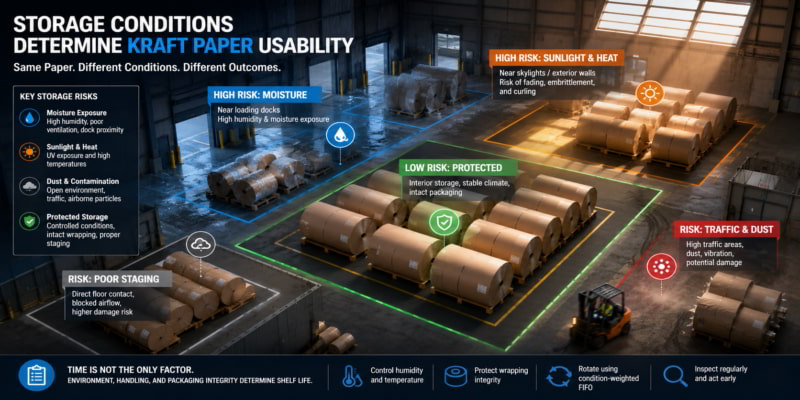
How Storage Conditions Affect Kraft Paper Shelf Life: A Procurement Manager’s Guide to Reducing Waste
📌 Key Takeaways Kraft paper doesn’t expire on a schedule. It degrades based on how and where you store it. Storage is a procurement problem, not just a warehouse problem — own it, and the waste drops. Procurement managers and supply chain teams overseeing kraft paper inventory will gain a ... Read More
Kraft Paper Storage Conditions Procurement Teams Should Review Before Increasing Order Volume
📌 Key Takeaways Buying more kraft paper only saves money if your warehouse can keep it usable for the longer time it will sit there. Storage conditions belong in the buying conversation, not just the warehouse conversation. Procurement teams managing kraft paper inventory will gain a clear framework for aligning ... Read More
AI for Paper Procurement Timing: What It Can Support and What It Cannot Decide for You
📌 Key Takeaways AI helps paper buyers organize scattered data — but the actual buying decision still needs human judgment. Document the reasoning, review the outcomes, and the next decision gets sharper. Procurement managers juggling supplier quotes, inventory risk, and internal approvals will gain a repeatable decision-making structure here, preparing ... Read More
The Hidden Cost of Unstructured Price History in Paper Procurement
📌 Key Takeaways Scattered price records — not price swings — are the real reason paper buying decisions feel like guesswork. Structured records don’t guarantee lower prices — they guarantee better decisions. Paper procurement teams and purchasing managers will gain a clear framework for turning scattered quote history into a ... Read More
How Paper Buyers Can Use AI to Track Price Signals Without Guessing the Market
📌 Key Takeaways AI helps paper buyers act on pricing signals they already have — not predict where the market is heading. Better buying discipline beats better market predictions every time. Paper procurement teams juggling multiple suppliers and tight timelines will gain a repeatable signal-tracking method here, guiding them into ... Read More
How to Standardize Paper Supplier Quotes Before Using AI to Compare Them
📌 Key Takeaways Comparing paper supplier quotes starts with asking every supplier the same structured questions — not with better tools. Comparable data — not faster software — is what makes quote decisions reliable. Procurement teams, sourcing coordinators, and operations managers comparing multi-supplier paper quotes will gain a repeatable normalization ... Read More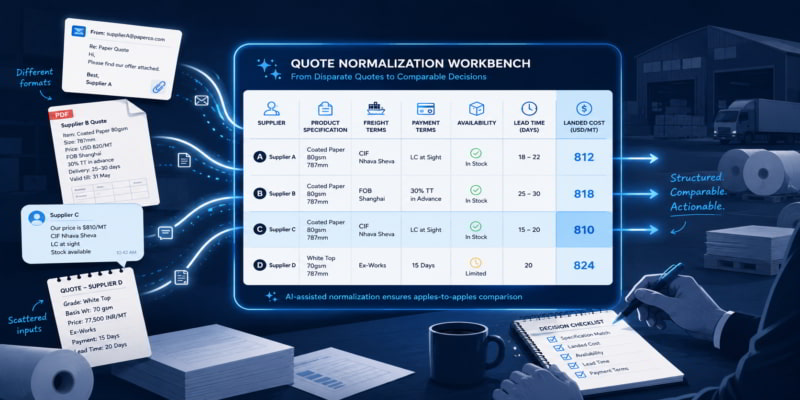
AI-Assisted Quote Comparison for Paper Buyers: Why Price Is Only One Part of the Decision
📌 Key Takeaways Comparing paper quotes by price alone hides the real costs buried in freight terms, specs, and payment conditions. Structure your comparison first — then the right questions surface before costly mistakes do. Paper buyers and sourcing teams managing multi-supplier quotes will gain a repeatable comparison method here, ... Read More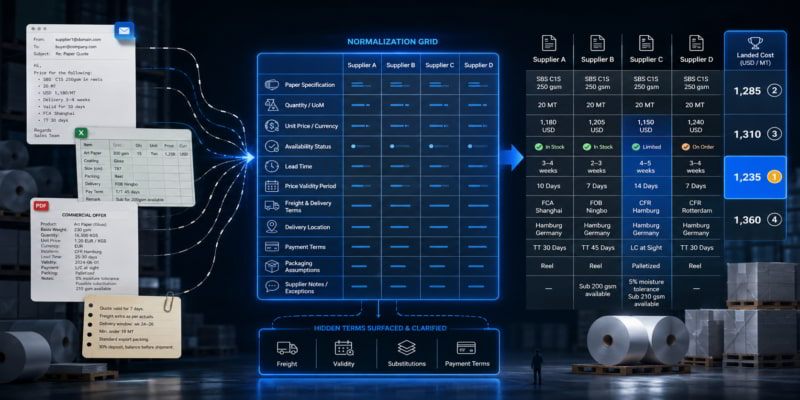
Why Paper RFQs Are Hard to Compare Manually and Where AI Can Help First
📌 Key Takeaways Supplier quotes only become comparable after you put them on the same basis — not before. Same fields, same basis, same visibility — that’s what turns quote comparison from guesswork into a real decision. Procurement managers and sourcing professionals handling multi-supplier paper RFQs will find a practical ... Read More
Before You Switch Kraft Paper Grades: A Small Converter’s Alignment Checklist for Sales, Purchase, and Production Teams
📌 Key Takeaways A kraft paper grade switch only saves money when sales, purchase, and production agree it works before it ships. A 15-minute cross-team conversation catches most problems that undisciplined grade switching creates. Small kraft paper converters evaluating grade changes will find a practical alignment framework here, preparing them ... Read More
How Small Converters Can Choose the Right Kraft Paper Grade Without Over-Specifying
📌 Key Takeaways Picking the right kraft paper grade starts with your job’s real failure risks, not the strongest option in the catalog. Specify for the real constraint, not the catalog’s highest grade. Small converters managing kraft paper procurement will gain a practical decision framework here, setting up the grade ... Read More
When a Cheaper Kraft Paper Becomes More Expensive in Production
📌 Key Takeaways The cheapest kraft paper roll often costs more once you count waste, downtime, rejects, and rework on the shop floor. Buy the lowest-cost grade that reliably produces saleable output — not the cheapest, not the strongest. Kraft paper converters and procurement teams balancing material cost against production ... Read More
Right-Specification Kraft Paper: How Small Converters Can Avoid Paying for Strength They Don’t Need
📌 Key Takeaways The best kraft paper isn’t the strongest; it’s the lightest grade that still passes the job’s real-world tests. Buy the grade the job needs, not the grade that feels safest. Small-scale converters and packaging buyers looking to cut material costs without adding production risk will find a ... Read More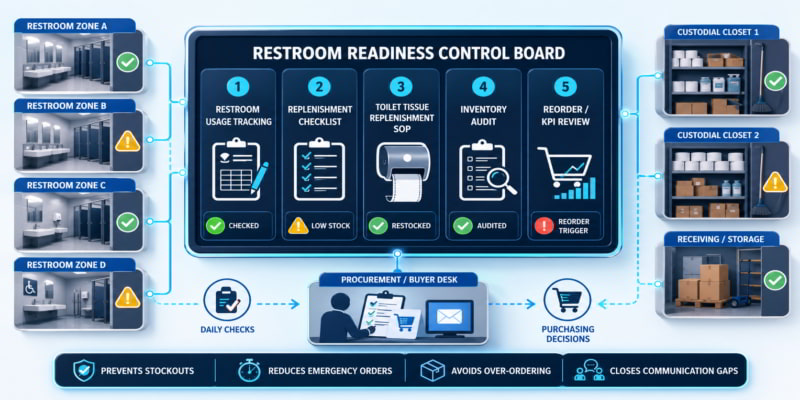
How to Build a Toilet Tissue Replenishment Documentation System for Away-From-Home (AFH) Facilities
📌 Key Takeaways Writing down how your facility tracks, restocks, and orders toilet tissue turns guesswork into reliable, data-driven purchasing. The system that prevents empty dispensers is not software — it is simple records, clear responsibilities, and regular follow-through. Facility managers, custodial supervisors, and procurement staff responsible for restroom supplies ... Read More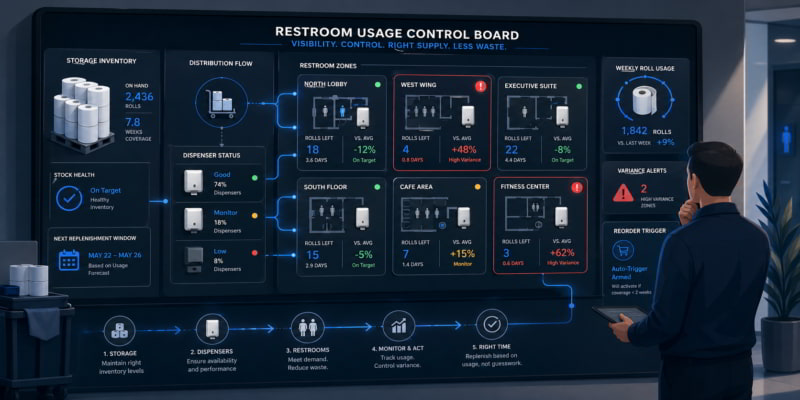
How AFH Facilities Can Reduce Toilet Tissue Waste, Overstock, and Replenishment Costs
📌 Key Takeaways Tracking how toilet tissue actually gets used — not just what you ordered — is the key to cutting restroom supply costs. Buy the right amount, use it fully, and let usage data — not habit — drive every restroom supply decision. Procurement teams and facilities managers ... Read More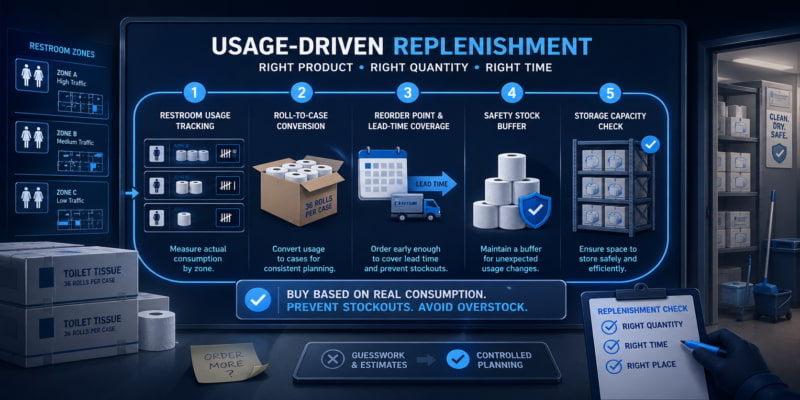
Commercial Toilet Tissue Procurement Strategy: Aligning Order Quantities With Actual Facility Usage
📌 Key Takeaways Buying toilet tissue based on real usage—not past invoices or gut feelings—prevents both stockouts and wasted storage space. Consistent restrooms start with procurement plans built on real numbers, not sticky-note guesses. Facility managers, office coordinators, and procurement teams responsible for restroom supplies will gain a practical ordering ... Read More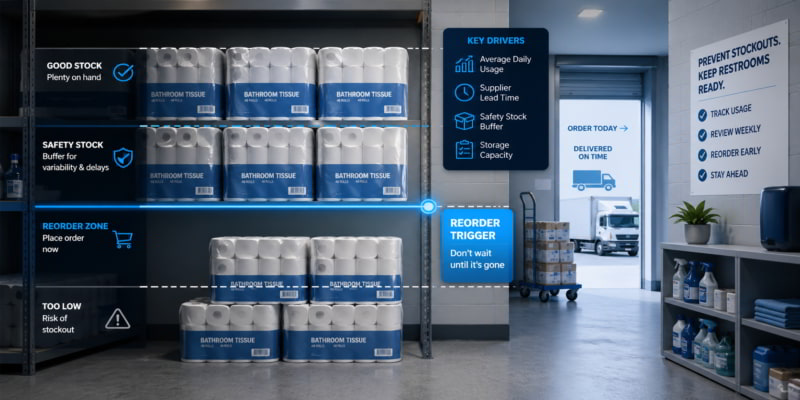
How to Set AFH Toilet Tissue Reorder Points and Replenishment Cycles
📌 Key Takeaways A simple reorder point — based on actual usage and supplier delivery time — prevents both empty dispensers and overstuffed closets. Clear reorder rules and consistent counting are the only two things standing between reactive scrambling and predictable restroom supply. AFH procurement buyers and facility managers responsible ... Read More