Source smarter, negotiate better, save more.

Corrugated Box Storage SOPs for Packaging, Warehouse, and Quality Teams
📌 Key Takeaways Corrugated box storage works best when packaging, warehouse, and quality teams share ownership instead of leaving it all to the warehouse. Shared visibility beats shared blame. Warehouse, quality, and procurement teams managing corrugated box inventory will find a ready-to-adapt responsibility framework here, preparing them for the detailed ... Read More
Corrugated Box Storage Audit Questions for SMB Packaging and Warehouse Teams
📌 Key Takeaways Most corrugated box damage starts with missing handoffs between procurement, warehouse, and quality — not one bad decision. Shared visibility across teams catches storage problems before they reach the customer. SMB packaging buyers, warehouse leads, and quality managers will find ready-to-use audit questions and escalation frameworks here, ... Read More
A Cross-Functional SOP Framework for Corrugated Box Storage and Escalation
📌 Key Takeaways Corrugated box storage problems usually start because no one defines who owns which part of the process — not because teams lack skill. Defined roles + condition checks + a shared issue log = boxes that actually perform on the packing line. Packaging, warehouse, and quality teams ... Read More
What Packaging Buyers Should Document About Warehouse Conditions Before Reordering Corrugated Boxes
📌 Key Takeaways Most corrugated box problems trace back to what happened after delivery — and documenting warehouse conditions before reordering turns guesswork into a fact-based conversation with suppliers. Document first, decide second — a one-page warehouse record turns reactive complaints into productive supplier conversations. Procurement teams and warehouse managers ... Read More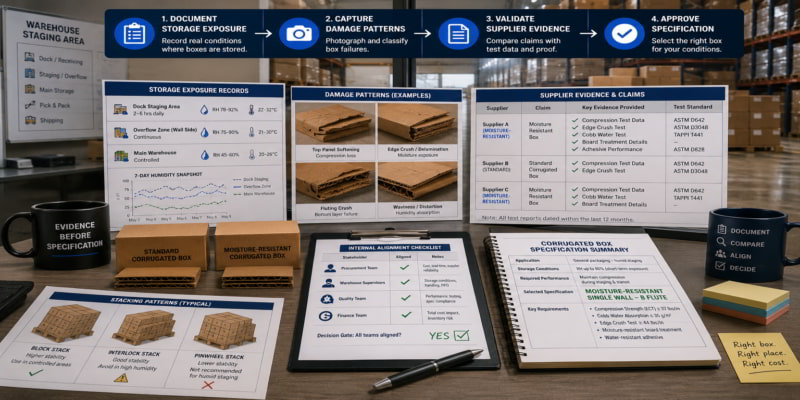
How to Compare Standard and Moisture-Resistant Corrugated Boxes Without Overbuying
📌 Key Takeaways Choosing between standard and moisture-resistant corrugated boxes starts with documenting what your boxes actually face — not assuming “stronger” means better. Specification decisions backed by evidence prevent both overbuying and repeated damage. Procurement managers, warehouse supervisors, and quality teams evaluating corrugated packaging for humidity-sensitive storage will gain ... Read More
Supplier Questions to Ask Before Buying Corrugated Boxes for Humid Storage Conditions
📌 Key Takeaways Telling your supplier exactly what your warehouse environment looks like prevents new boxes from collapsing during humid storage. Clear and honest communication with your packaging supplier stops seasonal warehouse humidity from silently destroying your expensive containers. Procurement and warehouse managers will gain highly practical sourcing strategies here, ... Read More
Why Corrugated Boxes May Look Usable in Storage but Fail During Packing or Shipping
📌 Key Takeaways Boxes that look perfect on the shelf often fail during shipping because quiet storage hides invisible moisture and structural fatigue. Physical testing before packing stops expensive failures during shipping. Warehouse and quality teams will gain practical inspection skills here, preparing them for the detailed overview that follows. ... Read More
How Humidity Changes Corrugated Box Stack Planning in SMB Warehouses
📌 Key Takeaways High humidity slowly weakens dry-looking corrugated boxes, forcing you to adjust your stack heights, pallet quality, and storage times. Smart support and shorter storage times stop invisible humidity from quietly crushing your valuable inventory. Small business warehouse teams will learn how to protect their stock, setting up ... Read More
Corrugated Box Storage for Slow-Moving Packaging Stock in SMB Warehouses
📌 Key Takeaways Slow-moving corrugated boxes lose strength based on where they sit, not just how long they’ve been stored. Condition-aware storage beats calendar-based rotation every time. SMB warehouse managers and packaging procurement teams coordinating on storage and reorder decisions will gain a practical inspection framework here, guiding them into ... Read More
Corrugated Box Storage Zones: How Warehouse Teams Can Spot Humidity Risk Areas
📌 Key Takeaways The same warehouse can have safe zones and risky zones — and where boxes sit matters more than how dry the building feels overall. Where the box sits changes the outcome more than what the box is made of. Warehouse supervisors and quality teams managing corrugated stock ... Read More
When Corrugated Box Damage Comes From Storage, Suppliers, or Handling: A Practical Triage Guide
📌 Key Takeaways When corrugated boxes fail after delivery, matching the damage pattern to records — not gut reactions — reveals the real cause. Evidence turns difficult supplier calls into productive ones. Packaging buyers, warehouse managers, and QA teams dealing with post-delivery box failures will find a ready-to-use triage framework ... Read More
How to Check Corrugated Box Deliveries for Humidity Exposure Before Warehouse Storage
📌 Key Takeaways A simple dock checklist turns a humidity-suspect corrugated box delivery into a structured, documented decision — no lab equipment needed. Document early, separate fast, and let evidence — not assumptions — guide the next step. Warehouse teams, packaging buyers, and quality managers handling corrugated box deliveries will ... Read More
Kraft Paper Shelf-Life Documentation Buyers Should Request Before Shortlisting Suppliers
📌 Key Takeaways Requesting specific shelf-life documents from kraft paper suppliers replaces vague promises with evidence you can actually compare. Better documents lead to better supplier conversations and fewer surprises after the purchase order is signed. Procurement professionals and packaging buyers evaluating kraft paper suppliers will gain a structured documentation ... Read More
When Stored Kraft Paper Needs Inspection Before Packaging Use
📌 Key Takeaways Stored kraft paper doesn’t expire on a schedule — it needs inspection when storage conditions, damage, or missing records create doubt about whether it will run properly on the packaging line. Inspect early, document everything, and let the evidence, not the pressure, drive the release decision. Procurement ... Read More
How Procurement and Warehouse Teams Can Coordinate Kraft Paper Storage Requirements
📌 Key Takeaways Kraft paper storage problems start with the purchase order, not at the warehouse dock. Ask before ordering, document before receiving, and align before the handoff. Procurement managers, warehouse supervisors, and QA leads coordinating kraft paper purchases will find a ready-to-use checklist and ownership framework here, preparing them ... Read More
Kraft Paper Shelf-Life Risks That Can Affect Packaging Consistency
📌 Key Takeaways Kraft paper doesn’t expire on a set date. Its real shelf life depends on how it was stored, handled, and protected. Good storage records today prevent bad supplier conversations tomorrow. Procurement teams, warehouse managers, and packaging operations staff responsible for kraft paper inventory will gain a clear ... Read More
Supplier Questions About Kraft Paper Storage, Handling, and Shelf-Life Guidance
📌 Key Takeaways Asking your kraft paper supplier about storage, handling, and shelf life before you buy prevents costly surprises after delivery. Better questions before the purchase order beat damage control after the first quality complaint. Procurement managers sourcing kraft paper for packaging, converting, or food-contact use will gain a ... Read More
Kraft Paper Delivery and Receiving Checks That Support Shelf-Life Planning
📌 Key Takeaways Recording what kraft paper looks like when it arrives is the foundation for every storage, quality, and supplier decision that follows. Every receiving check either supports a future decision or leaves a gap no one can fill later. Procurement teams, warehouse managers, and receiving staff responsible for ... Read More
How to Align Kraft Paper Reorder Timing With Storage Capacity and Packaging Demand
📌 Key Takeaways Smart kraft paper reorder timing starts with real usage data, storage limits, and supplier lead times — not last order size or a fixed calendar. Real reorder discipline means fewer emergency orders, less dead stock, and better use of warehouse space and working capital. Procurement coordinators and ... Read More