How Basis Weight, Caliper, Stiffness, and Coating Choices Shape Cupstock Procurement Risk
📌 Key Takeaways Cupstock buying risk drops when you specify weight, thickness, stiffness, and coating clearly — before comparing supplier prices. Specify before you compare — shared units, tolerances, test methods, and documentation turn a price list into a real evaluation. Procurement, production, and QA professionals sourcing cupstock will gain ... Read More
What Cupstock Buyers Should Include in a Paper Cup Board Specification Before Requesting Quotes
📌 Key Takeaways Supplier quotes only match up when every bidder prices the same cup job, material setup, and document package. One shared, detailed specification beats three rounds of supplier clarification. Paper cup buyers and procurement teams managing cupstock sourcing will gain a ready-to-use RFQ checklist here, preparing them for ... Read More
Paper Bag Specification Changes: How to Manage Sampling, Approval, and Supplier Transition Risk
📌 Key Takeaways A controlled approval process catches paper bag problems before they reach your packing line or your customers. Document the current bag, define what must match, and test under real conditions — before the PO goes out. Procurement teams and packaging buyers managing supplier transitions or specification changes ... Read More
Using Store and Operator Feedback to Refine Paper Bag Material Specifications
📌 Key Takeaways Store and operator feedback reveals real-world bag failures that sample reviews and specification sheets alone cannot predict. Smarter feedback loops build specification confidence without over-spending on materials. Procurement professionals, store operations managers, and packaging buyers managing paper bag rollouts will gain a practical framework for turning frontline ... Read More
Kraft, White, and Recycled Paper Bags: Specification Trade-Offs for Retail and Food Service Buyers
📌 Key Takeaways Define what the bag needs to do first then match the material, not the other way around. Specify the job, then verify the claim — assumptions cost more than samples. Procurement managers, QA leads, and packaging buyers comparing paper bag options will gain a clear method for ... Read More
How Paper Bag Material Specifications Affect Load Capacity, Shelf Handling, and Retail Use
📌 Key Takeaways A paper bag’s real strength comes from how it’s built and used, not just how heavy the paper is. The best spec matches the bag’s actual job — not the highest number on the data sheet. Procurement managers, QA leads, and packaging buyers sourcing paper bags will ... Read More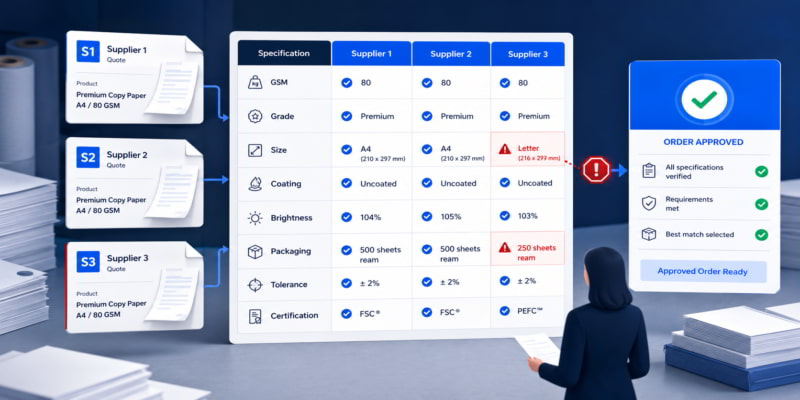
Paper Specification Matching: How Procurement Teams Can Reduce Costly Ordering Errors
📌 Key Takeaways Comparing paper suppliers by product name and price alone hides specification mismatches that cause rejected shipments. One structured checklist before each order catches mismatches that scattered emails and spreadsheets hide. Paper procurement teams and trading businesses managing sourcing through email and spreadsheets will gain a repeatable pre-order ... Read More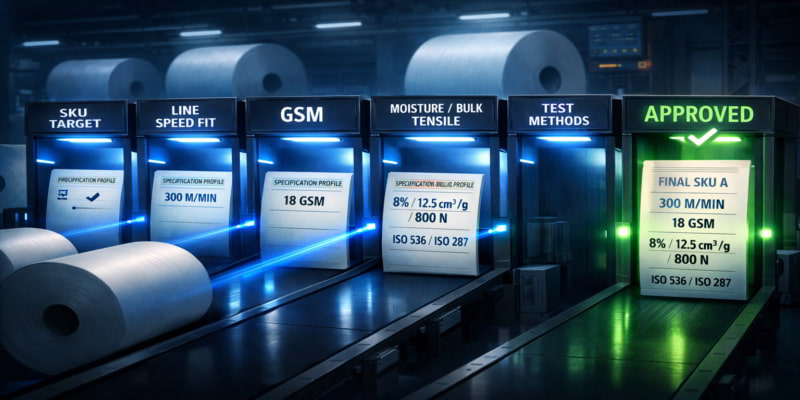
The Myth of Universal GSM: Using Specification-True Procurement to Match Bath Tissue Parent Rolls to High-Speed Converting Lines
📌 Key Takeaways Matching toilet paper parent rolls to your converting line requires a full specification profile—not just a GSM number. The cheapest quote often becomes the most expensive run. Growth-stage toilet paper converters sourcing private-label parent rolls will gain a practical framework for specification discipline, preparing them for the ... Read More
A Comparative Decision Matrix for Bath Tissue Parent Roll Specification Alignment: Aligning Procurement and Production Priorities
📌 Key Takeaways A shared decision matrix helps Procurement and Production evaluate toilet tissue parent rolls together—before price becomes the loudest voice in the room. One shared scorecard beats two separate checklists every time. Technical procurement leads and converting managers evaluating parent roll suppliers will find a ready-to-use framework here, ... Read More
The Truth Decay of Data Sheets: Why Relying on Supplier Specifications Ruins Folding Carton Specifications
📌 Key Takeaways Supplier data sheets describe what a supplier makes—they don’t define what you should accept, and that gap causes folding carton failures. Supplier sheets collect data; buyer-owned specifications create control. Packaging engineers, procurement managers, and converting operations teams managing multi-SKU portfolios will find a practical framework for building ... Read More
Cross-SKU Material Standardization: Preventing Folding Carton Collapse During Product Expansion
📌 Key Takeaways Folding Carton collapse during product expansion happens because each new SKU inherits different material assumptions—not because of bad suppliers or weak boxes. Same portfolio, same baseline logic—that’s how you stop quiet exceptions from becoming production halts. Packaging managers and procurement teams scaling product lines will find a ... Read More
The Baseline Packaging Parameter Checklist: Structuring Your Folding Carton Specification Requirements
📌 Key Takeaways Control your folding carton specifications before asking suppliers to quote—otherwise you’re comparing guesses, not offers. When you own the specification, you own the outcome. Procurement managers and packaging engineers preparing RFPs for new product lines will find a ready-to-use framework here, setting up the parameter-by-parameter details that ... Read More
Preventing Wrapper Failures: A Complete Guide to Food-Grade Packaging Paper Testing Protocols
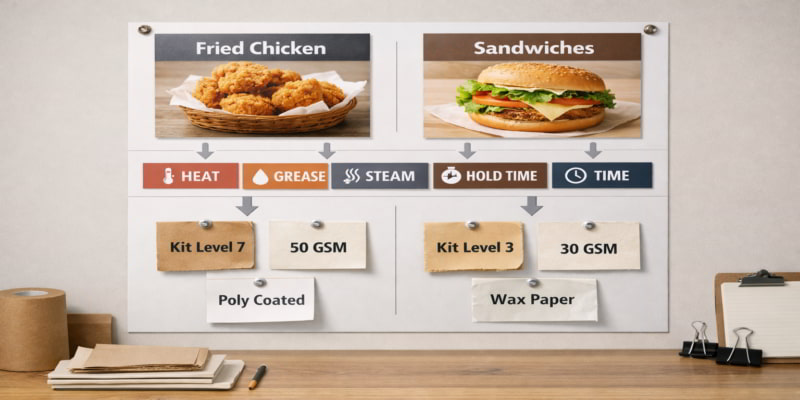
📌 Key Takeaways Wrapper failures happen because paper meets stresses it wasn’t designed for—test your highest-risk menu items before they reach customers. Food service operators, QA managers, and procurement professionals sourcing food-grade packaging paper will find a practical testing framework below, preparing them for the step-by-step protocol that follows. ~ ... Read More
Demystifying TAPPI T 559 for Food Packaging Paper: How to Read Kit Level Thresholds Before Changing Suppliers
📌 Key Takeaways A supplier’s “greaseproof” claim means nothing without a TAPPI T 559 test result you can verify and enforce. A clear threshold beats a vague promise—every time. Procurement managers and QA professionals evaluating food packaging suppliers will find a ready-to-use verification framework here, preparing them for the detailed ... Read More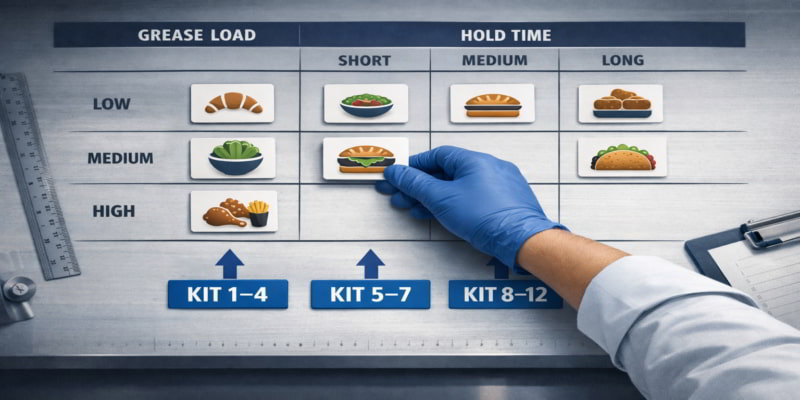
Why Universal Greaseproof Food Packaging Paper Leads to Massive Double-Wrapping Waste
📌 Key Takeaways Universal greaseproof paper fails because different menu items stress wrappers in completely different ways—one specification cannot handle them all. Specify the wrapper to the food’s stress, not to the label on the box. Procurement managers and food service operators sourcing packaging will gain a clear framework for ... Read More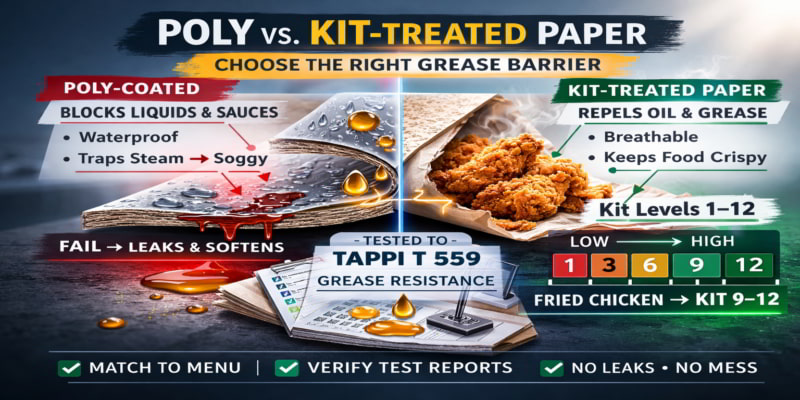
Poly-Coated vs. Kit-Treated (Greaseproof) Paper: Which Grease Barrier is Right for Your Delivery?
📌 Key Takeaways Fixing soggy delivery bags starts with matching the right grease barrier to your food—poly for wet sauces, kit-treated for fried foods. Choose barriers based on what makes food messy—not what makes paper thick. Food service operators and QSR procurement managers troubleshooting delivery packaging failures will find actionable ... Read More
The Hidden Cost of Grease Stains: How Food Packaging Paper Failures Hurt Customer Retention
📌 Key Takeaways Grease stains on food wrappers cost you customers—not because the food is bad, but because stains make people think your kitchen is dirty. Match your wrapper specifications to your menu, and customers stop seeing stains that make them doubt your standards. Food service operators and QSR managers ... Read More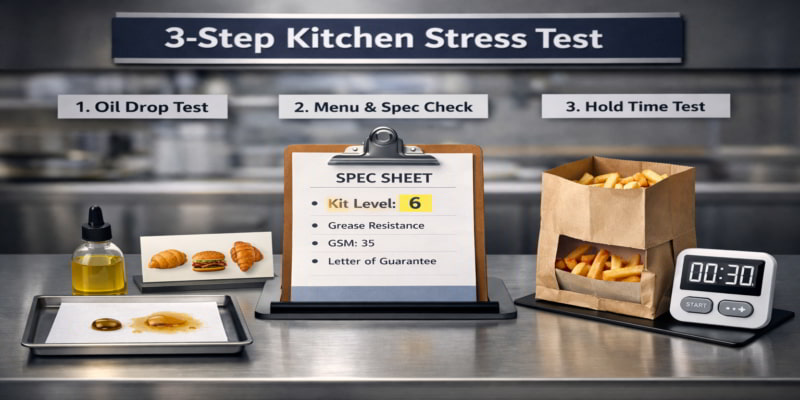
Understanding Food Packaging Paper Failures: The “Soggy Bag” Audit and How to Prevent Leaks
📌 Key Takeaways Greasy, leaking food bags fail because paper thickness (GSM) doesn’t block oil—only a chemical grease barrier (Kit Level) matched to your menu’s fat content and hold time will stop the leak. • Kit Level Beats GSM: Heavier paper still soaks through without a chemical barrier; grease resistance ... Read More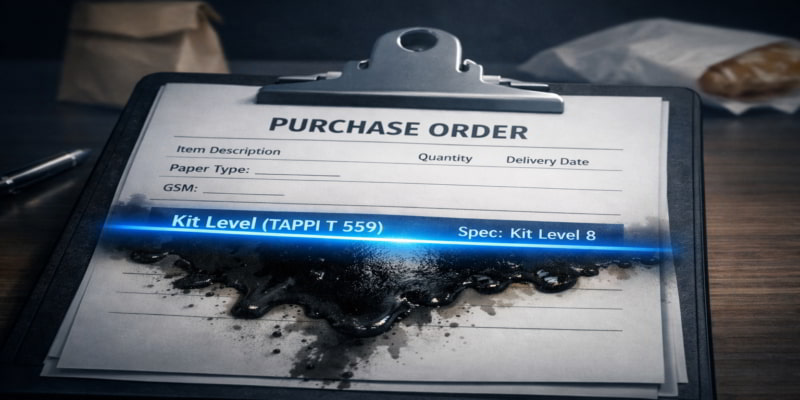
Stop the Leak: How Grease Resistance Ratings (Kit Levels) Protect Food Packaging Paper and Brand
📌 Key Takeaways Grease leaks through food packaging paper because the paper lacks a chemical barrier—not because it’s too thin. Specify the barrier, not the weight—that’s how you stop leaks before they reach customers. Food service operators and procurement managers sourcing delivery packaging will gain clarity on specification gaps here, ... Read More