

📌 Key Takeaways
Sourcing kraft paper across international mills creates an apples-to-oranges comparison problem that delays decisions and introduces compliance risk.
-
- Standardize with a capability matrix: A single-page grid comparing GSM, burst strength, moisture control, and certifications transforms scattered quotes into objective, side-by-side evaluations that cross-functional teams can analyze in days instead of weeks.
- Verify test methods, not just numbers: A 250 kPa burst strength claim means nothing without knowing whether it’s ISO 2758 or TAPPI T 403—different methods can yield different results from identical paper, so require named standards and normalize data before comparing suppliers.
- Certificate integrity checks prevent award-stage failures: Cross-referencing FSC and ISO certificate numbers against official databases before contract execution eliminates the risk of discovering expired or invalid credentials mid-production when your customer demands certified material.
- Moisture variance signals process control quality: Mills maintaining ±0.5% moisture tolerance demonstrate tighter process discipline than those claiming ±2%, directly reducing downstream converting issues like curl, dimensional instability, and adhesion problems.
- Combine lab data with line trials: Specifications win RFPs, but real converting performance—curl behavior, waste rates, bond strength—determines which suppliers earn repeat orders.
For procurement managers, category buyers, and quality assurance teams sourcing kraft paper internationally, these verification steps turn vendor evaluation from guesswork into a defensible, repeatable process.
Three quotes land on your desk. All claim 80 GSM kraft paper. One lists moisture at 6%, another at 8.5%, the third doesn’t mention it. The FSC certificate numbers look legitimate, but you’ve heard stories about expired credentials slipping through. Your team needs a shortlist by Friday, and right now you’re comparing apples to oranges.
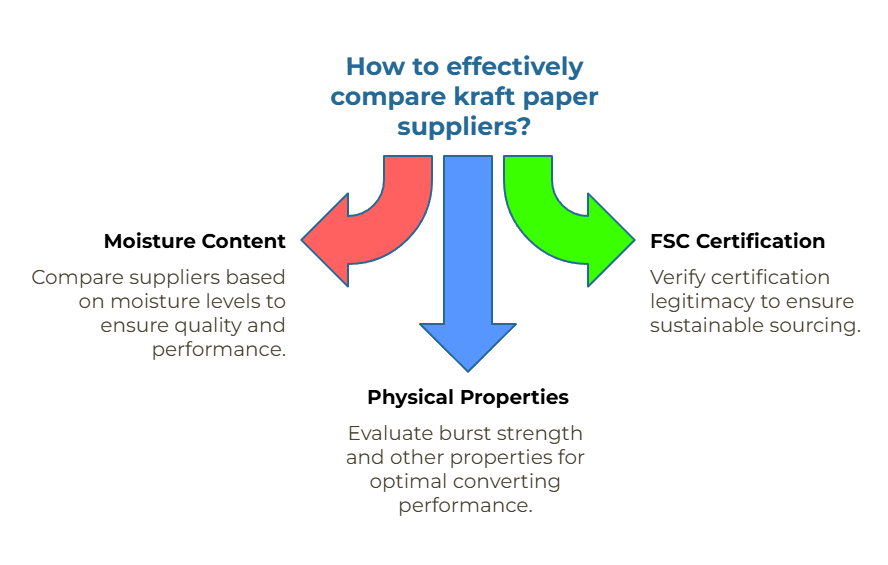
This is the challenge procurement managers face when sourcing kraft paper from mills internationally. Without a standardized comparison framework, even experienced buyers struggle to build defensible shortlists. Different suppliers present specifications in different formats, certification details vary in completeness, and physical properties that directly affect converting performance—like burst strength and moisture control—often get buried in technical sheets.
A capability matrix changes this. It standardizes mill comparison across both physical specifications and documentation criteria, creating an objective grid that cross-functional teams can use to evaluate suppliers on equal footing. By the end of this guide, you’ll have a practical template and a clear process for moving from scattered quotes to a prioritized shortlist backed by verifiable evidence.
Disclaimer: PaperIndex is a neutral marketplace and does not sell market intelligence or pricing indices. This content is for educational purposes only. All pricing and commercial negotiations occur directly between buyers and suppliers.
What to Compare: Physical & Documentation Criteria
A capability matrix standardizes mill comparison across specification and documentation criteria. That standardization prevents decisions based on incomparable quotes—the root cause of award-stage surprises and converting issues downstream.
The matrix should cover four critical dimensions:
GSM Ranges & Tolerance
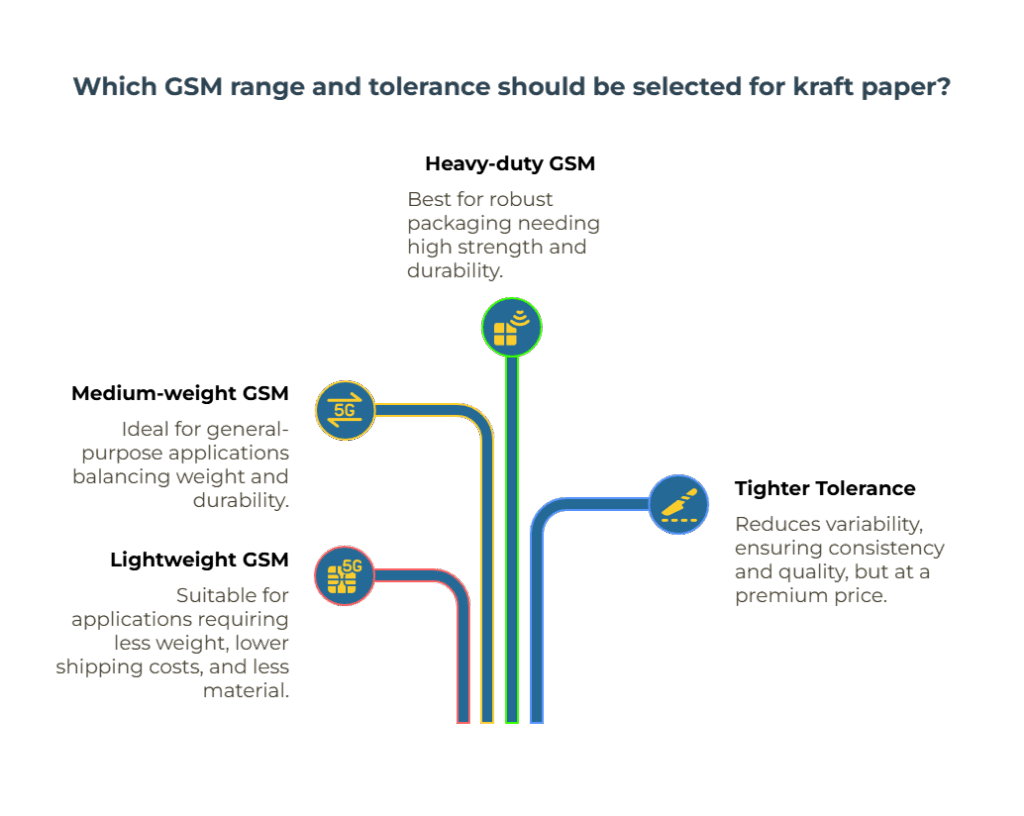
Grammage (grams per square meter) defines the paper’s weight and directly impacts shipping costs, converting performance, and end-use suitability. The international reference standard is ISO 536 for determining grammage, while TAPPI T 410 is the widely used method in North America. For comparability, confirm which standard the lab used and request that the same method be applied across all quotes.
Most kraft paper mills operate within specific GSM bands—typically 40-80 GSM for lightweight grades, 80-150 GSM for medium-weight applications, and 150-250+ GSM for heavy-duty packaging.
The tolerance matters as much as the target. A mill claiming ±5% tolerance on 100 GSM kraft means you could receive material ranging from 95 to 105 GSM. For high-volume converting operations, this variance can affect machine settings, waste rates, and final product consistency. Mills with tighter tolerances (±2-3%) typically command premium pricing but reduce downstream quality issues.
Your matrix should capture both the nominal GSM and the supplier’s stated tolerance. If trials are critical to your evaluation, request a lot-specific certificate of analysis (COA) showing measured GSM versus the nominal target.
BF/BST Benchmarks
Bursting strength test (BST) measures the paper’s resistance to rupture under pressure and is commonly determined by the Mullen method. The international reference is ISO 2758, while TAPPI T 403 is the common North American standard. These metrics correlate directly with downstream converting performance—higher burst strength generally means better performance in bag manufacturing, envelope production, and protective packaging applications.
Some markets also reference bursting factor (BF), a derived index that expresses bursting strength relative to grammage. Because terminology and calculation conventions vary by region and lab method, confirm how each supplier reports BF and always request the underlying BST test report. Treat BF as a helpful directional indicator rather than a substitute for method-referenced burst strength data.
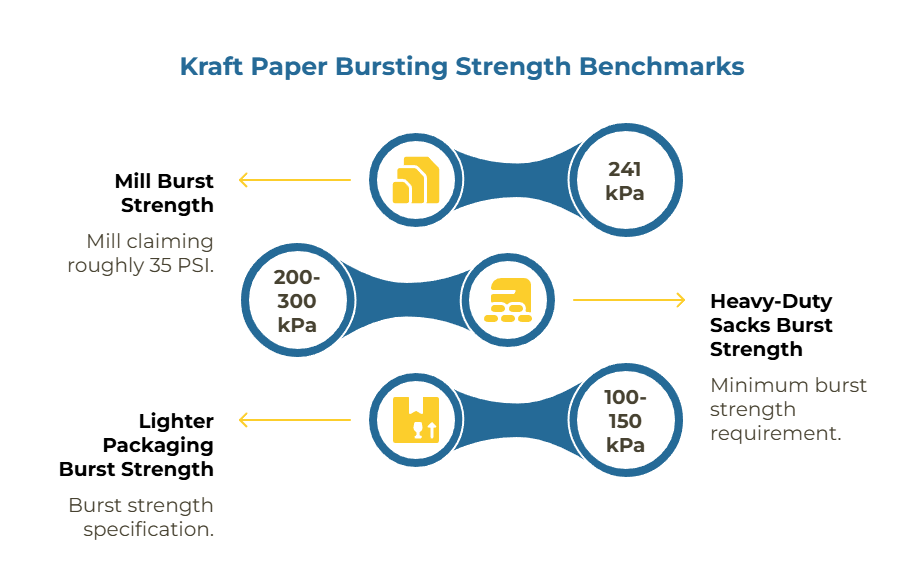
For context, kraft paper used in heavy-duty sacks typically requires a minimum burst strength of 200-300 kPa, while lighter packaging grades may specify 100-150 kPa. Your matrix should specify which test standard you’re requesting and record both the method used and the measured BST value.
When comparing quotes from mills using different standards, you’ll need to normalize values. The conversion is approximately 1 PSI = 6.895 kPa. A mill reporting 35 PSI burst strength is claiming roughly 241 kPa, placing them in the mid-range for typical kraft packaging applications. For mixed testing scenarios where one supplier uses ISO and another uses TAPPI, prioritize side-by-side trials or request that one party retest to the other’s method for true parity.
Moisture Control Targets
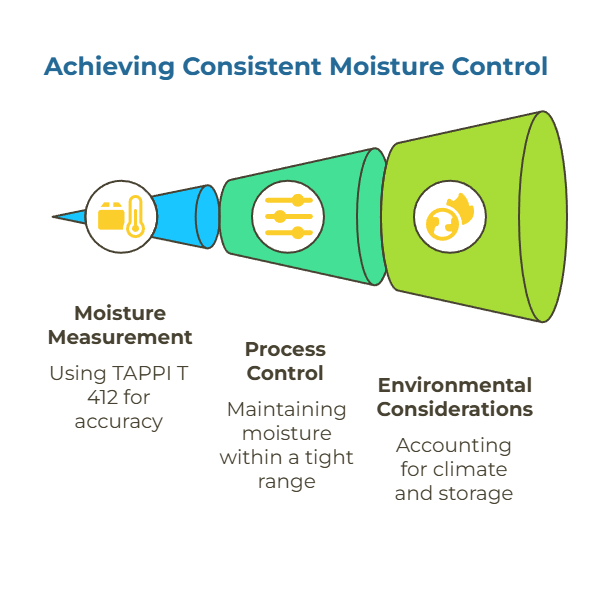
Moisture content affects everything from printing quality to shelf stability. Most kraft paper specifications target 6-8% moisture content, but the control range—how tightly the mill maintains that target—varies significantly.
A common laboratory method for measuring moisture is TAPPI T 412 (oven-dry determination). Some suppliers also state the equilibrium conditions (temperature and relative humidity) at which they conditioned samples before testing.
BF/BST and moisture control correlate with downstream converting performance. Normalized targets lower claims and rework rates because they force consistency at the manufacturing stage rather than leaving variance to be discovered during production runs. A mill that maintains 7% ±0.5% moisture demonstrates better process control than one claiming 7% ±2%, even though both hit the nominal target.
Your matrix should capture the target moisture range, the test method used, and whether the supplier provides in-process monitoring through online sensors or routine lab checks. Mills in humid regions may struggle to achieve consistent low-moisture targets without climate-controlled storage. This isn’t necessarily disqualifying, but it’s a factor worth noting—especially if your converting operations are sensitive to moisture variation.
When you conduct trials, document the storage conditions. The same sheet can behave differently in a dry winter warehouse versus a humid environment during monsoon season. That’s normal physics, not necessarily a quality lapse.
FSC/ISO Certifications & Documentation Integrity Checks
Certification claims are only as valuable as their verifiability. Certificate integrity checks reduce award-stage compliance risk by forcing verification of identifiers, issuing bodies, and expiration dates before you commit to a supplier relationship.
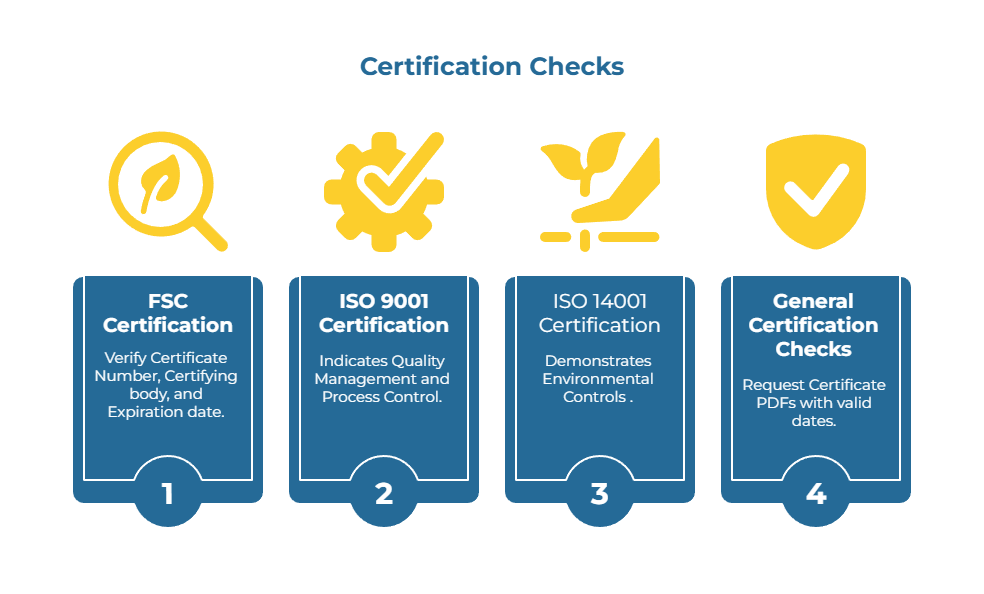
For FSC (Forest Stewardship Council) Chain of Custody certification, request the certificate number, the certifying body (such as SGS or Bureau Veritas), and the expiration date. Cross-reference these details against the FSC certificate database to confirm validity. A legitimate certificate includes a unique identifier, the certified entity’s legal name, and a clear chain-of-custody statement. Confirm whether the specific mill or the trader holds the certification—this distinction matters for your compliance documentation.
ISO 9001 certifications signal a structured approach to quality management and process control. While they don’t guarantee a specific paper property, they indicate systematic approaches to reducing variation and driving continual improvement. ISO 14001 certifications demonstrate systematic environmental controls around emissions, waste, and resource use.
For all certifications, request certificate PDFs with valid-through dates rather than accepting logos in slide decks. The certificate should reference the specific standard version, the accredited registrar, and the scope of certification. Generic claims like “ISO certified” without supporting documentation are red flags during vendor evaluation.
The Capability Matrix
Here’s a one-page template you can use immediately. The matrix includes one sample row to show how a completed evaluation looks in practice.
| Criterion | Mill A (Example) | Mill B | Mill C |
| GSM Range | 80-200 GSM | ||
| GSM Tolerance | ±3% | ||
| GSM Test Method | ISO 536 | ||
| BST Test Method | ISO 2758 | ||
| BST Value (kPa) | 250-280 | ||
| BF (if reported) | 32-38 | ||
| Moisture Test Method | TAPPI T 412 | ||
| Moisture Target | 7% | ||
| Moisture Range | ±0.5% | ||
| FSC Certified? | Yes | ||
| FSC Cert # | SGS-COC-123456 | ||
| FSC Expiry | Dec-25 | ||
| FSC Verified? | ✓ (checked Jan 2025) | ||
| ISO 9001? | Yes | ||
| ISO Cert # | ISO9001-2024-XYZ | ||
| ISO Expiry | Mar-26 | ||
| Lead Time | 45-60 days | ||
| MOQ (MT) | 20 MT | ||
| Trial Notes | Low curl, good adhesion |
How to Use This Matrix:
Start by sending the blank template to shortlisted mills as part of your RFQ package. Request that suppliers complete it directly, providing certificate numbers and supporting documentation. This approach shifts the verification burden upstream—mills that can’t produce valid certificates self-select out of your process.
Normalize test methods first. If methods differ across suppliers, ask one party to retest using the other’s method or run your own trials before drawing final conclusions. Pair specifications with evidence by logging the COA date, lot number, lab name, and conditioning conditions alongside each entry.
For mills that submit completed matrices, perform the verification steps in this sequence: First, confirm FSC and ISO certificates against official databases. Second, request tolerance specifications in writing, particularly for GSM and moisture control. Third, ask for recent test reports (ideally from the past 90 days) that demonstrate their stated burst strength performance.
The matrix becomes most valuable during cross-functional review meetings. When procurement, quality assurance, and operations teams can review suppliers side-by-side using identical criteria, conversations shift from subjective preferences to objective comparisons.
Track trial outcomes by adding notes on curl behavior, print quality, bond strength, and waste rate from your line runs. That real-world performance data becomes the ultimate truth.
You can use the capability matrix template to customize for your specific requirements and explore kraft paper manufacturers to begin your evaluation process.
Interpreting Results: Pros/Cons, Trade-offs & Risk Signals
Once your matrix is populated, the real analysis begins. Raw data means little without context about what the numbers actually signal for your operation.
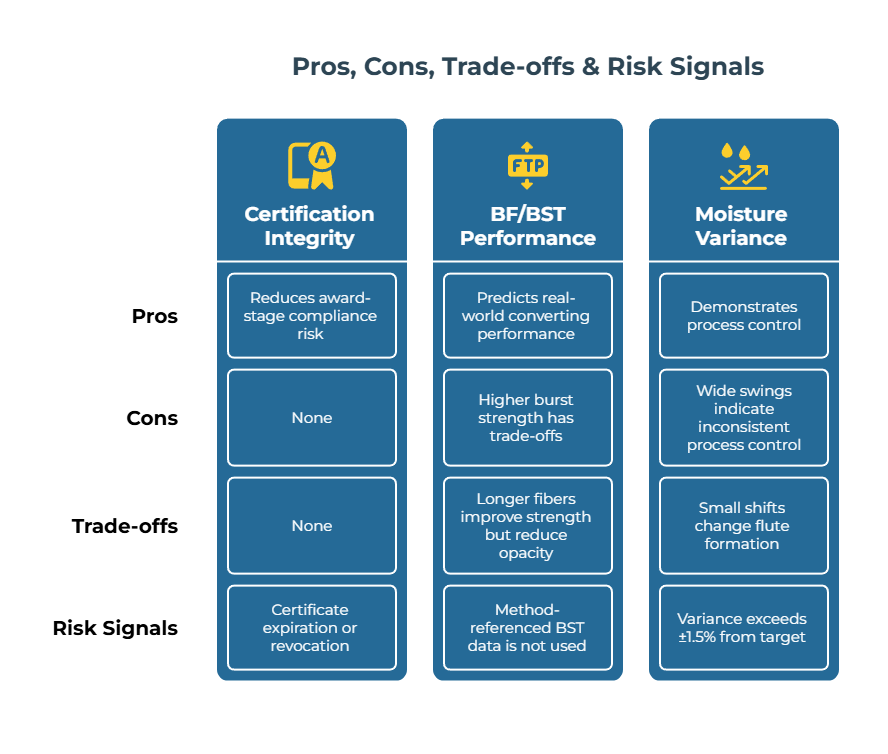
Certification Integrity as Risk Mitigation
Certificate integrity checks reduce award-stage compliance risk. This happens because forcing verification of identifiers, issuing bodies, and validity periods surfaces potential issues before contract execution, not after your first shipment arrives.
Consider the practical impact: If your end customer requires FSC-certified material and you discover mid-contract that a mill’s certificate expired or was revoked, you face production delays, potential contractual penalties, and the scramble to find an alternative supplier. The ten minutes spent verifying a certificate number against the FSC database eliminates this entire category of risk.
Quality management certifications like ISO 9001 and environmental certifications like ISO 14001 indicate process discipline and documentation practices. They don’t guarantee perfect outcomes, but they signal organizational maturity that correlates with supplier reliability and often results in tighter variation and stronger documentation—which simplifies audits and reduces surprises.
BF/BST Performance Correlation
Burst strength and burst factor aren’t abstract lab values—they predict real-world converting performance. Higher burst strength typically means the paper can withstand more stress during automated bag-filling operations, envelope sealing processes, and high-speed printing runs.
However, this relationship has trade-offs. Mills achieve higher burst strength through longer fiber length, increased refining, or chemical additives. Each approach affects other properties. Longer fibers improve strength but may reduce opacity. Increased refining boosts burst strength but can decrease tear resistance. Chemical additives enhance specific properties but may introduce environmental or food-safety considerations.
Your matrix should capture not just the burst strength value but the test method used to achieve it. When you’re comparing suppliers, anchor your decisions on method-referenced BST data and use BF as supplemental context rather than treating it as an absolute standard.
Moisture Variance as a Red Flag
Moisture control becomes a red flag when variance exceeds ±1.5% from the stated target. Wide moisture swings indicate inconsistent process control, inadequate climate management, or storage issues that will transfer directly to your converting operations.
For printing applications, high moisture content (above 9%) can cause paper cockling, ink absorption issues, and dimensional instability. For laminating or coating processes, moisture extremes affect adhesion and cure rates. Converting equipment calibrated for 7% moisture will produce different results with 9% material—even if both fall within a mill’s stated “acceptable range.”
This is where tight tolerances become a competitive differentiator. A mill maintaining 7% ±0.5% moisture isn’t just hitting a target; they’re demonstrating process control that translates to predictable performance in your facility. Small shifts in moisture can change flute formation, cause curl, or alter die-cutting and folding performance.
Common Pitfalls & How to Avoid Them
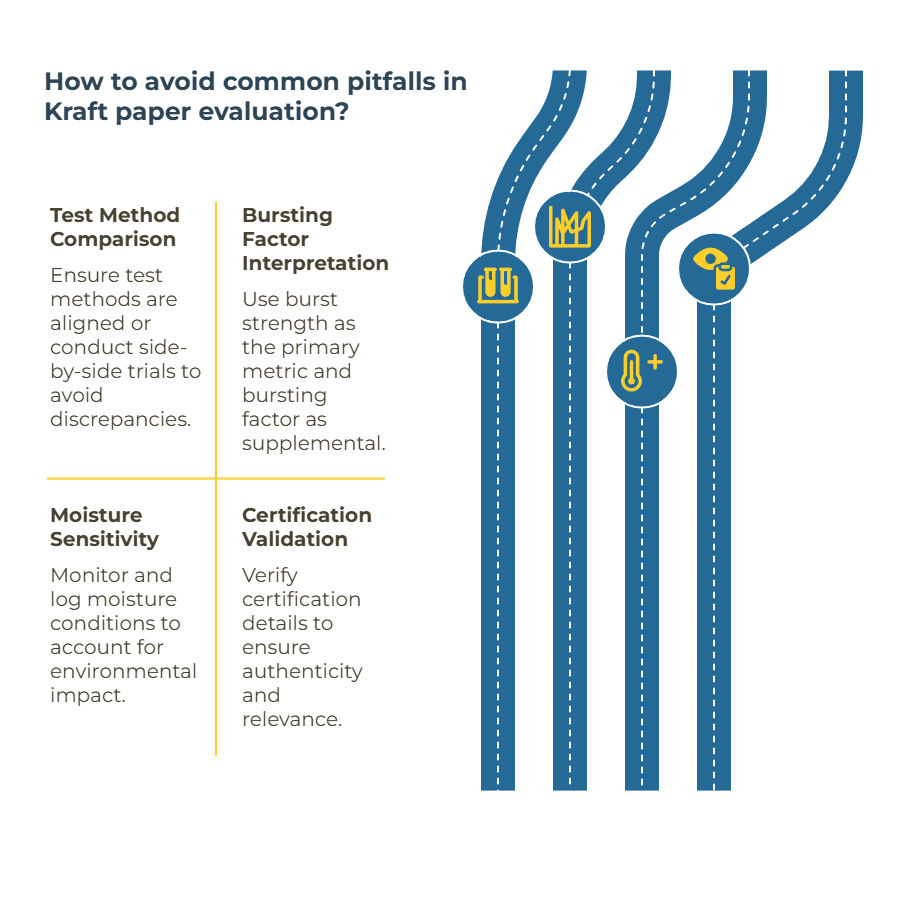
Even with a capability matrix in hand, certain mistakes can derail your evaluation process. Here are the most common traps and practical remedies.
Comparing Different Test Methods as Equivalent
A burst strength value from ISO 2758 isn’t always directly comparable to one from TAPPI T 403, even though both measure similar properties. Test method variations in sample preparation, conditioning, and measurement technique can produce different results from identical paper.
The remedy: Require the test method alongside every numerical specification. When quotes use different standards, don’t assume 1-to-1 equivalence. Instead, align on a single standard for retests or conduct side-by-side trials under controlled conditions.
Treating Bursting Factor as Absolute Truth
Bursting factor is a calculated index that can be helpful for rough comparisons, but its calculation conventions vary by lab and region. Some labs derive it from burst strength divided by grammage; others apply regional adjustments or use proprietary formulas.
The remedy: Anchor all mill comparisons on method-referenced burst strength (BST) values, and use bursting factor only as supplemental context. When a supplier emphasizes BF over BST, request the underlying test report that shows the actual measured burst strength.
Ignoring Moisture’s Environmental Sensitivity
A sheet with perfect moisture content at the mill can behave differently after weeks in your warehouse, depending on temperature and humidity conditions. This isn’t necessarily a mill quality issue—it’s physics.
The remedy: Log the moisture measurement method (such as TAPPI T 412), the lab’s conditioning environment, and your own warehouse conditions during trials. When performance varies from expectations, recheck moisture content in your facility before assuming the mill shipped out-of-spec material.
Over-Valuing Certification Logos Without Validation
A logo on a brochure or website proves nothing. Certificates expire, scopes change, and mills sometimes display certifications held by parent companies or trading partners rather than the manufacturing facility itself.
The remedy: Request actual certificate PDFs with visible certificate numbers, issuing bodies, valid-through dates, and scope statements. Verify FSC certificates against the official database and confirm that ISO certificates reference the specific mill location you’re sourcing from, not just the corporate headquarters.
Frequently Asked Questions
What’s the practical difference between bursting factor and bursting strength?
Bursting strength (BST) is the measured resistance to rupture using a specified test method like ISO 2758 or TAPPI T 403. Bursting factor (BF) is a calculated index that expresses strength relative to grammage, often used in certain markets for quick comparisons.
Because calculation conventions for BF can differ by lab and region, use it directionally rather than as your primary decision criterion. Anchor supplier evaluations on method-referenced burst strength data, verify through trials, and treat bursting factor as supplemental context.
What GSM should be used for shipping sacks or heavy wraps?
There’s no universal “best” number—suitable grammage depends on the sack design, number of plies, contents, handling requirements, and environmental exposure. A practical approach is to define the job requirements first (contents weight, drop-test specifications, humidity exposure), then compare candidate papers using burst strength to a common test method, GSM tolerance specifications, and moisture control data, followed by controlled line trials.
This reflects standard converting practice: start with functional requirements, then validate candidates through testing rather than relying on a single GSM rule of thumb.
Do ISO and FSC certifications guarantee better sheet performance?
They indicate process discipline and traceable sourcing practices, not specific physical property values. In practice, certified mills often show tighter process variation and stronger documentation systems—which simplifies your compliance audits and reduces operational surprises—but you should still validate actual performance through COA review, test method verification, and line trials.
Certifications are valuable risk-mitigation signals, not substitutes for performance verification.
From Matrix to Shortlist: Next Actions
The matrix is a tool, not a decision. Converting populated data into a prioritized shortlist requires a structured approach that aligns cross-functional stakeholders around objective criteria.
Align Stakeholders Using an Objective Grid
Schedule a shortlist review meeting with representatives from procurement, quality assurance, operations, and finance. Distribute the completed capability matrix at least 48 hours in advance so each function can review from their perspective.
During the meeting, work through the matrix column by column (mill by mill) rather than row by row (criterion by criterion). This approach keeps the discussion focused on holistic supplier fit rather than getting bogged down in individual specification debates.
Quality teams will naturally gravitate toward certification integrity and burst strength performance. Operations will focus on lead times, minimum order quantities, and tolerance levels. Finance will evaluate commercial terms and total landed cost. The capability matrix gives everyone a common reference point, making it easier to surface and resolve competing priorities.
Verification Workflow
Before finalizing your shortlist, execute this five-step verification sequence:
-
- Request Current COAs: Ask for certificates of analysis for the offered grade and lot, listing GSM, burst strength (with test method), and moisture determination method. Confirm the COA is recent (ideally within 90 days) and from a recognized testing lab.
- Confirm Test Methods Up Front: Specify your required standards in your RFQ (for example, “Report BST to ISO 2758 and grammage to ISO 536”) so numbers are directly comparable across all quotes.
- Validate Certificates: Request certificate PDFs showing valid-through dates for FSC and ISO certifications. Cross-reference FSC certificate numbers against the official FSC database and verify that ISO certificates cover the specific manufacturing location, not just corporate headquarters.
- Run Controlled Line Trials: Test candidate materials using your typical adhesives, inks, and climate conditions. Log performance data including curl behavior, waste rates, and any processing faults by lot number.
- Decide with Combined Data: Use both laboratory specifications and line performance to make your final selection. Specifications help you win RFPs; actual converting performance wins repeat orders.
Tie Cadence to ETD Predictability
One often-overlooked criterion: estimated time of departure (ETD) predictability. A mill with slightly wider tolerances but rock-solid delivery windows may be preferable to one with perfect specifications but erratic shipping schedules, especially if your converting operations run just-in-time.
Ask shortlisted mills for their on-time ETD performance over the past six months. Mills with vertically integrated logistics or dedicated export relationships typically show better predictability than those relying on spot container bookings. This data point doesn’t fit neatly in the capability matrix but deserves discussion during shortlist finalization.
For background on normalizing quotes across different trade terms, see comparing quotes across Incoterms. For total cost analysis, the landed-cost framework provides methods to compare door-delivered pricing across multiple suppliers.
If you’re ready to begin building your shortlist, you can explore kraft paper manufacturers or submit an RFQ to receive quotes from multiple suppliers.
From Confusion to Clarity: Building Defensible Shortlists
The capability matrix resolves the apples-to-oranges confusion that has long plagued kraft paper procurement. By standardizing comparison across physical specifications and documentation criteria, it transforms vendor evaluation from a subjective exercise into an objective process.
Three months from now, when your team faces the next sourcing decision, you won’t be starting from scratch. The matrix becomes a living tool—refined with each sourcing cycle, updated as standards evolve, and improved based on actual converting performance. Teams that embed this framework into their procurement workflow report faster decision cycles, fewer award-stage surprises, and stronger alignment between procurement, quality, and operations.
The real value isn’t just in making better initial selections. It’s in building institutional memory about what drives supplier performance in your specific application, creating a foundation for continuous improvement in sourcing strategy.
Specifications tell part of the story; test methods, moisture control, and documented proof tell the rest. Build your capability matrix once, insist on named standards, and decide using both lab data and line performance. Clear. Comparable. Defensible.
Download the Capability Matrix Template to begin standardizing your kraft paper mill evaluations today.
Our Editorial Process
Our expert team uses AI tools to help organize and structure our initial drafts. Every piece is then extensively rewritten, fact-checked, and enriched with first-hand insights and experiences by expert humans on our Insights Team to ensure accuracy and clarity.
About the PaperIndex Insights Team
The PaperIndex Insights Team is our dedicated engine for synthesizing complex topics into clear, helpful guides. While our content is thoroughly reviewed for clarity and accuracy, it is for informational purposes and should not replace professional advice.