

The Golden Age of Fiber: How the New EU Packaging Laws Are Changing the Game for Waste Paper Buyers
The regulatory framework governing packaging in the European Union is undergoing its most profound structural transformation in three decades. On February 11, 2025, the Packaging and Packaging Waste Regulation (PPWR) officially entered into force, establishing the structural framework to replace fragmented national rules with a directly applicable, EU-wide mandate starting ... Read More
The New Paper Trail: How EU Regulation 2025/40 (PPWR) Redefines the Waste Paper Market
A Regulatory Seismic Shift The landscape of European secondary raw material procurement is undergoing its most significant structural transformation in decades. The EU Packaging and Packaging Waste Regulation (PPWR), designated as Regulation 2025/40, entered into force with a series of critical safety and operational compliance protocols taking effect on 12 ... Read More
The Upcoming EU PPWR Compliance Deadline: Send This Email to Your Paper Packaging Suppliers Now
If your business exports goods to the European Union or operates within it, the compliance countdown is well underway. The EU’s sweeping Packaging and Packaging Waste Regulation (PPWR) is moving toward its primary application date, which takes effect 18 months following its final publication in the Official Journal of the ... Read More
The Strategic Risk of Delaying Your Folding Carton Packaging Transition
📌 Key Takeaways Waiting to switch packaging materials feels safer, but it actually makes the eventual change harder and riskier. Control your timeline now, or external deadlines will control it for you. Packaging and procurement teams preparing for a plastic-to-folding carton transition will gain a clear framework for building internal ... Read More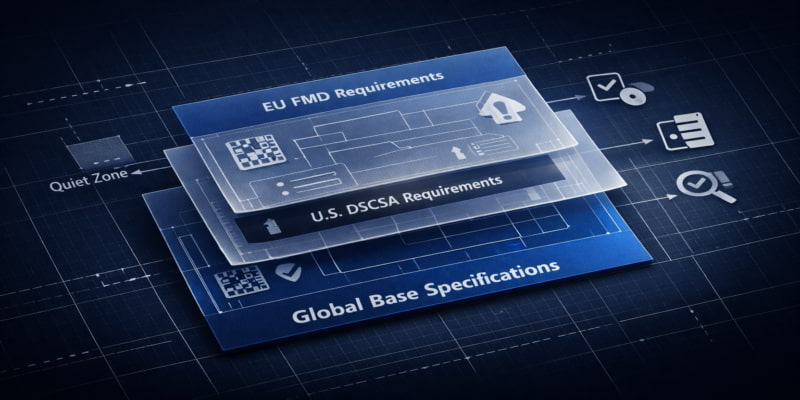
Decoding DSCSA vs FMD: How Regional Mandates Change Your Folding Carton Specifications
📌 Key Takeaways U.S. and EU drug packaging rules stress different parts of the folding carton—so one “global” specification invites confusion, not compliance. One shared foundation plus documented regional overlays beats a single vague global specification every time. Pharmaceutical packaging engineers, procurement managers, and QA leads managing multi-market carton programs ... Read More
Stop Skipping Compliance: Why Ignoring Folding Carton Specifications Leads to Recalls
📌 Key Takeaways Skipping folding carton specification reviews doesn’t save time—it transfers risk to QA, regulatory, and brand teams who’ll pay for it later. Specification discipline isn’t friction—it’s the checkpoint that keeps preventable failures out of your supply chain. QA managers, packaging engineers, and procurement leads at food and beverage ... Read More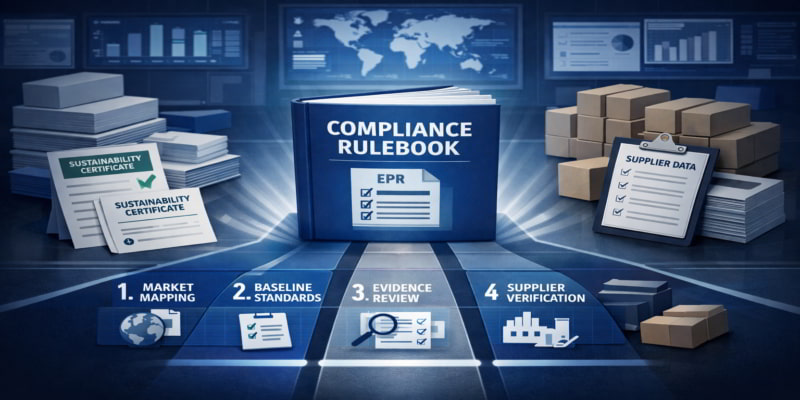
The Compliance Problem in Global Sourcing: A Methodology-First Approach for Sustainable Folding Cartons
📌 Key Takeaways Sustainable packaging compliance starts with knowing what the law requires—not with what suppliers claim to offer. Method beats marketing when compliance is on the line. Packaging buyers and sustainability managers navigating global EPR requirements will gain a clear verification framework here, preparing them for the detailed four-phase ... Read More
Why “FDA Compliant” Isn’t Enough: The Hidden Gaps in Food-Grade Packaging Paper Testing Protocols
📌 Key Takeaways An FDA compliance certificate proves your packaging paper is legally safe to use—it doesn’t prove the paper will actually stop grease from soaking through during a busy lunch rush. Compliant means allowed. Validated means it works. QA managers and procurement leads sourcing food packaging paper will find ... Read More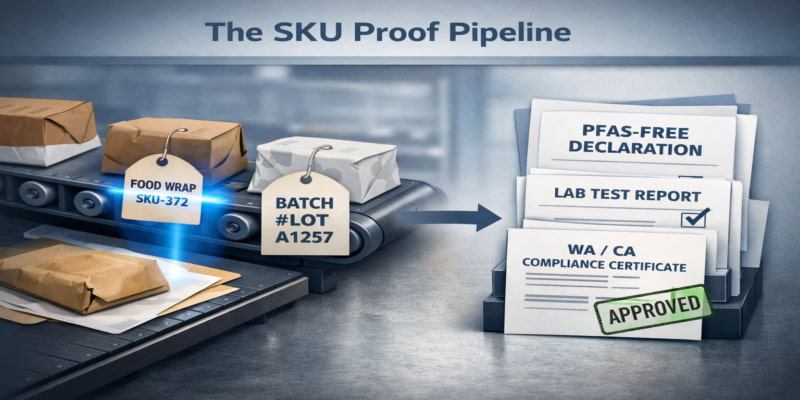
Food Packaging Paper and PFAS Regulations: What Small Business Owners Need to Clearly Understand About the New Rules
📌 Key Takeaways PFAS rules are changing fast, and “food safe” labels don’t prove your packaging is compliant—only supplier documentation does. Build a verification habit that survives rule changes, not a one-time compliance fix. Small business owners and restaurant operators sourcing food packaging will find a ready-to-use supplier verification script ... Read More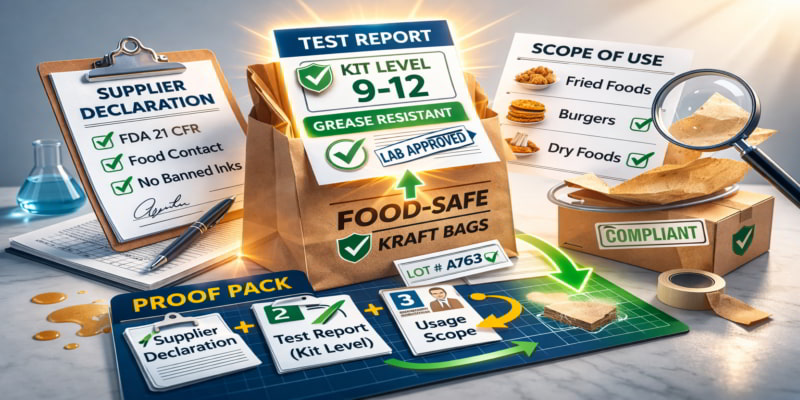
The “Brown Kraft Paper” Trap and Why Generic Bag Paper May Not Be FDA Compliant
📌 Key Takeaways Brown Kraft paper bags are not automatically food safe—proof comes from documentation that matches your actual use conditions, not from color or thickness. Documentation you can retrieve in minutes beats hoping your packaging holds up. Food service operators and procurement managers sourcing takeout packaging will gain a ... Read More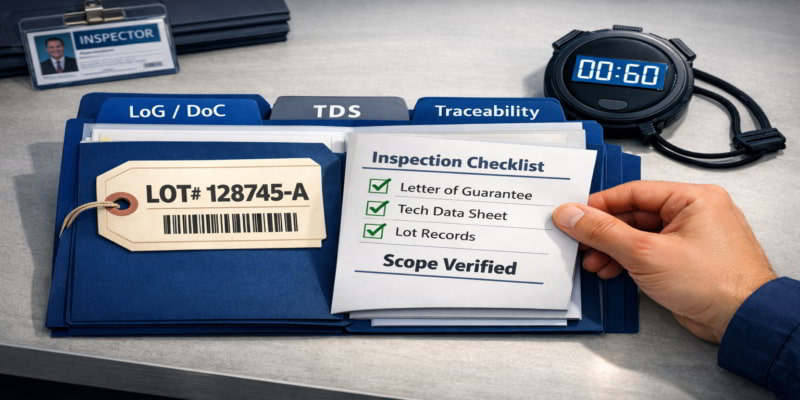
Audit-Ready Food Packaging Paper: Understanding FDA & ISEGA Safety Standards for Food Service
📌 Key Takeaways Audit-ready food packaging paper means having proof documents that match how you actually use the packaging—not just a “food safe” label. Proof that matches reality beats paperwork that looks official. Food service operators and procurement managers sourcing food packaging paper for hot or greasy foods will find ... Read More
Migration Testing: How to Read Your Food Packaging Paper Supplier’s Technical Data Sheet
📌 Key Takeaways A supplier’s “FDA compliant” label means nothing if the test conditions don’t match how you actually use the packaging. Test conditions prove compliance—not labels or claims. Food service operators and procurement managers sourcing packaging for hot, greasy, or acidic menu items will find a ready-to-use verification checklist ... Read More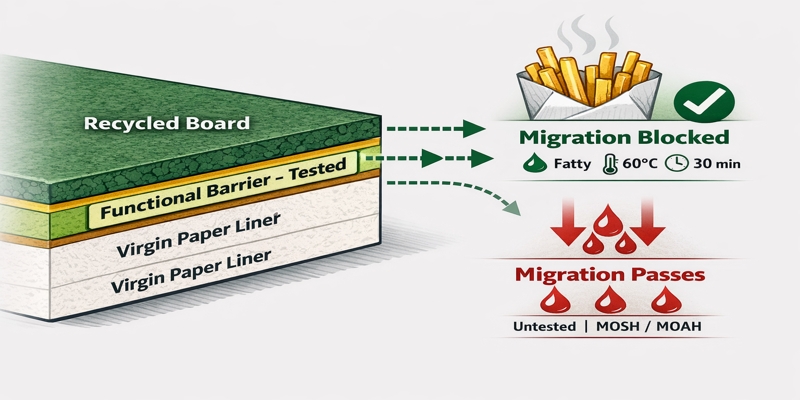
Recycled vs. Virgin Pulp: Understanding Migration Risks in Food Packaging
📌 Key Takeaways Choosing recycled or virgin paper for food packaging depends on what touches food, how hot and greasy the food is, and whether you can prove safety with matching test reports. Proof that matches reality beats claims that sound good on paper. Procurement managers and food-service operators balancing ... Read More
FDA vs. ISEGA for Takeout Food Packaging Paper: What the Acronyms Really Mean (and What to Ask Your Supplier)
📌 Key Takeaways FDA and ISEGA are signals pointing to different regulatory systems—neither automatically means your food packaging paper is safe for your specific use. Documentation survives audits; marketing claims do not. Restaurant owners and food service buyers managing takeout food packaging paper compliance will gain clear verification questions here, ... Read More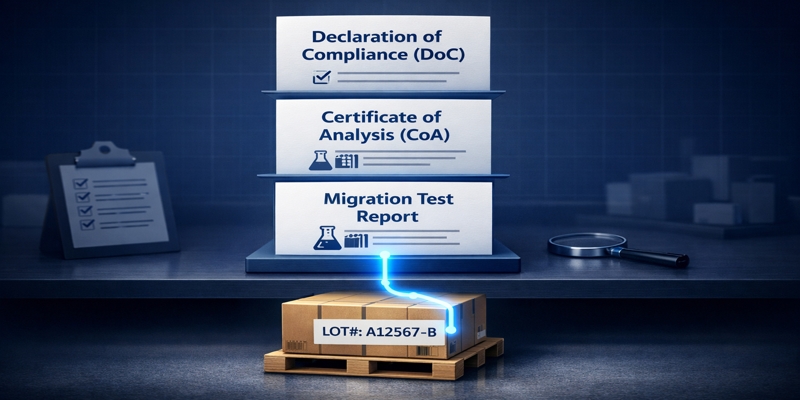
The Compliance Shield: How to Audit Your Food Packaging Paper Suppliers for FDA & ISEGA Safety
📌 Key Takeaways A compliance certificate proves testing happened—not that the testing covers your actual use case. Verified suppliers protect your supply chain—hopeful assumptions do not. Procurement managers and compliance professionals auditing food-contact packaging suppliers will gain a repeatable verification method here, preparing them for the detailed workflow that follows. ... Read More
Navigating Specific Migration Limits (SML): A Global Compliance Workflow for Food-Grade Packaging Paper
📌 Key Takeaways A “pass” on one migration test report may be irrelevant—or misleading—in another jurisdiction because Specific Migration Limits (SML) compliance depends on matching test conditions to actual use. Market logic, conditions of use, and material structure must align—when that triangle is explicit, audits stay focused. QA managers and ... Read More
Invoice/Label Mismatches in Pharma Logistics: How to Catch Them Before They Trigger Quarantine
📌 Key Takeaways Invoice/label mismatches break traceability chains in pharma logistics, triggering quarantine holds until documentation integrity can be restored through systematic verification. Traceability breaks caught at receiving are inconveniences; breaks caught at audit are compliance findings. Procurement managers and quality teams in regulated industries will find the five-step response ... Read More
Food-Grade Certification Standards for Delivery Packaging Bags
📌 Key Takeaways Food-grade certification means nothing without documented proof of compliance aligned to your destination market and specific use case. Documentation scope and verification discipline prevent compliance failures that price negotiations cannot fix. Procurement teams sourcing food delivery packaging will gain immediately usable checklists and copy-paste supplier questions here, ... Read More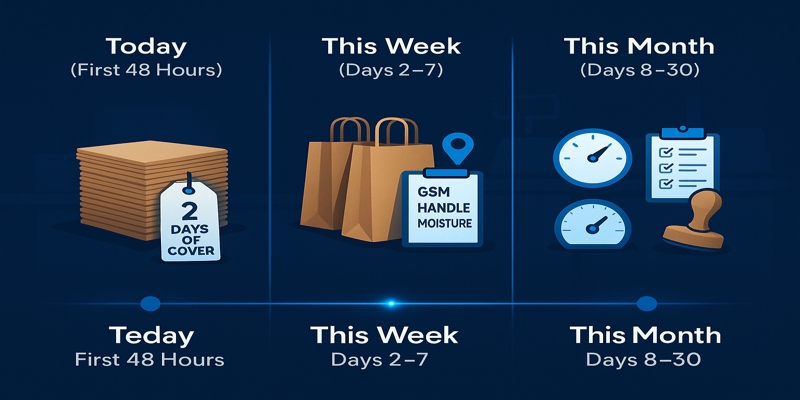
Plastic Ban Survival Guide: Transitioning to Paper Without Disrupting Operations
📌 Key Takeaways Retail bag transitions succeed when operations are protected before products are perfected. Operations continuity protects brand credibility when packaging changes. Retail managers and store owners facing plastic ban deadlines will gain a phased action plan here, preparing them for the detailed implementation timeline that follows. Switching bags ... Read More