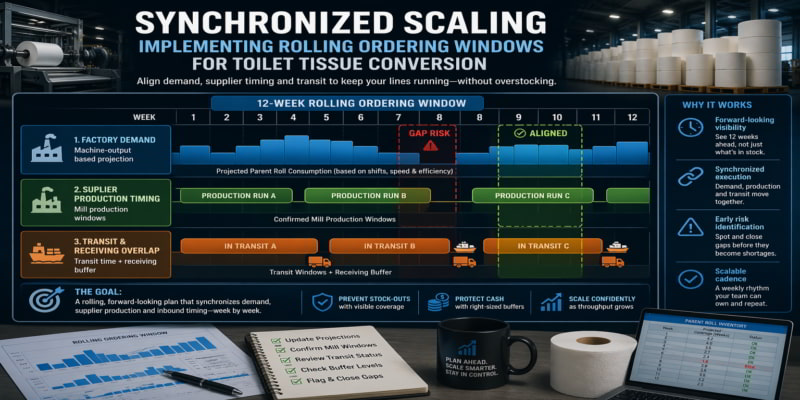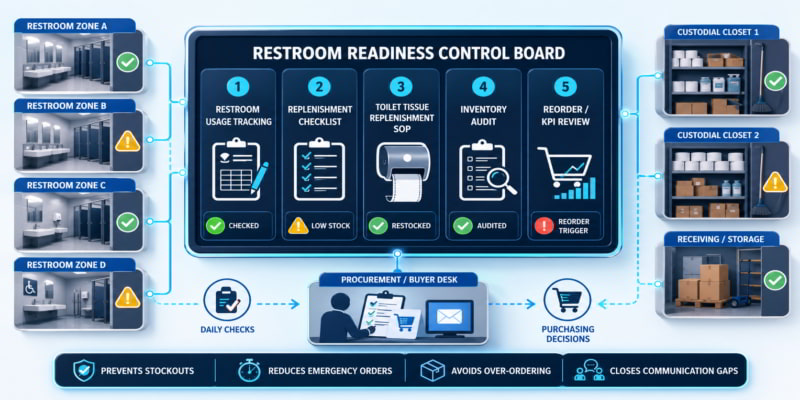
How to Build a Toilet Tissue Replenishment Documentation System for Away-From-Home (AFH) Facilities
📌 Key Takeaways Writing down how your facility tracks, restocks, and orders toilet tissue turns guesswork into reliable, data-driven purchasing. The system that prevents empty dispensers is not software — it is simple records, clear responsibilities, and regular follow-through. Facility managers, custodial supervisors, and procurement staff responsible for restroom supplies ... Read More
How to Build a Toilet Tissue Stockout Prevention Plan for Commercial Facilities
📌 Key Takeaways Most toilet tissue stockouts happen because products sit in the wrong place, not because the building ran out. A stocked restroom signals competence — an empty dispenser signals neglect. Facility managers, custodial supervisors, and commercial procurement leads will gain a ready-to-use prevention framework here, preparing them for ... Read More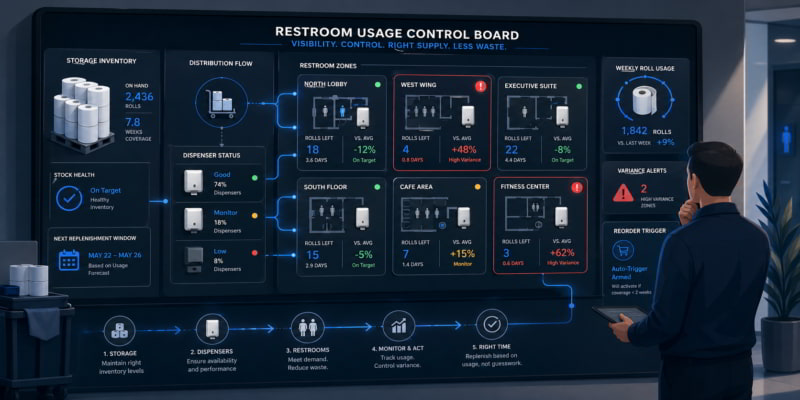
How AFH Facilities Can Reduce Toilet Tissue Waste, Overstock, and Replenishment Costs
📌 Key Takeaways Tracking how toilet tissue actually gets used — not just what you ordered — is the key to cutting restroom supply costs. Buy the right amount, use it fully, and let usage data — not habit — drive every restroom supply decision. Procurement teams and facilities managers ... Read More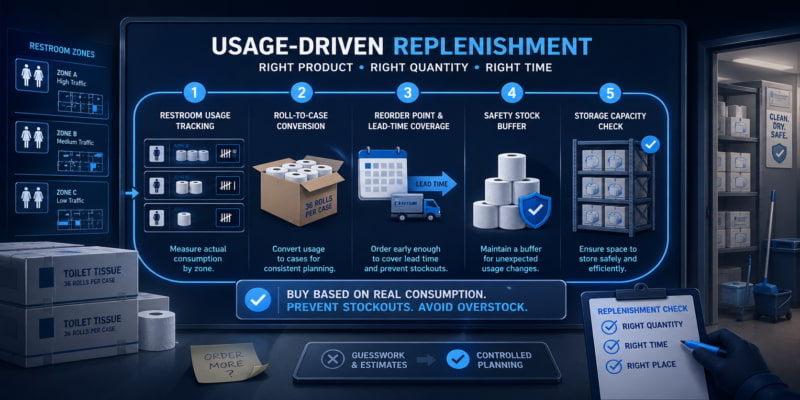
Commercial Toilet Tissue Procurement Strategy: Aligning Order Quantities With Actual Facility Usage
📌 Key Takeaways Buying toilet tissue based on real usage—not past invoices or gut feelings—prevents both stockouts and wasted storage space. Consistent restrooms start with procurement plans built on real numbers, not sticky-note guesses. Facility managers, office coordinators, and procurement teams responsible for restroom supplies will gain a practical ordering ... Read More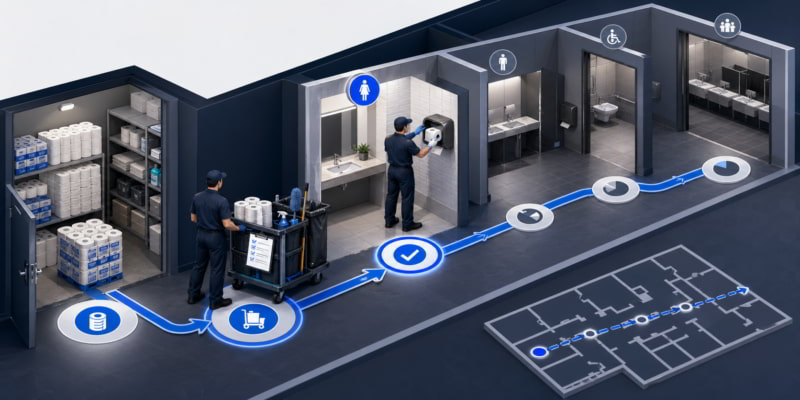
How to Align Toilet Tissue Replenishment with Commercial Restroom Servicing Workflows
📌 Key Takeaways Toilet tissue runs out when refilling isn’t built into daily custodial routes — not because the supply closet is empty. Stock on the shelf only matters when it reaches the dispenser before the guest does. Facilities managers, custodial supervisors, and operations teams overseeing commercial restrooms will find ... Read More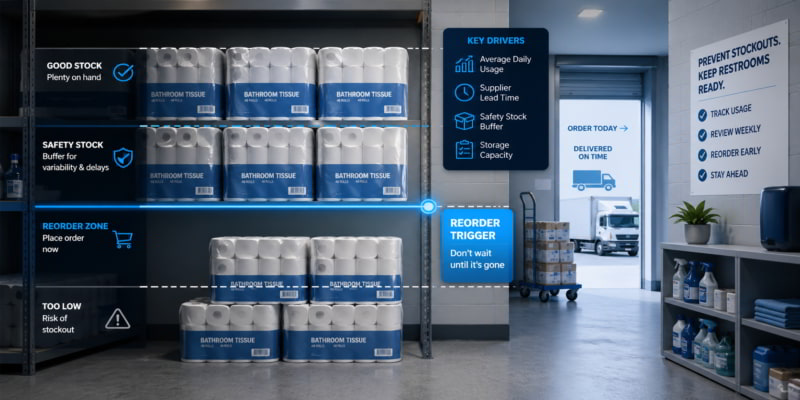
How to Set AFH Toilet Tissue Reorder Points and Replenishment Cycles
📌 Key Takeaways A simple reorder point — based on actual usage and supplier delivery time — prevents both empty dispensers and overstuffed closets. Clear reorder rules and consistent counting are the only two things standing between reactive scrambling and predictable restroom supply. AFH procurement buyers and facility managers responsible ... Read More
How to Forecast Commercial Toilet Tissue Usage Before Stockouts Occur
📌 Key Takeaways AFH toilet tissue stockouts are a forecasting problem, not a product problem — and a simple usage-to-reorder model can prevent most of them. Plan the reorder before the shelf goes empty — not after. Procurement managers and facilities teams responsible for AFH restroom supply will find a ... Read More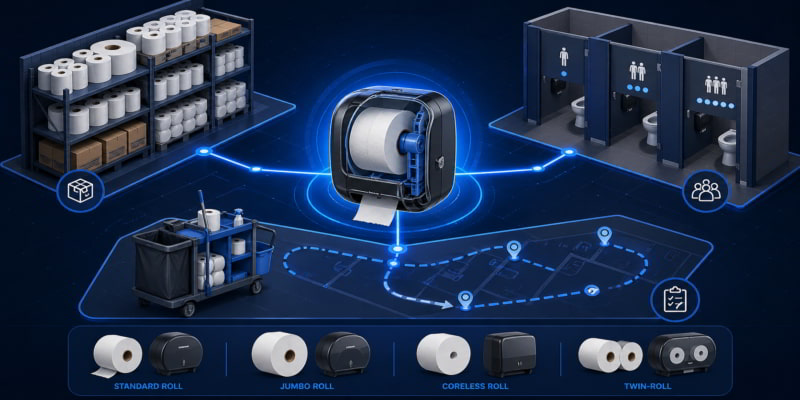
How Toilet Tissue Dispenser Format and Roll Type Affect Replenishment Planning
📌 Key Takeaways Toilet tissue planning works best when roll type, dispenser format, and custodial service routines are planned together. Better replenishment starts at the dispenser, not just the supply closet. Facility managers, janitorial buyers, and AFH procurement teams will gain a clearer planning lens here, preparing them for the ... Read More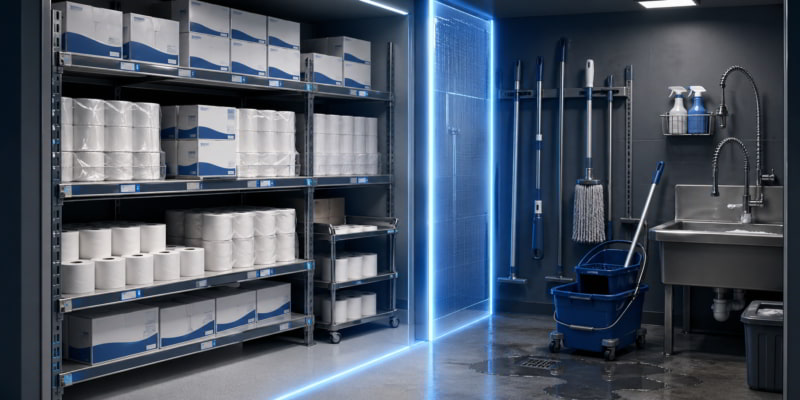
Toilet Tissue Roll Storage Requirements for Commercial Janitorial Programs
📌 Key Takeaways Storing toilet tissue right protects restroom uptime, cuts labor waste, and keeps you on the right side of safety rules. The closet that runs itself is the one you planned before you filled it. Facility managers and custodial supervisors responsible for restroom supply programs will find ready-to-apply ... Read More
Toilet Tissue Storage Standards for Compliance, Risk Reduction, and Quality Control
📌 Key Takeaways Toilet tissue storage failures are not dramatic events — they are quiet, routine shortcuts that show up as audit findings, wasted stock, pest problems, and program credibility gaps. Clean, dry, documented, repeatable — that is the standard that holds up under scrutiny. Facility managers, janitorial supervisors, and ... Read More
Commercial Toilet Tissue Inventory Management for Janitorial Operations
📌 Key Takeaways Restroom supply failures start with broken inventory systems, not bad purchasing contracts — and fixing them means treating toilet tissue like a tracked, managed product flow. Managed flow beats managed pile — track it, route it, measure it. Janitorial supervisors and facility managers overseeing multi-restroom operations will ... Read More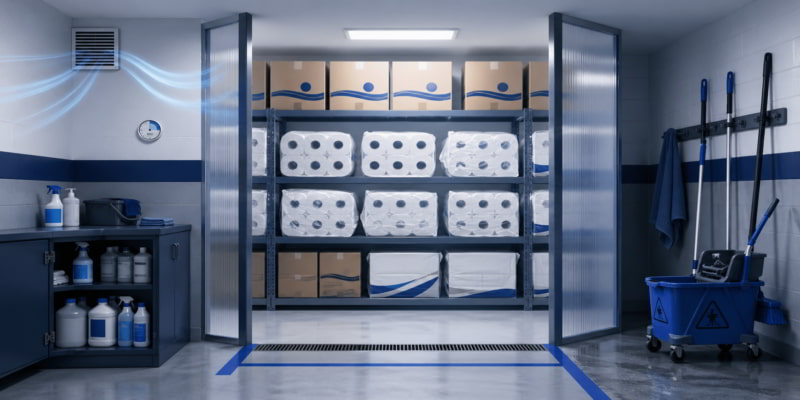
Storage Environment Standards for Commercial Toilet Tissue Inventory
📌 Key Takeaways Toilet tissue storage fails when humidity, airflow, or handling breaks down — not when the product itself is defective. Dry stock, clean hands, and intact packaging prevent most storage failures before they start. Facility managers, janitorial supervisors, and procurement teams responsible for restroom supply quality will find ... Read More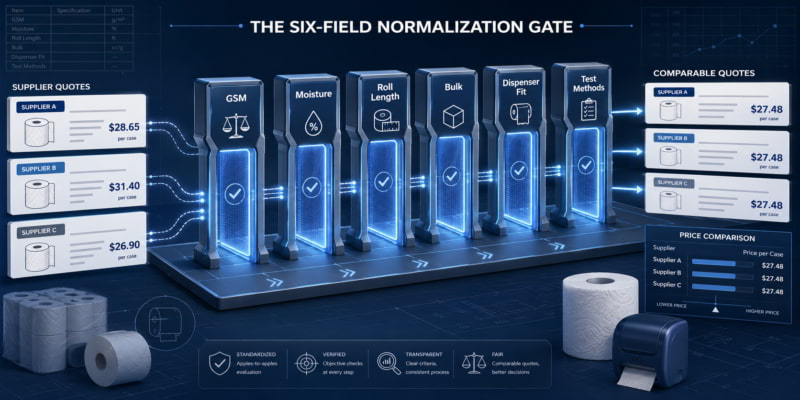
The ‘Cheapest Quote’ Myth: Why AFH Bath Tissue Lowest Price per Roll Guarantees Outages
📌 Key Takeaways The cheapest tissue quote often hides technical gaps that drive up labor, complaints, and emergency restock costs. Normalize specs first, compare prices second, approve last. Procurement leads and QA managers in facilities buying AFH tissue will gain a clear method for catching hidden quote risks, preparing them ... Read More
Beyond the “Clack-Clack” Moment: Why Linear AFH Toilet Tissue Restocking Leads to Washroom Outages
📌 Key Takeaways Washroom tissue outages are usually a buying problem, not a staffing problem — fixed restocking schedules hide the real cause. Control the specs upstream, and the dispensers stay full downstream. Procurement leads, QA managers, and facilities buyers responsible for high-traffic AFH tissue programs will find a clear ... Read More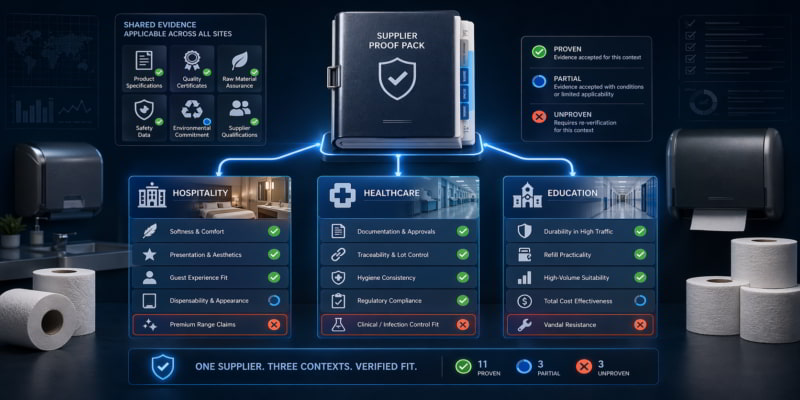
Away-From-Home Toilet Tissue Supplier Verification for Multi-Site Buying: How to Test Fit Across Hospitality, Healthcare, and Education Use Cases
📌 Key Takeaways A supplier proven fit for one type of building may lack proof for another — test each site separately before approving. A supplier story should not travel further than its proof. Multi-site procurement leads and QA managers overseeing hospitality, healthcare, or education portfolios will gain a ready-to-use ... Read More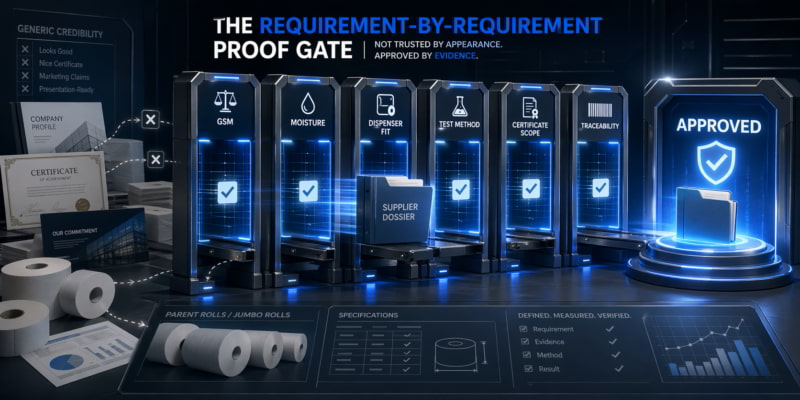
The Cost of Weak Away-From-Home Bath Tissue Supplier Verification: Why Polished Claims Still Create Procurement Risk
📌 Key Takeaways Polished supplier documents don’t prove fit — only requirement-by-requirement evidence does. Strong verification gives procurement a clear reason to say yes — and a clean way to explain it. Away-from-home procurement teams and sourcing professionals will gain a practical framework for separating credible claims from confirmed fit, ... Read More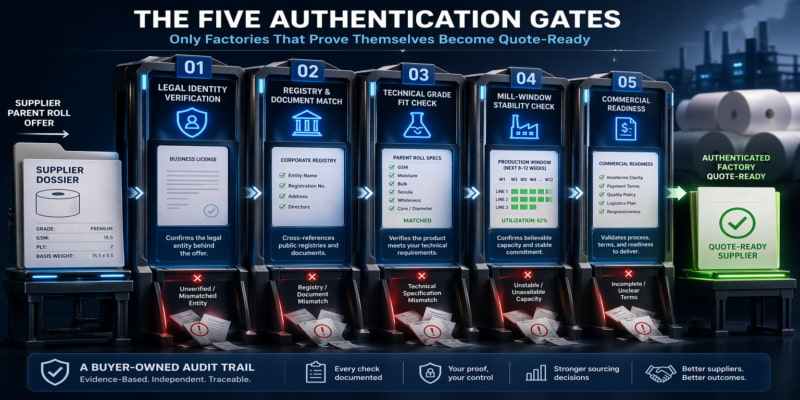
The Authentication Protocol: Advanced Factory-Direct Verification for Premium Tissue Grades
📌 Key Takeaways Premium bath tissue sourcing works only when supplier checks prove the mill is real before price comparisons begin. Clear proof before quotes leads to cleaner supplier decisions and fewer sourcing mistakes. Procurement teams and toilet tissue converters screening premium-grade suppliers will gain a clearer qualification mindset here, ... Read More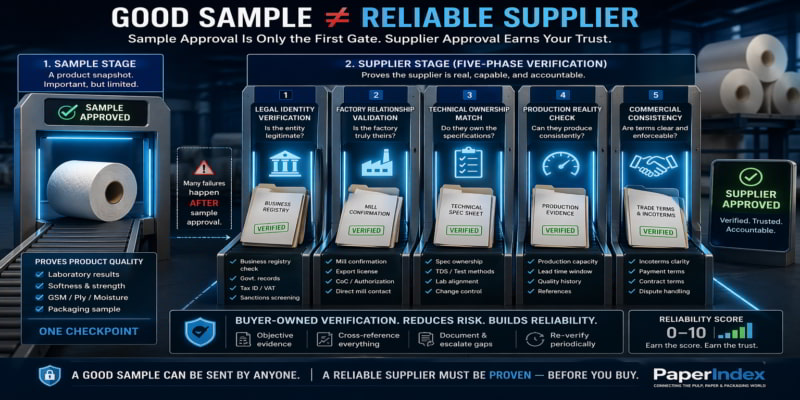
The Bath Tissue Parent Roll Sample Trap: Why Good Quote Quality Does Not Always Mean a Reliable Supplier
📌 Key Takeaways A good toilet tissue sample only proves the product looked right once—it says nothing about whether the supplier can deliver that same quality again and again. Good verification protects the supply chain; good samples alone never will. Toilet tissue converters and procurement teams evaluating new parent roll ... Read More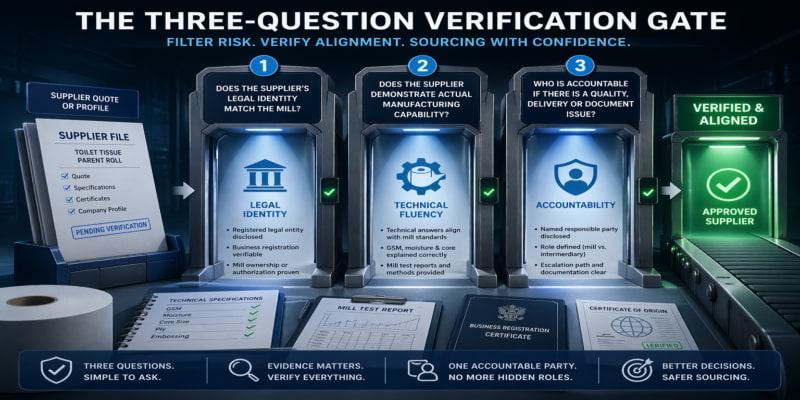
Toilet Tissue Parent Roll Sourcing: How to Distinguish Factory-Direct Suppliers from Intermediaries and Improve Vetting Accuracy
📌 Key Takeaways The fastest way to spot a fake “factory-direct” toilet tissue supplier is to ask three simple questions about who actually makes the product. Three questions before any quote moves forward — that’s where reliable sourcing starts. Procurement managers and toilet tissue converters vetting overseas parent roll suppliers ... Read More