
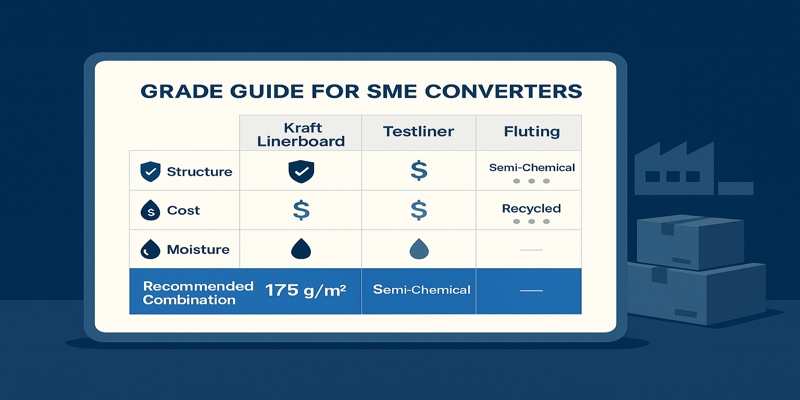
Kraft Paper Grade Guide for SME Converters: Choose the Right Grade for Every Job
📌 Key Takeaways Grade confusion costs SME converters money in over-specified materials and lost customers from under-specified failures. Clear grade specifications prevent MOQ traps and inventory bloat while enabling confident supplier negotiations. SME packaging converter owners and procurement managers will find a systematic framework here, preparing them for the detailed ... Read More
Vendor Data to Request Before You Lock Specs: COAs, Machine Conditions, and Variation Bands That Matter to Packaging Paper Converters
📌 Key Takeaways Lock specifications only after you’ve reviewed verifiable evidence—not vendor promises. Verifiable evidence transforms procurement from promise-based negotiations into data-driven decisions. Procurement professionals and quality managers at packaging converters will find this framework here, preparing them for the detailed evidence collection and vendor qualification processes that follow. This ... Read More
The Micrometer on Money: Spec Discipline for Containerboard Converters for Predictable Per-Order Cost
📌 Key Takeaways Unpredictable per-order costs stem from vague specifications that invite interpretation, rework, and post-award negotiations—not from market volatility. Spec discipline converts micrometer-level technical precision into predictable financial outcomes through enforceable contract language and systematic evidence verification. SMB containerboard converters, procurement managers, and quality leads responsible for kraft paper ... Read More
Containerboard Quality Acceptance Criteria That Prevent Disputes: A Simple Way to Set Thresholds and Triage
📌 Key Takeaways Delivery disputes don’t start at the receiving dock—they start with vague purchase orders that list properties without stating how to measure them or what variation is acceptable. Prepared = objective verification and fewer rejected loads. Converter procurement and QA teams at small to mid-sized packaging operations will ... Read More
Trim Optimization Basics for Containerboard: Width, Deckle, and Minimum-Run Logic
📌 Key Takeaways Trim optimization isn’t about chasing zero waste—it’s about protecting throughput while keeping material costs predictable. Accepting 1-2 percentage points more trim often recovers more value through eliminated setups than it costs in material waste. Procurement and operations planners at packaging converters will find this framework here, preparing ... Read More
Change Control in Paper Contracts: A Simple Checklist to Manage Adjustments Without Surprises
📌 Key Takeaways Price changes don’t have to trigger panic when both parties know exactly how, when, and why adjustments happen. Prepared contracts with guardrails equal predictable landed costs and cleaner quarter-end closes. Procurement and finance leaders at converters and containerboard buyers will find actionable frameworks here, preparing them for ... Read More
Spot vs. Term Supply in Containerboard: When to Lock, When to Float, and How to Set Guardrails
📌 Key Takeaways Chasing the lowest spot price without a framework is exposure, not strategy. Price volatility demands objective guardrails and a hybrid approach. Lock-or-float isn’t a coin flip; it’s a discipline built on thresholds, cadence, and contract clarity. Procurement and sourcing professionals at packaging paper converters will find a ... Read More
Incoterms for Paper Supply: The Six Clauses That Change Your Delivered Price More Than You Think
📌 Key Takeaways Mixed Incoterms quotes hide true costs until you normalize every offer to your facility door. Standardize the named place, normalize to one basis, document assumptions—this sequence cuts sourcing cycle time and builds supplier trust. Procurement managers evaluating international paper suppliers and logistics coordinators managing cross-border shipments will ... Read More
Containerboard Cost Stack Explained: Freight, Fiber, Energy, and Surcharges—What Actually Moves Your Landed Cost
📌 Key Takeaways Containerboard quotes become comparable only when you separate cost drivers, normalize delivery terms, and govern volatility before signing contracts. Prepared procurement = comparable quotes, governed volatility, and defensible renewals. Procurement professionals, finance teams, and supply chain managers evaluating containerboard suppliers will find this framework essential, preparing them ... Read More
From Volatility to Clarity: A Practical Playbook for Containerboard Cost & Contract Foundations
📌 Key Takeaways Containerboard landed costs remain stable only when explicit guardrails prevent quote confusion, freight surprises, and specification drift. Guardrails installed = volatility managed as bandwidth, not crisis. Procurement managers, finance controllers, and operations leaders at converters will find immediate implementation guidance here, preparing them for the detailed guardrail ... Read More
Guardrails, Not Guesswork: A Simple Mental Model for Stabilizing Containerboard Landed Cost
📌 Key Takeaways Landed cost shouldn’t trigger quarterly panic—five simple guardrails turn reactive scrambling into predictable, defensible decisions. Use these five controls, and renewals become routine process execution rather than detective work. Procurement and sourcing professionals at packaging converters will gain a complete mental model here, preparing them for the ... Read More
The Mill Capability Matrix: Map What a Containerboard Supplier Can Actually Hold, Not What They Promise
📌 Key Takeaways Supplier brochures promise tight tolerances, but your corrugator needs proof that those claims hold at line speed across shifts and production lots. Evidence-backed qualification replaces promises with verifiable performance data. Procurement teams, quality assurance managers, and plant operations staff in the containerboard industry will find this framework ... Read More
Acceptance Criteria for Containerboard Pilots: What “Pass” Looks Like Before You Scale
📌 Key Takeaways Pilots fail when acceptance criteria are vague, turning validation into negotiation rather than verification. Clear gates eliminate guesswork. Approved criteria = confident decisions. QA managers, production leaders, and procurement teams evaluating containerboard suppliers will find this framework essential, preparing them for the detailed three-gate system and documentation ... Read More
Containerboard Basis Weight vs. Caliper: Picking the Right Trade-Off for Clean Runs on Your Existing Equipment
📌 Key Takeaways Your converting line’s performance depends less on paper quality than on matching specifications to equipment limits. Start with equipment windows, then optimize within those bounds—not the reverse. Packaging engineers, converting supervisors, and plant managers will find a practical decisionmaking framework here, preparing them for the detailed specifications ... Read More
Containerboard MOQ and Lead Time Surprises: How to De-Risk Scheduling Before You Place Volume Orders
📌 Key Takeaways MOQ shifts and lead-time slips follow predictable patterns rooted in campaign economics, lane logistics, and documentation workflows—not supplier dishonesty. Prepared = predictable schedules and protected go-live dates. Procurement and sourcing professionals at packaging converters will find this framework essential here, preparing them for the detailed implementation guidance ... Read More
Supplier Qualification for Containerboard: A Pilot-First Playbook to Prove Mill Capability
📌 Key Takeaways Supplier qualification failures cost you production downtime, emergency re-sourcing at premium prices, and customer complaints—avoid these risks by proving mill capability under real operating conditions before committing to volume. Verified capability under operating conditions beats supplier promises every time. Containerboard buyers managing converting operations and supply chain ... Read More
Moisture & Profile Control in Containerboard: The Simple Checks That Prevent Warp and Line Stops
📌 Key Takeaways Warp on the corrugator line isn’t random—it’s the predictable result of moisture and temperature imbalances between liner and medium at the moment of bonding. Corrugator supervisors, process engineers, quality managers, and plant managers at box plants and sheet feeders will find actionable protocols here, while containerboard mill ... Read More
How Containerboard ECT/RCT/SCT Translate to Real-World Box Strength (Without the Jargon)
📌 Key Takeaways Lab numbers tell you board quality, but real-world conditions determine whether your boxes actually survive the warehouse floor. Procurement teams and packaging engineers at converters will find a practical decision framework here, preparing them for the method-named pilot checklist and consensus-building tools that follow. You’re staring at ... Read More
A Practical Blueprint for Containerboard Grades & Specifications
📌 Key Takeaways Converting disasters start when specs look right on paper but fail on the line—warped board, unstable runs, and lost shifts because the gap between an ECT number and real acceptance criteria was never closed. Procurement teams and QA managers sourcing containerboard will find the structured translation from ... Read More