

How to Create Your Mill Spec Sheet: A Step-by-Step Guide
📌 Key Takeaways A mill spec sheet prevents quote mismatches by translating requirements into test-method-defined, tolerance-bound specifications that every supplier interprets identically. Spec sheets define acceptance criteria, not aspirations. Packaging converters managing multi-supplier sourcing programs will gain a systematic framework here, preparing them for the implementation template that follows. The ... Read More
The Ultimate Mill-Direct Kraft Paper Sourcing Guide
How to Partner with and Source Directly from Kraft Paper Manufacturers Effectively Buying direct from kraft paper manufacturers offers the lowest unit costs and highest customizability, but it requires a technical mindset. You aren’t just buying stock; you are booking production capacity. This guide helps you assess mill capabilities, align ... Read More
Testing Protocols: How to Verify Kraft Paper Quality Upon Arrival
📌 Key Takeaways Documentation captured before the truck leaves separates successful claims from absorbed losses—the receiving dock is a legal and operational firewall. Your inspection protocol transforms receiving from signature-and-hope into a defensible quality gate. Small and mid-sized converter teams managing kraft paper procurement will gain immediately implementable verification steps ... Read More
Creating Your Mill Spec Sheet: A Guide for Converting Operations Managers
📌 Key Takeaways Mill spec sheets transform tribal knowledge into measurable parameters that prevent production stoppages and enable comparable supplier quotes. Measurable specs eliminate negotiation and enable verification. Operations managers at small converting businesses will gain systematic frameworks for building enforceable specifications, preparing them for the copy-ready templates and technical ... Read More
Anatomy of a Perfect Kraft Paper RFQ: A Step-by-Step Guide for Converters
📌 Key Takeaways Vague RFQs produce incomparable quotes because suppliers interpret ambiguous specs differently, pad margins for uncertainty, or skip responding altogether. Specification clarity beats negotiation leverage for converters with limited buying power. Procurement managers and operations leaders sourcing kraft paper internationally will gain a copy-paste RFQ structure that eliminates ... Read More
The Quality Blueprint: How to Define & Enforce Kraft Paper Technical Specs
📌 Key Takeaways Kraft paper specifications prevent quality disputes only when they define test methods, tolerances, sampling plans, and enforcement consequences before orders flow. Governance, not guesswork—enforcement mechanisms turn specifications into accountable performance. Procurement managers and quality teams sourcing kraft paper internationally will gain copy-paste templates and enforcement workflows here, ... Read More
From Guesswork to Governance: A Standardized Framework for Sourcing Kraft Paper
📌 Key Takeaways Kraft paper sourcing becomes defensible when documentation replaces memory—standardized specifications, evidence requirements, normalized cost models, qualification gates, and ongoing controls transform reactive purchasing into repeatable decisions. Governance isn’t bureaucracy—it’s making procurement risk visible and manageable through artifacts that survive personnel changes and time pressure. Small and mid-sized ... Read More
The Spec-Driven Kraft Paper RFQ Template: Combine Technical Specs and Commercial Terms for Comparable Quotes
📌 Key Takeaways Comparable kraft paper quotes require technical specs and commercial terms in a single structured document that prevents supplier interpretation gaps. Spec discipline converts assumptions into documented terms before negotiation starts. Procurement managers and operations leaders sourcing kraft paper, packaging materials, or finished paper products will gain a ... Read More
Diagnosing Packaging Failures: Why Paper Bags Tear During Delivery
📌 Key Takeaways Every torn bag reveals a measurable gap between your specification and real delivery conditions. Document failures as data, not complaints—each tear becomes permanent specification improvement. Procurement managers and operations leaders sourcing paper bags for delivery operations will gain diagnostic clarity here, preparing them for the specification and ... Read More
Virgin vs. Recycled Kraft Paper: Choosing the Right Grade for Paper Bag Durability
📌 Key Takeaways Virgin vs. recycled kraft paper decisions require measurable performance specs—burst, tensile, tear, and Cobb values—not labels alone. Labels describe fiber source; test data describes real-world durability. Procurement teams sourcing kraft paper for packaging will gain spec-writing confidence here, preparing them for the decision matrix and RFQ template ... Read More
Sustainable Sourcing of Bag Paper: Aligning Packaging with Brand Values
📌 Key Takeaways Sustainable packaging sourcing succeeds when brand values translate into measurable specifications, suppliers provide verifiable evidence, and internal teams align on a shared approval framework. Verifiable sourcing protects brands while honoring operational realities. Procurement managers, operations leaders, and brand stakeholders implementing sustainable packaging programs will gain a structured ... Read More
Paper Bag Raw Material Grades: GSM and Burst Factor Explained
📌 Key Takeaways GSM measures paper weight, not bag strength—burst testing reveals rupture resistance under real-world pressure. Measurable specs eliminate supplier ambiguity and protect margins. Procurement and operations teams sourcing paper bags for e-commerce, food delivery, or retail packaging will gain immediately enforceable RFQ language here, preparing them for the ... Read More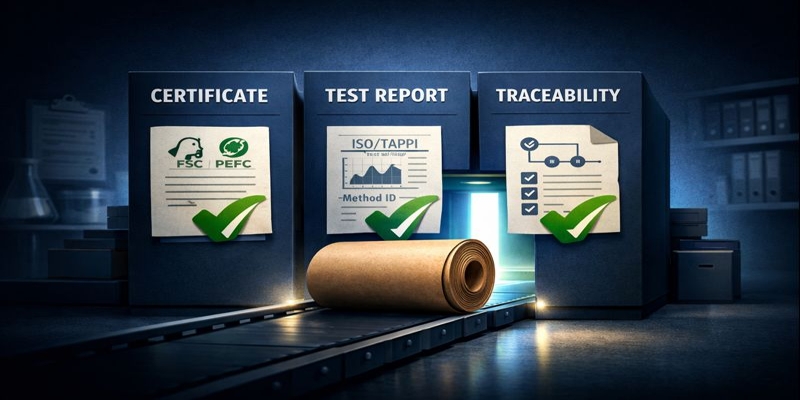
Recycled vs. Virgin Kraft Paper: Choosing the Right Bag Material for Eco-Compliance
📌 Key Takeaways Choosing between recycled and virgin kraft paper requires matching three factors: the compliance claim you must defend, the loads your bags carry, and the documentation you can maintain. The right material is the one you can verify, document, and defend when inspectors or buyers ask questions. Procurement ... Read More
Understanding Kraft Paper Grades for Paper Bags: A Guide to Durability and Cost for Retailers
📌 Key Takeaways Kraft paper grade selection determines whether checkout bags fail publicly or quietly overspend on durability the store never needs. Grade clarity turns procurement from guesswork into risk management. Retail buyers and store managers responsible for packaging decisions will gain a practical framework for specifying kraft grades confidently, ... Read More
How to Source Small Lots of Kraft Paper Without Compromising on Quality
📌 Key Takeaways Small-lot kraft paper sourcing protects cash flow and machine uptime when you verify suppliers systematically before committing. Systematic vetting converts small-lot sourcing from gamble to repeatable capability. Paper bag manufacturers struggling with mill MOQs and working capital constraints will gain immediate process clarity here, preparing them for ... Read More
The ‘Inventory Trap’: Why Buying Mill Direct is Bankrupting Small Paper Converters
📌 Key Takeaways Mill-direct paper deals bankrupt small converters by locking working capital in warehouse inventory while cash flow drains. The inventory trap is structural mismatch, not incompetence—mill economics designed for giants suffocate small paper converters.. Small packaging converters and paper bag manufacturers managing tight margins will gain defensive sourcing ... Read More
The High Cost of “Cheap” Paper: How Quality Variance Kills Production Margins
📌 Key Takeaways Quality variance in kraft paper erodes production margins through waste, downtime, and customer complaints that dwarf any headline price savings. Cheap paper costs most when machines stop running. SME paper bag manufacturers and packaging converters balancing tight margins with quality risk will find a practical three-step modeling ... Read More
Kraft Paper for Making Paper Bags: A Strategic Guide to Grade Selection and Procurement
📌 Key Takeaways Kraft paper grade selection protects production uptime and cash flow better than chasing the lowest price per ton. The most expensive paper is the one that stops the machine. Small and mid-sized bag plant operators balancing cost pressure with quality requirements will gain a structured grade-selection framework ... Read More
A Comparative Decision Matrix for Low-Volume Sourcing: Marketplace vs. Mill Direct vs. Local Distributor
📌 Key Takeaways The MOQ Barrier forces small converters to choose between channels that don’t fit their reality—but a neutral decision matrix turns that problem into a documented, defensible sourcing strategy. Most sourcing decisions fail because they optimize for the wrong variable at the wrong time—this framework ensures your choice ... Read More