
Secure payment methods and manage financial risk in global trade.

Negotiating Payment Terms: How to Move Beyond 100% Advance
📌 Key Takeaways Suppliers demand 100% advance to manage risk, not to exploit buyers—understanding this opens the door to negotiation. Terms are risk-allocation choices, not moral battles. Procurement managers sourcing paper bags internationally will gain a repeatable negotiation framework here, preparing them for the detailed scripts and option menu that ... Read More
Negotiating Payment Terms for Paper Bags: A Guide for Cash-Flow Management
📌 Key Takeaways Payment terms shape working capital needs as powerfully as unit price, making them a negotiable lever for controlling cash flow in paper bag procurement. Better terms come from becoming the lowest-risk small buyer, not the loudest negotiator. Small and mid-sized paper bag buyers managing tight working capital ... Read More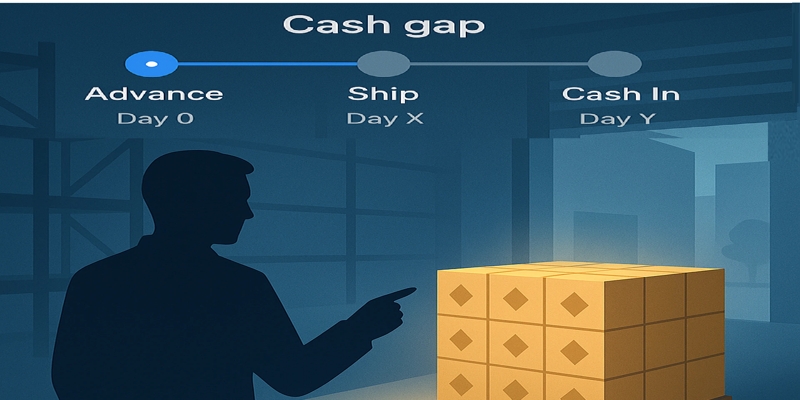
The “Cash Gap” Calculator for Paper Bag Buyers: How to Keep Working Capital Flowing
📌 Key Takeaways Paper bag procurement creates a cash gap—the time between paying suppliers and recovering money through customer sales—that could stretch 90 to 175 days. Calculate before you commit—rough numbers reveal hidden capital traps. E-commerce procurement managers, retail operations teams, and brand managers overseeing packaging decisions will gain a ... Read More
Payment Terms Design for Kraft Paper Suppliers & Customers – Simple Rules of Thumb for Balancing Supplier and Customer Days
📌 Key Takeaways Month-end cash stress isn’t about revenue—it’s about the gap between when you pay kraft paper suppliers and when customers pay you. Deliberate payment terms design turns month-end firefighting into predictable cash rhythm. Finance heads, procurement managers, and business owners at SME packaging converters will find practical rules ... Read More
Payment Terms Design for Kraft Paper Suppliers & Customers: A One-Page Terms Summary You Can Share with Your Team and Bank
📌 Key Takeaways The gap between paying kraft paper suppliers and collecting from customers locks up working capital that could fuel growth instead of just funding timing mismatches. Visibility precedes control—one page can transform working capital from a constant source of stress into something the business actively manages. Finance and ... Read More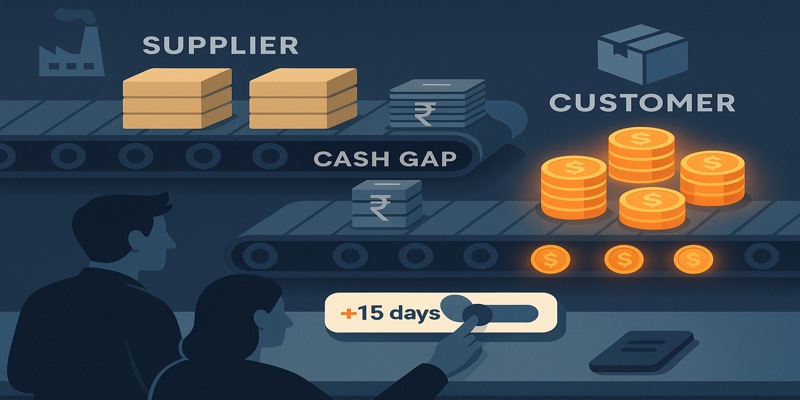
Payment Terms Design for Kraft Paper Suppliers & Customers: Mini-Scenarios Showing How 15-Day Changes Shrink the Cash Gap
📌 Key Takeaways A 15-day shift in payment terms can free tens of thousands in trapped working capital—or quietly tighten the cash squeeze until month-end becomes a crisis. Prepared finance and procurement teams can use these mini-scenarios the same day they read them—no complex models required. Finance, procurement, and sourcing ... Read More
Payment Terms Design for Kraft Paper Suppliers & Customers: Scripts You Can Use to Ask for Better Terms
📌 Key Takeaways Payment terms determine when cash moves, and a 15-day shift can materially change your working capital needs over a year. Terms that align with your cash cycle reduce overdraft reliance and free capital for growth. Kraft paper suppliers and buyers in B2B trade will find practical scripts ... Read More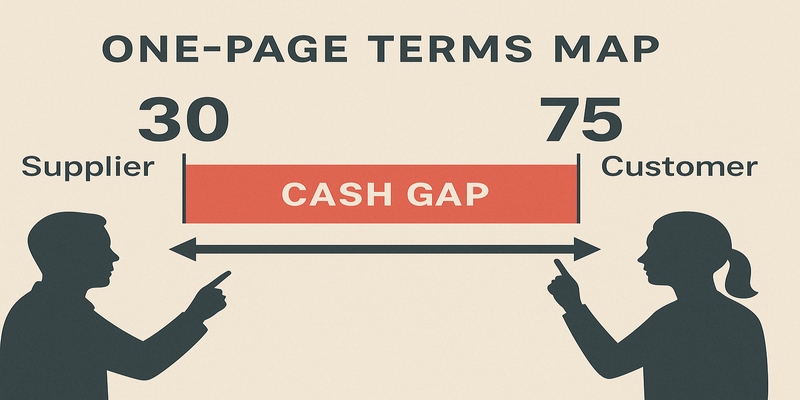
Payment Terms Design for Kraft Paper Suppliers & Customers: First Steps to List, Compare, and Spot Your Biggest Cash Flow Gaps
📌 Key Takeaways Payment terms with kraft paper suppliers and customers rarely align by accident—and that mismatch quietly drains working capital every month. Mapping precedes negotiation; clarity precedes control. Finance heads, CFOs, and procurement leads at SME packaging converters will find a practical diagnostic framework here, preparing them for the ... Read More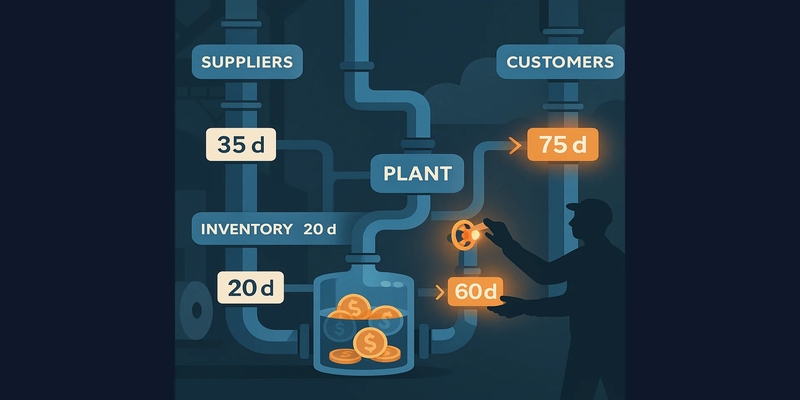
Payment Terms Design for Kraft Paper Suppliers & Customers: A Simple Playbook to Align Cash In and Cash Out
📌 Key Takeaways Payment terms you inherited years ago are quietly designing your cash flow—whether anyone designed them or not. Design payment terms intentionally, and growth stops feeling like suffocation. Small and mid-sized packaging converters juggling kraft paper suppliers and demanding customers will find a practical roadmap here, preparing them ... Read MoreAligning Finance and Procurement Priorities: A Checklist for Reducing Working Capital Strain from Payment Terms
📌 Key Takeaways Working capital strain from payment terms turns month-end into a firefight when kraft paper bills come due weeks before customer payments arrive. Finance heads, procurement leaders, and owner-operators at SME packaging converters will find a practical framework here, preparing them for the detailed checklist and implementation guidance ... Read More
Working Capital Strain from Payment Terms: Inventory Days, Overdraft Stress, and How Much Cash is Stuck in Kraft Paper
📌 Key Takeaways Overdraft limits stay pinned near maximum not because sales are weak, but because cash sits idle in warehouse reels while supplier and customer payment terms pull in opposite directions. Visibility first, then targeted action—not sweeping cuts. SME packaging converters juggling tight bank limits and volatile kraft paper ... Read More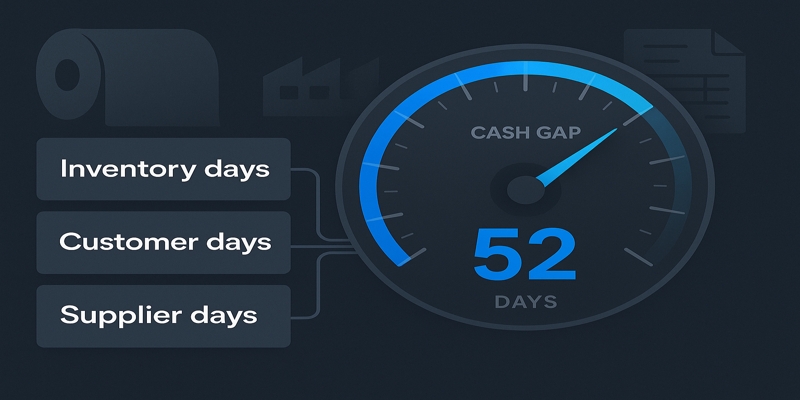
Working Capital Strain from Payment Terms: How Much Working Capital Limit Do You Need for Kraft Paper?
📌 Key Takeaways Your working capital limit for kraft paper isn’t a guessing game—it’s a calculation you can do in three steps using numbers you already have. Prepared discussions lead to appropriate limits and calmer banking relationships. Small and mid-sized packaging converters will find a practical calculation method here, preparing ... Read More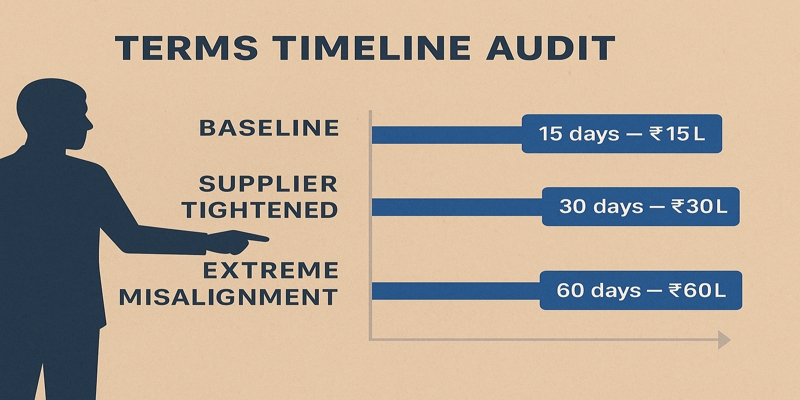
Working Capital Strain from Payment Terms: Simple Examples Showing How Fifteen Days Change Your Cash Flow Gap
📌 Key Takeaways A 15-day shift in payment terms isn’t a minor adjustment—it can double or eliminate your working capital needs entirely. Show the numbers, not just the stress. SME packaging converters buying kraft paper—especially owners, finance heads, and procurement leads—will find concrete scenarios here, preparing them for the actionable ... Read More
Working Capital Strain from Payment Terms: A Simple Guide to Seeing and Fixing Your Kraft Paper Cash Flow Gap
📌 Key Takeaways Cash flow problems aren’t always caused by poor sales—they’re often caused by poor timing between when you pay suppliers and when customers pay you. Map it once, measure it quarterly, adjust one lever at a time—that’s how converters move from overdraft anxiety to cash control. SME packaging ... Read More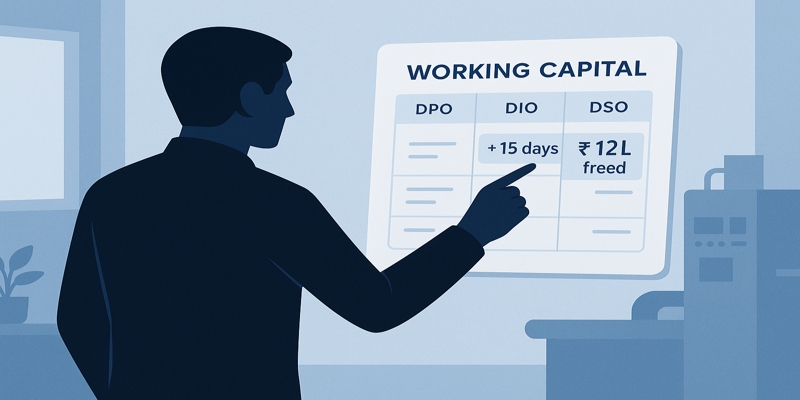
Working Capital Strain from Payment Terms and Payment Terms Design: A Strategic Bridge Guide for SME Packaging Converters
📌 Key Takeaways Misaligned payment terms between kraft paper suppliers and customers create a structural cash flow gap that turns growth into a working capital crisis for SME packaging converters. Target improvements of 15-20 days in your cash conversion cycle = ₹12-15 lakh ($14-18K) freed for a typical ₹20 lakh ... Read More