Build strong supplier relationships that deliver consistent value.

Beyond the Fine: The Reputation Risk of Non-Compliant Food Packaging Paper
📌 Key Takeaways A packaging failure costs far more in lost trust than any fine—customers see grease stains as food safety problems. The fine is a line item; the reputation is the business. Restaurant operators, food service managers, and procurement teams responsible for food packaging sourcing will find practical checklists ... Read More
Food Packaging Paper Trail: 3 Documents You Need to Pass a Health Inspection
📌 Key Takeaways Three documents—kept together and easy to find—turn inspection stress into a calm folder handoff. Organized paperwork means confident inspections. Restaurant owners and food service operators managing takeout packaging will gain a clear system for inspection readiness, preparing them for the detailed filing guide that follows. ~ ~ ... Read More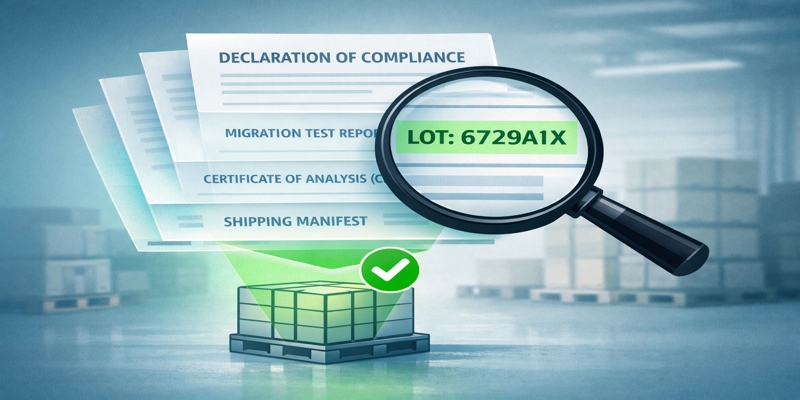
The Integrated Safety Model: A Strategic Playbook for Aligning Food Packaging Paper Specs with Verification Protocols
📌 Key Takeaways Compliance certificates describe what was tested in the past—not what actually arrives in each shipment today. Paperwork that matches what actually ships—that’s real compliance. Procurement, quality, and operations teams managing food-contact packaging will find a ready-to-use verification framework here, guiding them into the step-by-step implementation details that ... Read More
The Engineering of Efficiency: A Thesis on Corrugated Box Cost Optimization
📌 Key Takeaways Corrugated box cost optimization is an engineering discipline that matches structural integrity to actual load stress—preventing systemic failure costs— rather than chasing unit price reductions. Specification discipline prevents the failures that price negotiation cannot fix. Procurement managers, operations leaders, and packaging engineers responsible for corrugated box sourcing ... Read More
Five Signs Your Corrugated Box Procurement Strategy Is Risking Production
📌 Key Takeaways Corrugated box failures usually trace to procurement gaps—thin specs, informal qualification, and missing feedback loops—not bad suppliers or careless operators. Spec discipline turns reactive buying into quiet governance. Procurement managers, packaging engineers, and QA professionals responsible for corrugated box sourcing will gain a diagnostic framework here, preparing ... Read More
From Guesswork to Governance: A Framework for Sourcing Heavy-Duty Corrugated Boxes
📌 Key Takeaways Heavy-duty corrugated box failures typically stem from weak sourcing systems, not weak corrugated fiberboard—governance prevents recurring damage. Governed sourcing = consistent boxes from month one through month twelve. Procurement managers and packaging engineers sourcing corrugated boxes for heavy industrial loads will gain a structured qualification framework here, ... Read More
Handling Corrugated Box Vendor Non-Compliance Disputes: How to Use Data to Enforce Specs
📌 Key Takeaways Vendor disputes are resolved by structured evidence—spec references, named test methods, and traceable documentation—not by persuasion or negotiation. Disputes are process, not persuasion—structure your evidence and the conversation resolves itself. Procurement managers and QA leads handling off-spec corrugated box shipments will gain a ready-to-use workflow here, preparing ... Read More
Why Burst Strength Isn’t Enough: Understanding Corrugated Box ECT and Flute Profiles
📌 Key Takeaways Corrugated box specifications must match the actual failure mode—stacking collapse, puncture, or converting constraints—not default to a single strength number. Specification clarity eliminates preventable disputes and transfers risk appropriately. Procurement managers sourcing corrugated packaging from international suppliers will gain failure-mode specification frameworks here, preparing them for the ... Read More
Why Corrugated Box Damage on Arrival Is a Sourcing Failure, Not a Logistics Issue
📌 Key Takeaways Recurring corrugated box damage traces to specification gaps and supplier control failures, not carrier handling alone. Prevention converts incident learnings into enforceable sourcing controls, not reactive claim filing. Procurement managers and packaging engineers responsible for corrugated box sourcing will gain diagnostic frameworks and specification improvement strategies here, ... Read More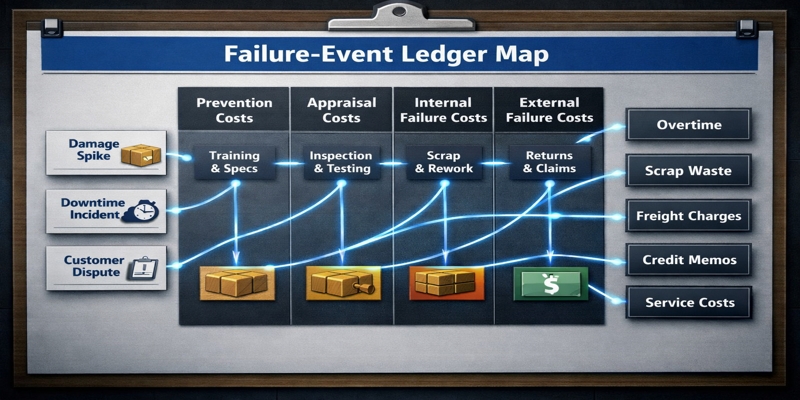
Building the Business Case for Packaging Quality: A CFO-Readable Justification Model for Operations and Finance
📌 Key Takeaways Finance rejects quality requests lacking definitional clarity, repeatable assumptions, and measurable controls—not because they oppose quality. Quality spend becomes defensible when failure events map to cost categories with measurement plans. Procurement managers and operations leads building CFO-ready quality cases will gain the justification framework and one-page template ... Read More
When Supply Chains Break: Mitigating Risk with Multi-Regional Corrugated Box Sourcing
📌 Key Takeaways Multi-regional sourcing prevents packaging crises by building qualified supplier alternatives across independent geographies before disruptions force emergency switches. The work happens before the crisis, not during it. Packaging procurement managers and operations leaders responsible for corrugated box supply chains will gain a systematic qualification framework here, preparing ... Read More
How to Vet Corrugated Box Suppliers for Technical Competence (Before You Send an RFQ)
📌 Key Takeaways Technical vetting before RFQs eliminates quote-only suppliers and prevents costly quality failures after contract award. Proof before paperwork = fewer line stoppages and disputes. Procurement managers sourcing corrugated packaging will gain a repeatable qualification framework here, preparing them for the technical screening checklist and evidence evaluation guide ... Read More
How to Create Your Mill Spec Sheet: A Step-by-Step Guide
📌 Key Takeaways A mill spec sheet prevents quote mismatches by translating requirements into test-method-defined, tolerance-bound specifications that every supplier interprets identically. Spec sheets define acceptance criteria, not aspirations. Packaging converters managing multi-supplier sourcing programs will gain a systematic framework here, preparing them for the implementation template that follows. The ... Read More
How to Verify Corrugated Box Quality at the Dock: A Practical Testing Protocol
📌 Key Takeaways Dock verification of corrugated boxes prevents quality failures by catching moisture, crush, and dimensional drift before acceptance transfers risk to your operation. The moment you sign the Bill of Lading, the quality problem becomes yours. Packaging procurement managers and warehouse receiving teams will gain fast, measurable protocols ... Read More
Stop Buying on Price: A Strategic Framework for Resilient Corrugated Box Sourcing
📌 Key Takeaways Corrugated box sourcing becomes resilient when specifications reflect real-world operational stress, suppliers prove repeatable capability through evidence gates, and governance detects drift before failure. Five layers transform corrugated from commodity firefighting into controlled infrastructure. Procurement managers and operations leaders responsible for automated packaging lines will gain systematic ... Read More
The Hidden Risk of Unverified Suppliers: Protecting Your Pharmaceutical Supply Chain
📌 Key Takeaways Supplier verification failures surface during QA release or audits when evidence cannot be produced—not during initial procurement decisions. Structured onboarding, documented evidence, and continuous monitoring prevent downstream failures before they reach production lines. Procurement managers and quality professionals in pharmaceutical packaging will gain practical verification workflows here, ... Read More
Structuring Your Compliance Audit Checklist for Packaging Suppliers
📌 Key Takeaways Effective packaging supplier audits require evidence trails and gating logic—not generic yes/no questions—to verify that documented controls actually function under production pressure. Defensible decisions require weighting modules by risk—not question count. Procurement managers and QA leaders qualifying corrugated, carton, and other packaging suppliers in regulated environments will ... Read More
Beyond the Certificate: A Governance Model for Pharmaceutical Packaging Compliance
📌 Key Takeaways Certificates prove a supplier had a system once; governance proves the system still functions today through evidence, accountability, and change control. Evidence beats promises; governance beats assumptions. Pharmaceutical procurement and QA professionals managing multi-tier packaging supply chains will gain implementation-ready frameworks here, preparing them for the 90-day ... Read More
From Chaos to Compliance: A Strategic Framework for Enterprise Corrugated Box Sourcing for Pharmaceuticals
📌 Key Takeaways Enterprise corrugated sourcing becomes audit-ready when requirements are separated into performance-critical controls and compliance-critical governance, quotes are normalized before price comparison, supplier qualification follows an evidence ladder from claims to verification, and monitoring replaces one-time approvals. Systematic verification filters out weak suppliers before they embed—not after audits ... Read More