
📌 Key Takeaways
Picking the right food wrap means matching the coating to your menu’s heat, grease, and hold time—not just grabbing whatever says “food safe.”
- “Food Safe” Doesn’t Mean It Works: Compliance labels confirm safety rules were followed, but they say nothing about whether the paper handles steam, grease, or delivery hold times.
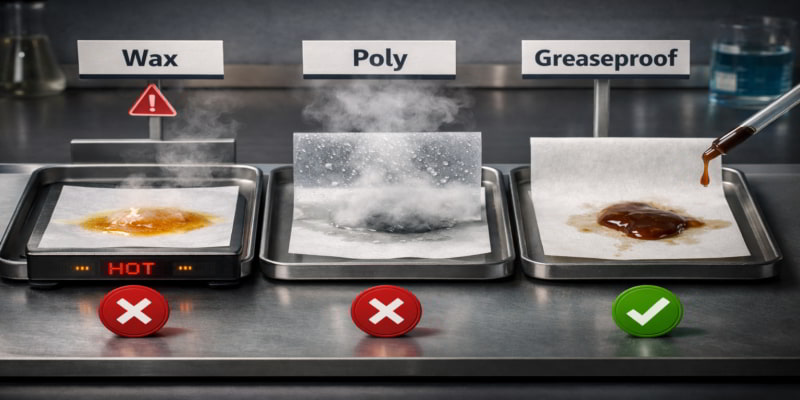
- Each Coating Fails Differently: Wax melts under heat, poly traps steam and makes crispy food soggy, and greaseproof can’t handle heavy sauces—know the limits before you choose.
- Match Coating to Menu Stress: Use greaseproof for fried foods that need to breathe, poly-coated for saucy items that leak, and wax only for cold or room-temperature foods.
- Two Wraps Beat One Compromise: If your menu has both crispy and saucy items, stock two different papers—one coating rarely handles both well.
- Ask Suppliers for Real Specifications: Request COBB values, heat limits, and coating details instead of accepting vague marketing claims that can’t be compared.
The right coating protects food quality; the wrong one creates the complaints you’re trying to prevent.
Food service operators and procurement managers sourcing packaging paper will find a ready-to-use decision workflow and RFQ checklist below, preparing them for comparable supplier quotes.
~ ~ ~ ~ ~ ~ ~ ~ ~ ~ ~ ~ ~ ~ ~ ~ ~ ~
Two wraps. Both are “food safe.” One fails your burger in 6 minutes.
Grease bleeds through onto the customer’s hands. The bun goes soggy before the delivery driver reaches the first stop. Crispy fries turn soft inside a sealed bag. These failures rarely trace back to bad food—they trace back to the wrong paper coating.
Food packaging coatings create barriers against oil, moisture, and heat. But “food safe” is a compliance term, not a performance specification. While it ensures chemical safety, it offers no guarantee of physical durability under heat or moisture.
Choosing the right coating means matching barrier properties to actual menu conditions. This guide delivers a comparison table, a 5-question decision workflow, and an RFQ-ready checklist that makes supplier quotes comparable—so you stop guessing and start specifying.
Quick Comparison: How Each Coating Performs
| Coating Type | Barrier Strength | Where It Fails | Best Menu Matches | Key Specification to Request |
| Poly-coated | Strong moisture barrier; contains liquids and sauces | Traps steam—softens crispy items over time | Wet sandwiches, saucy wraps, dripping burgers | Heat tolerance limit (°F/°C); lined one side or both |
| Wax-coated | Moderate grease resistance; prevents sticking | Softens/melts above 150–170°F (~65–75°C) | Deli sandwiches, bakery items, cold subs | Maximum temperature rating |
| Greaseproof | Oil resistance with breathability; lets steam escape | Heavy liquids/sauces can penetrate | Fries, fried chicken, crispy wraps | COBB value; oil resistance rating |
This table provides the starting point. The sections below explain why each coating behaves this way—and how to match coatings to your specific menu using a systematic approach similar to how kit levels measure grease resistance in food packaging paper.
The Three Coating Options—What They Actually Do

Poly-coated paper has a thin polyethylene film laminated to one or both sides. This plastic layer creates a near-complete moisture barrier—liquids, condensation, and wet sauces stay contained. That makes poly coated paper the standard choice for foods that drip, leak, or release moisture during holding.
The tradeoff: that same barrier traps steam inside. For crispy foods held more than a few minutes, moisture migrates back to the surface. The result is the soggy texture customers complain about.
Wax-coated paper uses paraffin or food-grade wax instead of plastic. It provides moderate grease resistance and prevents paper from sticking to food—useful for bakery items, deli meats, and cold sandwiches. Wax works well at room temperature or below.
The critical limitation: wax softens at elevated temperatures. A hot burger patty placed directly on wax paper can cause the coating to transfer or separate within minutes. For a deeper look at this failure mode, see the wax paper trap: why generic wraps fail high-heat tests.
Greaseproof paper takes a different approach. While it avoids heavy, impermeable plastic laminates, modern greaseproof paper is typically manufactured with tightly packed fibers combined with a microscopic surface treatment (such as starches, alginates, or natural bio-polymers) that resists oil penetration. This engineered structure creates grease resistance while still allowing moisture vapor to escape—essential for fried foods where steam buildup destroys texture.
The limitation: greaseproof handles oil well but may not contain heavy liquid sauces or wet ingredients.
Where Each Coating Fails
Every coating has specific failure modes. Knowing these prevents mismatches.
Wax paper fails under high heat. When temperatures climb above roughly 150–170°F (65–75°C), the wax layer softens, transfers to food, or loses barrier function entirely. This makes wax unsuitable for anything served hot, held under heat lamps, or reheated in warming drawers.
Poly-coated paper traps steam. The moisture barrier that prevents leaks also prevents evaporation. Wrap fresh fries in poly-lined paper and seal them in a delivery bag—steam condenses against the plastic surface and migrates back to the food. Crispness disappears within minutes. For items where texture matters more than leak prevention, poly-coated paper creates the problem it’s supposed to solve.
Greaseproof paper can’t handle heavy liquids. Oil resistance doesn’t equal waterproofing. A saucy pulled pork sandwich or a wrap drenched in dressing can overwhelm greaseproof paper’s barrier. The liquid finds pathways through the fiber structure. When your menu includes wet, saucy items, greaseproof alone may not provide adequate containment.
Reheat scenarios compound these failures. Microwave reheating generates additional steam. Warming drawers maintain heat over extended periods. Both stress coatings in ways that quick service doesn’t—factor holding and reheat conditions into your coating selection.
Coating Selection Matrix
Use this matrix to match menu items to the right coating. Think of it like applying kit levels to coating decisions—matching the barrier to the specific thermal and moisture stressors of the menu item.
| Food Type | Poly-Coated | Wax-Coated | Greaseproof |
| Burgers (saucy, hot) | ✓ Best | ✗ Avoid | △ Caution |
| Fried chicken/wings | △ Caution | ✗ Avoid | ✓ Best |
| French fries | ✗ Avoid | ✗ Avoid | ✓ Best |
| Cold deli sandwiches | △ Overkill | ✓ Best | ✓ Works |
| Hot saucy wraps | ✓ Best | ✗ Avoid | ✗ Avoid |
| Bakery items | △ Overkill | ✓ Best | ✓ Works |
- ✓ Best = Optimal match for barrier needs
- △ Caution/Overkill = Works but may cause texture issues or unnecessary cost
- ✗ Avoid = Likely failure under these conditions
For a more detailed framework on matching paper specifications to menu items, see the menu-match matrix for food packaging paper.
Three Service Risk Triage: Categorizing by Thermal Load
Before working through the full decision workflow, a simpler framework can point you in the right direction. Match your coating spend to your service risk.
- Level 1 (Cold or Short-Hold): Food stays cool or reaches the customer within minutes. Wax-coated or basic greaseproof paper handles most items at this level without overspending on barrier performance.
- Level 2 (Hot and Oily): Food is served hot with significant grease load—fried items, oily proteins, crispy coatings. Greaseproof paper protects against oil strike-through while allowing steam to escape.
- Level 3 (Hot and Wet): Food combines heat with moisture, sauces, or dripping liquids. Poly-coated paper provides the containment needed to prevent leaks and soak-through during delivery or extended holding. For guidance on matching barrier performance to specific menu conditions, operators can apply the principles from kit level specifications to evaluate grease resistance requirements.
This three-tier model gives you a starting point. The detailed workflow below helps refine the choice when menu items don’t fit neatly into one category.
Match Coating to Your Menu: A 5-Question Decision Workflow

Work through these questions for each menu item requiring wrapping. Your answers point to the right coating.
Question 1: Is the food fried or crispy where steam release matters? Yes → Start with greaseproof. Breathability preserves texture.
Question 2: Is the food saucy, wet, or prone to leaking? Yes → Poly-coated paper provides the moisture barrier needed to prevent strike-through and customer complaints.
Question 3: What temperature is the food when wrapped? Hot (above 160°F/70°C) → Eliminate wax-coated paper immediately. Cold or room temperature → Wax remains a cost-effective option.
Question 4: What’s the hold time before consumption? Short (under 5 minutes) → Steam trapping matters less; poly works even for some crispy items. Long (10+ minutes, delivery, holding) → Prioritize breathability for crispy items; prioritize containment for wet items.
Question 5: Does the wrap go into a closed container? Yes (clamshell, sealed bag) → Closed environments amplify steam problems. Greaseproof with ventilation or vented outer packaging may be necessary for crispy items.
If your menu includes both crispy fried items and saucy wet items, you likely need two different papers. Consolidating menu items into standardized specification families reduces SKU complexity while ensuring each item gets appropriate protection. Trying to find one coating that handles both usually means compromising on both. Many operators stock greaseproof for fried items and poly-coated for saucy items—the cost of carrying two SKUs is lower than the cost of customer complaints.
Common Specification Mistakes (And How to Avoid Them)
The most common sourcing failure isn’t choosing the wrong coating category. It’s accepting vague specifications that don’t guarantee performance.
Mistake 1: Over-reliance on regulatory compliance for performance assurance. Compliance certification confirms regulatory standards are met. It tells you nothing about grease resistance, heat tolerance, or moisture barrier strength. FDA addresses paper and paperboard components for food contact under 21 CFR Part 176, while the EU’s general framework falls under Regulation (EC) No 1935/2004. For operators navigating both regulatory frameworks, the guide on FDA vs. ISEGA certifications clarify what each certification actually proves. Meeting these requirements confirms food-contact suitability—not that the wrap will perform under steam, oil, and holding time.
As to why food-safe labels fail, this gap between compliance and performance creates real operational problems. You need both: compliance documentation and performance specifications.
Mistake 2: Ignoring COBB values. COBB testing measures water absorbency—lower numbers indicate better moisture resistance. Understanding COBB values helps buyers specify papers that perform under actual service conditions. The test method is standardized under ISO 535 and TAPPI T 441. For greaseproof applications, a documented COBB value gives you something measurable to compare across suppliers. Without it, you’re comparing marketing claims. Target a COBB60 value (ISO 535) of < 30 g/m2. This ensures the weight of water absorbed by 1 m2 of paper over a 60-second interval is minimized for saucy applications.
Mistake 3: Skipping heat limits. If your supplier can’t state a maximum operating temperature for poly or wax-coated paper, you can’t verify the material matches your serving conditions. Ask for the specification. If they can’t provide it, that tells you something about their technical depth.
RFQ-Ready Specification Checklist: What to Ask Your Supplier
Use this checklist when requesting quotes. It forces comparable responses and reveals suppliers who cannot document their claims.
Use Case Description:
- Food type (fried, saucy, dry, mixed)
- Serving temperature at wrap time
- Expected hold time before consumption
- Packaging environment (open service, clamshell, sealed delivery bag)
- Reheat requirements (if applicable)
Barrier Requirements:
- Primary need: oil resistance / moisture barrier / breathability
- Secondary concerns
Performance Specifications to Request:
- Greaseproof: COBB value (g/m²), oil/grease resistance rating or test method used
- Poly-coated: Maximum heat tolerance (°F/°C), coating weight or thickness, coating construction (one side or both sides)
- Wax-coated: Maximum operating temperature, coating type
- All types: GSM (basis weight), food-contact compliance documentation
Verification:
- Test reports documenting claimed performance values
- Compliance certificates with current validity dates
For operators ready to source coatings with documented specifications, food packaging paper suppliers can provide the technical data needed to compare options. Those requiring supplier verification guidance can reference the compliance shield: how to audit your food packaging paper suppliers.
Frequently Asked Questions
What’s the difference between wax paper and greaseproof paper?
Wax paper uses a surface coating that provides moderate grease resistance but softens under heat. Greaseproof paper resists oil through its fiber structure, tolerates higher temperatures, and allows steam to escape. For hot fried foods, greaseproof is the appropriate choice; wax works for cold or room-temperature items only.
Is poly-coated paper better than wax paper for hot food?
Yes. Poly-coated paper tolerates significantly higher temperatures without coating degradation. However, poly traps moisture vapor, making it best suited for wet or saucy hot foods rather than crispy items where texture preservation matters. The guide on poly-coated vs. uncoated options provides a detailed framework for this decision.
What paper coating works best for sandwiches and burgers?
It depends on the specific item. Cold deli sandwiches work well with wax-coated paper. Hot, saucy burgers need poly-coated paper to prevent leaks. Crispy fried chicken sandwiches benefit from greaseproof paper to maintain crunch during holding. Many operations stock multiple coatings to match different menu items.
What should I ask for besides “food safe” when sourcing leak-proof paper?
Request specific performance specifications: COBB value for absorbency measurement (tested per ISO 535 or TAPPI T 441), heat tolerance limits, grease resistance ratings, and documentation of test methods used. Also ask whether the paper is coated on one side or both—this affects both performance and cost. “Food safe” confirms regulatory compliance but provides no information about whether the paper will actually perform under your specific menu conditions. The guide on why ‘food safe’ labels prove nothing without verification outlines seven questions that separate verified claims from marketing language.
Disclaimer:
This article provides general educational guidance on food packaging coating selection. Performance requirements vary by specific application, menu conditions, and operational context. Verify supplier claims through documented test results appropriate to your use case.
Our Editorial Process:
Our expert team uses AI tools to help organize and structure our initial drafts. Every piece is then extensively rewritten, fact-checked, and enriched with first-hand insights and experiences by expert humans on our Insights Team to ensure accuracy and clarity.
About the PaperIndex Insights Team:
The PaperIndex Insights Team is our dedicated engine for synthesizing complex topics into clear, helpful guides. While our content is thoroughly reviewed for clarity and accuracy, it is for informational purposes and should not replace professional advice.