
📌 Key Takeaways
Soggy fried food usually signals trapped steam, not weak grease protection—so adding a stronger coating often makes things worse.
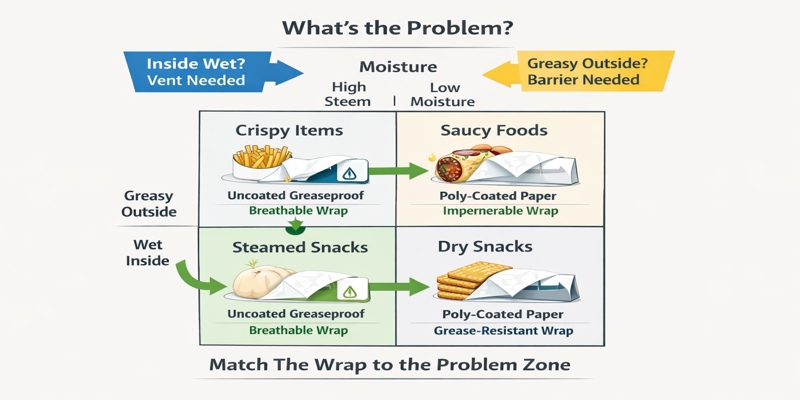
- Diagnose Before You Specify: Check if the inside of your wrapper is wet (steam problem) or the outside is greasy (oil problem)—each needs a different fix.
- Poly-Coated Traps Steam: Film coatings block leaks well but seal in moisture, turning crispy fries into a condensation chamber within minutes.
- Uncoated Greaseproof Breathes: Treated papers resist oil while letting vapor escape, keeping fried foods crisp during typical 15–20 minute delivery windows.
- Match Wrapper to Menu Item: Saucy, wet foods need sealed barriers; crispy fried foods need breathable ones—use your 2×2 grid to decide.
- Test Before You Commit: A 15-minute hot-hold test with your actual food reveals more than any specification (spec) sheet about real-world performance.
The right barrier matches the failure mode, not the price tier.
Food service operators and procurement managers sourcing packaging for hot delivery items will find a clear decision framework here, preparing them for the detailed spec and RFQ guidance that follows.
~ ~ ~ ~ ~ ~ ~ ~ ~ ~ ~ ~ ~ ~ ~ ~ ~ ~
Another one-star review. “Fries were soggy.”
You check the wrapper. No grease stains. No tears. The paper held up fine. So what failed?
The answer isn’t what most operators expect. That premium “greaseproof” coating you upgraded to last quarter? It’s working exactly as designed—sealing in moisture along with the grease. For fried foods releasing steam, a sealed barrier turns your crispy fries into a condensation chamber. The coating isn’t defective. It’s just solving the wrong problem.
Choosing between poly-coated and uncoated greaseproof paper isn’t about quality tiers. It’s about diagnosing whether your failure mode is steam condensation or grease migration—then matching the barrier to that specific problem.
Why Hot, Steamy Foods Break Packaging
Hot food releases moisture continuously. Steam rises off fresh fries, vents from fried chicken skin, escapes from warm sandwich bread. When that vapor hits a non-breathable surface, physics takes over: steam condenses back into liquid water—a phenomenon sometimes called “rainback” in packaging circles—and that water soaks directly into your crispy coating.
Grease migration works differently. Oil doesn’t evaporate—it slowly wicks through paper fibers over time, eventually reaching the outer surface as translucent stains. These two failure modes require opposite solutions.
Here’s the trap most operators fall into: sogginess feels like a grease problem, so they request “stronger greaseproof” paper. The supplier sends poly-coated stock with an even tighter barrier. Steam condensation accelerates. Complaints increase. The operator assumes they need even more coating.
Sogginess in fried foods is almost always a moisture-management failure, not a grease-resistance failure. Diagnosing which problem you actually have changes everything about the specifications (specs) you need.
What “Poly-Coated” and “Uncoated Greaseproof” Actually Mean
Poly-coated paper applies a thin polymer layer—typically polyethylene (PE) as either a film or dispersion coating—to one or both paper surfaces. This continuous barrier creates near-impermeability. Liquids can’t pass through. Grease can’t migrate. But vapor can’t escape either. The technical measure here is MVTR (moisture vapor transmission rate), tested through methods like ASTM E96/E96M, and poly-coated papers drive this number very low.
Uncoated greaseproof paper takes a different approach. Through fiber treatment (internal sizing) and mechanical processing (calendering), manufacturers tighten the paper structure enough to resist oil penetration without adding a continuous film. The paper blocks grease while still allowing some vapor transmission through microscopic pathways between fibers.
Think raincoat versus breathable hiking jacket. The raincoat blocks everything—including your body heat, which builds up as sweat inside. The breathable jacket lets vapor escape while still shedding rain. Neither is objectively better. The right choice depends on conditions.
For deeper context on how GSM and Kit Level interact to determine wrapper performance, the PaperIndex Academy provides a practical breakdown in Stop Serving Soggy Food: The Operator’s Clear Guide to GSM and Kit Levels in Food Packaging Paper.
The Core Tradeoff: Grease Barrier vs. Breathability
The selection framework maps your menu items against two variables: how much steam they release and how much grease they contain. Plot those coordinates, and the appropriate barrier type becomes clear.
Moisture vs. Grease Selection Grid
| Low Grease | High Grease | |
| High Steam Output | Vented design or perforated paper | Uncoated treated greaseproof + venting |
| Low Steam Output | Basic kraft or parchment | Poly-coated paper |
A practical diagnostic: if the inside of your wrapper is wet but the outside is clean, steam trapping and condensation are the likely culprit. If the outside stains or feels oily, grease or liquid migration is dominating. This single observation often points directly to the barrier change you need.
- High steam, high grease — freshly fried chicken, tempura, fish and chips. These items need grease resistance and breathability. Uncoated treated greaseproof paper handles the oil; vented container designs or perforated liners handle the steam. Adding more coating makes things worse.
- Low steam, high grease — cold deli sandwiches, room-temperature pastries with butter, chilled desserts. No significant vapor generation means trapped moisture isn’t a concern. Poly-coated barriers excel here because their strength (liquid impermeability) doesn’t create a weakness (condensation).
- High steam, low grease — steamed buns, fresh bakery items, warm bread rolls. Breathability is the priority. Vented packaging, perforated liners, or simple kraft paper prevents the soggy-bottom problem without needing grease resistance you’re not using.
- Low steam, low grease — dry snacks, crackers, room-temperature baked goods. Basic kraft or parchment suffices. No specialized barrier required.
Poly-Coated Paper: Where It Wins and Where It Fails
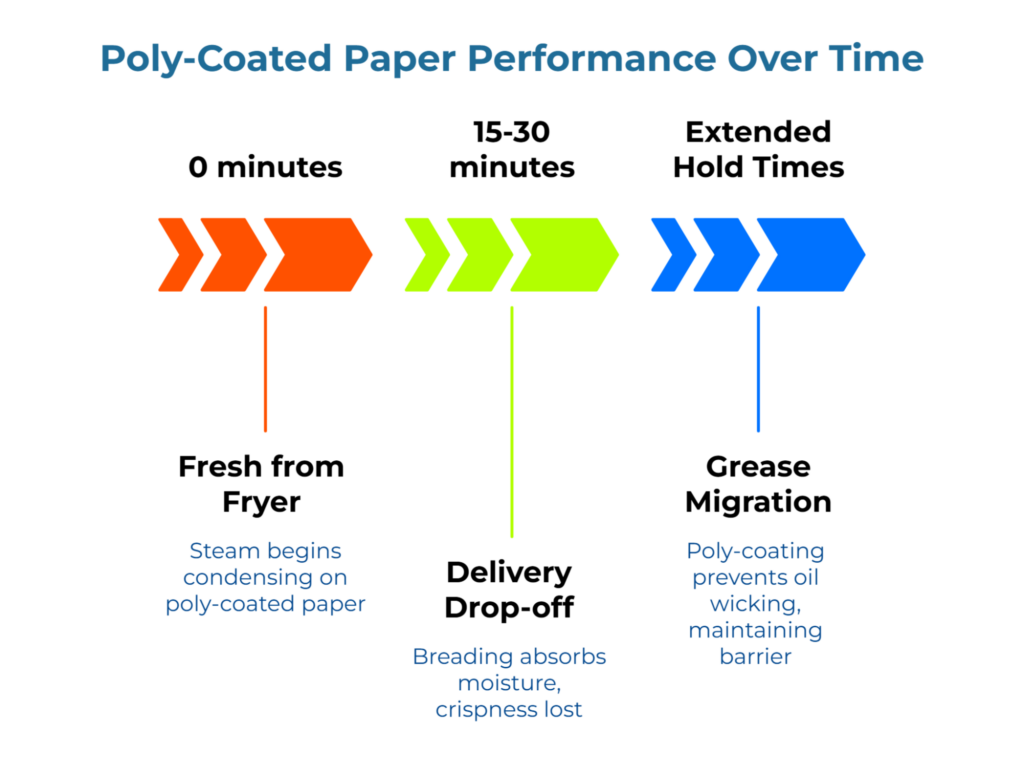
Poly-coated paper earns its place for specific applications. Saucy items where liquid pooling is the primary threat—wet burritos, loaded nachos with liquid cheese, items with significant sauce or dressing—benefit from the film barrier’s impermeability. Extended hold times also favor poly-coating because grease migration is cumulative; given enough time, oil will eventually wick through treated greaseproof paper, but it won’t penetrate a continuous film.
The failure pattern is equally predictable. Wrap fresh-from-the-fryer items in poly-coated paper, and steam begins condensing against the film almost immediately. That condensation has nowhere to go except back into the food. Breading absorbs moisture. Crispness disappears. By the time the delivery driver completes the drop-off—typically 15 to 30 minutes later—the damage is done.
For operators who previously used wax-coated papers, The Wax Paper Trap: Why Generic Wraps Fail High-Heat Tests explains why heat performance varies significantly across coating types.
If your customer complaints mention soggy food but your wrappers show no grease stains, the coating itself may be creating the problem. That’s the counterintuitive insight operators miss: a stronger grease barrier can make crispy food worse by trapping steam.
When poly-coated is needed for leakage control but texture still matters, the overall pack design can help. Adding a vapor exit—through vented secondary packaging or less airtight wrapping—often improves texture outcomes even when the primary wrapper is film-coated.
Uncoated Treated Greaseproof: Where It Wins and Where It Fails
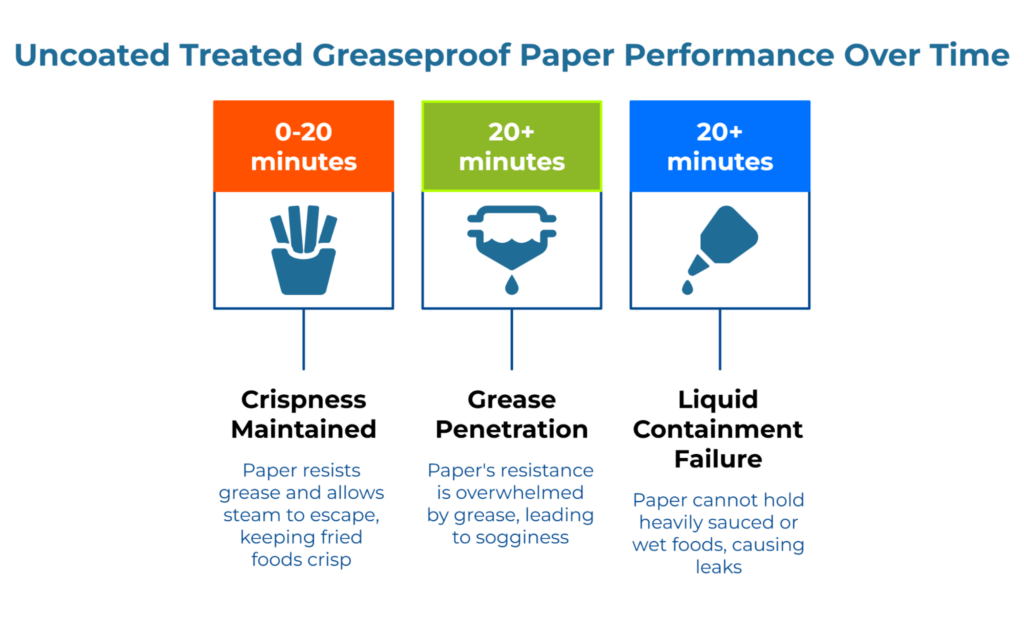
Uncoated greaseproof paper balances two competing needs. The treated fiber structure resists oil penetration—typically achieving Kit Levels adequate for most fried foods—while maintaining enough porosity for vapor transmission. Steam escapes. Crispness survives.
This makes it a highly effective choice for fried foods with standard hold times (typically under 20 minutes): fries, onion rings, fried fish, chicken tenders, and tempura vegetables. The wrapper handles moderate grease while letting the food breathe.
The limitation is absolute liquid containment. Very wet items—heavily sauced foods, items with pooling liquids, anything where the grease load overwhelms the paper’s resistance over time—eventually defeat treated greaseproof paper. For these applications, either upgrade to poly-coated or redesign the packaging system entirely (separate sauce containers, double-layer constructions).
If double-wrapping is common in your operation, the issue is often a mismatch in the two-number spec (GSM + Kit Level) or a need to redesign venting—not simply ‘use thicker paper’.
Menu-to-Wrapper Mapping Table
| Food Item | Primary Failure Risk | Recommended Barrier | Rationale |
| French fries | Steam condensation | Uncoated greaseproof + vented container | High steam; crispness critical; moderate grease |
| Fried chicken pieces | Steam trapping | Uncoated treated greaseproof | Crispy skin requires breathability |
| Wet burrito | Sauce leakage | Poly-coated | Liquid containment primary; minimal steam |
| Breakfast sandwich (egg/cheese) | Steam from warm fillings | Uncoated greaseproof | Moderate grease; bread sogginess from trapped steam |
| Cold deli wrap | Grease migration | Poly-coated | No steam concern; extended hold time possible |
| Warm croissant | Interior steam | Perforated or vented paper | Low grease; flaky texture sensitive to moisture |
| Loaded nachos with cheese sauce | Liquid pooling | Poly-coated | Sauce containment trumps breathability |
| Sauced wings / gravy items | Leaks, soggy outer bag | Poly-coated | Liquid migration dominates |
| Steamed items | Water droplets inside pack | Breathable wrap + venting strategy | Vapor condensing; avoid airtight film barriers |
Specifications and Questions for Your RFQ
When requesting quotes, specify these parameters to ensure comparable responses:
- Kit Level measures grease resistance on a standardized scale. Match to your menu’s fat content. While historical standards utilized levels 8–12 for heavy grease, modern PFAS-free compliant options typically peak around Kit 7–9, which is adequate for most fried chicken; moderate levels (3–6) generally suffice for standard fried items like fries or onion rings. The test method (commonly TAPPI T 559 or equivalent) provides the framework suppliers use.
- GSM indicates basis weight—the paper’s mass per square meter. Higher GSM generally means stiffer, more puncture-resistant paper, but it doesn’t automatically mean better moisture management. A 45 GSM treated greaseproof paper may outperform a 60 GSM poly-coated paper for crispy fried foods.
- Cobb value measures water absorption. Lower values indicate better moisture resistance, but very low values may signal reduced breathability—the same tradeoff in different terms.
- Coating specification (for poly-coated options) should specify coating type (film versus dispersion), coat weight in g/m², and application side. These variables affect both barrier performance and how the paper handles in your wrapping process.
- Breathability framing: If “breathable” is claimed, ask what test method or proxy is used, and at what temperature/humidity conditions the measurement applies. Standards such as ASTM E96/E96M govern gravimetric water vapor transmission measurement across sheet materials.
- Test conditions matter more than most operators realize. Ask whether grease resistance was tested at temperatures matching actual use. A Kit Level certified at 23°C may perform differently when your fries hit the paper at 75°C. Similarly, confirm what temperature range and hold time the grade is intended for, and whether recommendations rest on lab testing or field trials.
Avoid accepting vague ‘food safe’ claims without documentation — Why “Food Safe” Is a Meaningless Label for Food Packaging Paper (And What to Ask Instead) explains the verification questions that separate genuine compliance from marketing language. Require Declarations of Compliance and test reports that match your conditions of use. The FDA vs. ISEGA for Takeout Food Packaging Paper: What the Acronyms Really Mean explains these regulatory frameworks and what to ask your supplier, and The Compliance Shield: How to Audit Your Food Packaging Paper Suppliers for FDA & ISEGA Safety walks through verification steps. For operations serving EU markets, the European Commission’s food contact materials framework applies.
When balancing safety documentation against performance specifications, the Food Packaging Paper Sourcing Matrix: Balancing Safety Certification with Performance Specs helps structure tradeoffs systematically.
Quick In-House Checks Before Committing
Before scaling up orders, validate with your actual menu items.
- Hot-hold test. Wrap your food in the sample paper. Hold for your typical delivery window—often 12–18 minutes depending on your operation. Unwrap and assess: Is the bread still crisp? Is there visible moisture on the food surface or inside the wrapper?
- Condensation check. After the hot-hold test, examine the wrapper interior. Water droplets indicate trapped steam. If you see condensation and your food is soggy, breathability is insufficient—regardless of what the spec sheet claims.
- Grease penetration check. FFor high-fat items, inspect both wrapper surfaces after your hold time using the method outlined in A Simple 5-Minute Grease Spot Test to Check Your Food Packaging Paper Supply. Grease showing through to the outside means the barrier isn’t adequate for that food item at that duration.
- Vent sensitivity check. Repeat the hot-hold test with slightly looser wrapping or a vented secondary pack. If texture improves materially, steam trapping—not GSM or Kit Level—was the main issue.
These 15-minute tests with your actual products reveal more about real-world performance than any laboratory certification. Run them before committing volume.
Frequently Asked Questions
Does poly-coated paper prevent sogginess?
Not necessarily. Poly-coated paper prevents grease leakage but can worsen sogginess by trapping steam inside the wrapper. For crispy fried foods generating significant vapor, this tradeoff often works against food quality.
What’s the difference between greaseproof and poly-coated paper?
Poly-coated paper adds a polymer barrier layer (film or dispersion) for strong liquid and grease containment. Treated uncoated greaseproof relies on paper structure and fiber treatment to resist oil while often allowing more vapor venting. The distinction matters most for steam-generating foods where breathability affects texture.
How does uncoated paper resist grease without a coating?
Through fiber treatment and mechanical processing. Internal sizing adds chemicals during papermaking that resist oil absorption. Calendering compresses fibers to tighten the paper structure. The result resists grease penetration through physical and chemical means rather than a surface film.
Is poly-coated paper recyclable or compostable?
It depends on the coating type, thickness, and local facility capabilities. PE-coated papers generally cannot be recycled through standard municipal streams because the plastic film contaminates the paper recycling process. Compostability varies by formulation. Confirm with your waste hauler and supplier rather than assuming based on general claims.
What does double-wrapping signal?
If your team routinely double-wraps to prevent grease bleed-through or adds extra liners for moisture, the base wrapper specification likely doesn’t match your food’s requirements. Double-wrapping adds material cost and labor time to compensate for a spec mismatch. Correct the specification rather than working around it.
Can thicker paper (higher GSM) solve sogginess?
Not directly. GSM affects stiffness and puncture resistance, not moisture management. A thick poly-coated paper still traps steam. A thinner treated greaseproof paper with adequate breathability often preserves crispness better despite lower GSM.
Match the Barrier to the Failure Mode
The choice between poly-coated and uncoated greaseproof paper comes down to one question: is your actual failure mode steam condensation or grease migration?
For crispy fried foods with hold times under 15–20 minutes, breathable uncoated treated paper typically preserves texture better than sealed barriers. For saucy items, wet foods, or extended hold scenarios where liquid containment dominates, poly-coated barriers make sense.
Build a wrapper selection grid for your menu. Standardize specifications across similar items. Test samples with your actual food under your actual hold times before committing volume. When the reviews stop mentioning soggy fries, the spec is working.
To compare grades and request quotes, browse food packaging paper listings on PaperIndex. If you need to identify potential suppliers, the food packaging paper supplier directory provides a starting point for discovery.
For additional guidance on food packaging paper specifications, the PaperIndex Academy offers practical resources on sourcing, compliance, and performance optimization.
Disclaimer:
This article is for educational purposes and does not constitute legal or regulatory advice. Always confirm food-contact compliance and fitness-for-use with supplier documentation, test scope, and applicable local regulations.
Our Editorial Process:
Our expert team uses AI tools to help organize and structure our initial drafts. Every piece is then extensively rewritten, fact-checked, and enriched with first-hand insights and experiences by expert humans on our Insights Team to ensure accuracy and clarity.
About the PaperIndex Insights Team:
The PaperIndex Insights Team is our dedicated engine for synthesizing complex topics into clear, helpful guides. While our content is thoroughly reviewed for clarity and accuracy, it is for informational purposes and should not replace professional advice.