
Navigate sourcing decisions with clarity and confidence.

Building a Shortlist: Criteria for Choosing Wholesale Paper Bag Suppliers
📌 Key Takeaways Shortlisting paper bag suppliers requires structured criteria that reveal performance differences hidden beneath similar-looking quotes. Structured criteria transform scattered quotes into defensible supplier choices. Procurement managers sourcing custom paper bags will gain practical filtering methods here, preparing them for the detailed supplier evaluation framework that follows. Three ... Read More
Right Bag for the Job: A Playbook for Paper Bag Specs and Use-Case Matching in E-commerce & Delivery
📌 Key Takeaways Paper bag failures in delivery stem from construction mismatches and missing validation, not insufficient material weight alone. Construction clarity eliminates rework; route validation prevents scale-up failures. E-commerce procurement teams and delivery operations managers will gain repeatable spec frameworks here, preparing them for the detailed RFQ templates and ... Read More
Diagnosing Packaging Failures: Why Paper Bags Tear During Delivery
📌 Key Takeaways Every torn bag reveals a measurable gap between your specification and real delivery conditions. Document failures as data, not complaints—each tear becomes permanent specification improvement. Procurement managers and operations leaders sourcing paper bags for delivery operations will gain diagnostic clarity here, preparing them for the specification and ... Read More
Virgin vs. Recycled Kraft Paper: Choosing the Right Grade for Paper Bag Durability
📌 Key Takeaways Virgin vs. recycled kraft paper decisions require measurable performance specs—burst, tensile, tear, and Cobb values—not labels alone. Labels describe fiber source; test data describes real-world durability. Procurement teams sourcing kraft paper for packaging will gain spec-writing confidence here, preparing them for the decision matrix and RFQ template ... Read More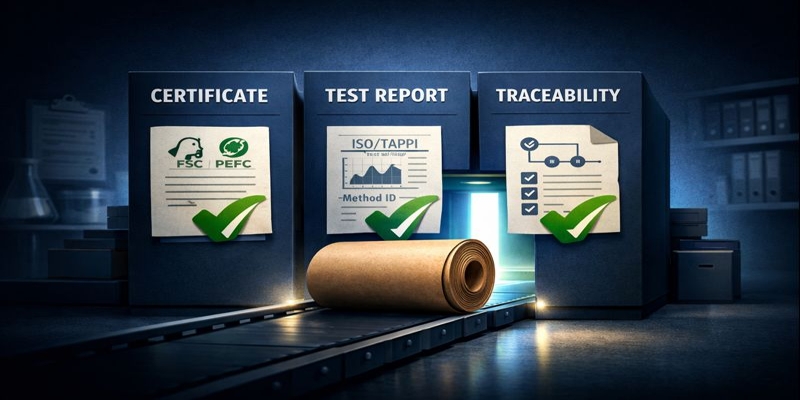
Recycled vs. Virgin Kraft Paper: Choosing the Right Bag Material for Eco-Compliance
📌 Key Takeaways Choosing between recycled and virgin kraft paper requires matching three factors: the compliance claim you must defend, the loads your bags carry, and the documentation you can maintain. The right material is the one you can verify, document, and defend when inspectors or buyers ask questions. Procurement ... Read More
Understanding Kraft Paper Grades for Paper Bags: A Guide to Durability and Cost for Retailers
📌 Key Takeaways Kraft paper grade selection determines whether checkout bags fail publicly or quietly overspend on durability the store never needs. Grade clarity turns procurement from guesswork into risk management. Retail buyers and store managers responsible for packaging decisions will gain a practical framework for specifying kraft grades confidently, ... Read More
Understanding GSM and Burst Factor: A Specifier’s Guide to Paper Bag Strength
📌 Key Takeaways Specifying GSM alone leaves bag strength to chance; pairing it with Burst Factor protects both product and margins. Heavy paper doesn’t guarantee strong bags—measured strength does. Paper bag manufacturers and packaging converters managing specifications across product lines will gain immediate clarity on cost-versus-strength trade-offs, preparing them for ... Read More
Kraft Paper for Making Paper Bags: A Strategic Guide to Grade Selection and Procurement
📌 Key Takeaways Kraft paper grade selection protects production uptime and cash flow better than chasing the lowest price per ton. The most expensive paper is the one that stops the machine. Small and mid-sized bag plant operators balancing cost pressure with quality requirements will gain a structured grade-selection framework ... Read More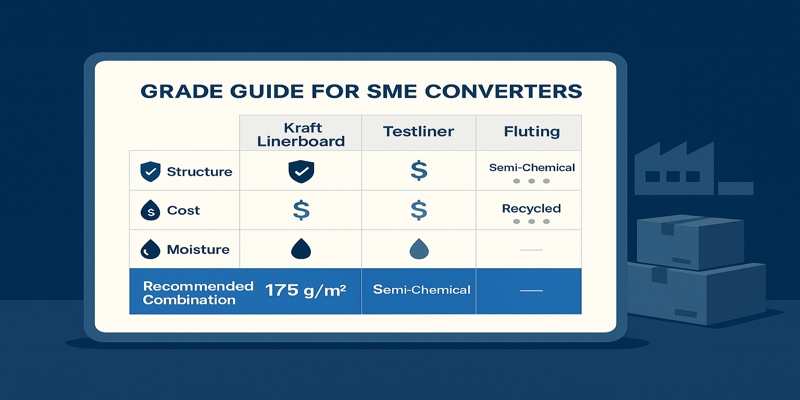
Kraft Paper Grade Guide for SME Converters: Choose the Right Grade for Every Job
📌 Key Takeaways Grade confusion costs SME converters money in over-specified materials and lost customers from under-specified failures. Clear grade specifications prevent MOQ traps and inventory bloat while enabling confident supplier negotiations. SME packaging converter owners and procurement managers will find a systematic framework here, preparing them for the detailed ... Read More
Vendor Data to Request Before You Lock Specs: COAs, Machine Conditions, and Variation Bands That Matter to Packaging Paper Converters
📌 Key Takeaways Lock specifications only after you’ve reviewed verifiable evidence—not vendor promises. Verifiable evidence transforms procurement from promise-based negotiations into data-driven decisions. Procurement professionals and quality managers at packaging converters will find this framework here, preparing them for the detailed evidence collection and vendor qualification processes that follow. This ... Read More
The Micrometer on Money: Spec Discipline for Containerboard Converters for Predictable Per-Order Cost
📌 Key Takeaways Unpredictable per-order costs stem from vague specifications that invite interpretation, rework, and post-award negotiations—not from market volatility. Spec discipline converts micrometer-level technical precision into predictable financial outcomes through enforceable contract language and systematic evidence verification. SMB containerboard converters, procurement managers, and quality leads responsible for kraft paper ... Read More
Energy Surcharges Explained: Turn Fuel & Power Volatility into Predictable Kraft Paper Budgets
📌 Key Takeaways Energy surcharges look like random line items, but they follow predictable patterns you can translate, contain, and track with minimal overhead. Translated = budgetable. Banded = defensible. Monitored = predictable. Procurement and sourcing managers at SMB packaging converters will find the systematic approach here, preparing them for ... Read More
Kraft Paper Cost Drivers: How Pulp, Energy, Freight, and FX Move Your Price — and What to Track
📌 Key Takeaways Procurement teams face supplier price adjustments without systematic verification tools, leaving them reactive and vulnerable to unsubstantiated cost increases. Four monitored dials, documented assumptions, and preset actions = supplier conversations backed by evidence, not guesswork. Procurement and sourcing managers at SMB packaging converters—plus supplier sales teams seeking ... Read More
Containerboard Quality Acceptance Criteria That Prevent Disputes: A Simple Way to Set Thresholds and Triage
📌 Key Takeaways Delivery disputes don’t start at the receiving dock—they start with vague purchase orders that list properties without stating how to measure them or what variation is acceptable. Prepared = objective verification and fewer rejected loads. Converter procurement and QA teams at small to mid-sized packaging operations will ... Read More
Trim Optimization Basics for Containerboard: Width, Deckle, and Minimum-Run Logic
📌 Key Takeaways Trim optimization isn’t about chasing zero waste—it’s about protecting throughput while keeping material costs predictable. Accepting 1-2 percentage points more trim often recovers more value through eliminated setups than it costs in material waste. Procurement and operations planners at packaging converters will find this framework here, preparing ... Read More
Runnability and Moisture: How Small Spec Shifts Drive Big Downtime
📌 Key Takeaways A half-percent moisture drift seems negligible, but it’s the hidden variable that transforms smooth production runs into costly downtime cycles. Moisture control = predictable runs and eliminated finger-pointing. Procurement and sourcing professionals at packaging converters will find a practical framework here, preparing them for the detailed operational ... Read More
Cp/Cpk Basics for Paper Converters: Read Capability Numbers Without Becoming a Statistician
📌 Key Takeaways Capability indices promise a quick answer to supplier readiness, but only three foundational checks—measurement system analysis, process stability, and distribution shape—determine whether those numbers are actually valid. Valid capability data enables confident decisions; invalid data creates false confidence. Procurement teams, QA managers, and converting operations professionals will ... Read More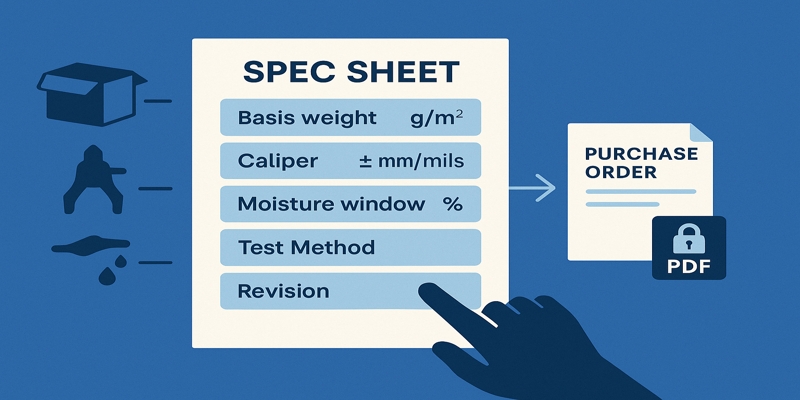
Spec Sheets That Work: The Minimum Fields a Packaging Paper Converter Needs to Avoid Guesswork
📌 Key Takeaways Vague spec sheets create receiving disputes, incomparable quotes, and line stops—but five systematic fields eliminate the guesswork. Lock the standard, attach the PDF to every PO, and both sides execute without renegotiation. Paper converters and their procurement teams will find a systematic framework here, preparing them for ... Read More
Containerboard Basis Weight vs. Caliper: Picking the Right Trade-Off for Clean Runs on Your Existing Equipment
📌 Key Takeaways Your converting line’s performance depends less on paper quality than on matching specifications to equipment limits. Start with equipment windows, then optimize within those bounds—not the reverse. Packaging engineers, converting supervisors, and plant managers will find a practical decisionmaking framework here, preparing them for the detailed specifications ... Read More