
Plan procurement budgets and optimize cost.

Why Unit-Price Thinking Fails: The Hidden Impact of Corrugated Box Structural Integrity
📌 Key Takeaways A five-cent per-box saving disappears when damage rates rise by as little as 0.12%, because failure costs scatter across departments that never see the original purchase order. Spend accurately, not cheaply—structural integrity matched to load stress lowers total landed cost. Procurement managers and operations leaders responsible for ... Read More
The Engineering of Efficiency: A Thesis on Corrugated Box Cost Optimization
📌 Key Takeaways Corrugated box cost optimization is an engineering discipline that matches structural integrity to actual load stress—preventing systemic failure costs— rather than chasing unit price reductions. Specification discipline prevents the failures that price negotiation cannot fix. Procurement managers, operations leaders, and packaging engineers responsible for corrugated box sourcing ... Read More
Corrugated Box Cost Optimization in Industrial Packaging Is an Engineering Discipline—Not a Negotiation Tactic
📌 Key Takeaways Corrugated box cost optimization means engineering the minimum viable structural performance for the actual load case, then negotiating within that engineered envelope. Engineer the spec. Verify the claims. Govern the drift. Procurement managers, packaging engineers, and operations leaders balancing cost pressure against supply chain reliability will gain ... Read More
Building the Business Case for Heavy-Duty Corrugated Box Packaging: A Justification Model for Operations and Finance
📌 Key Takeaways Finance approves packaging upgrades when requests map failure events to measurable costs and include decision rules that prevent permanent spend without proof. Documented assumptions and decision thresholds turn packaging requests from cost debates into controlled pilots. Category managers, operations leaders, and packaging engineers seeking cross-functional approval will ... Read More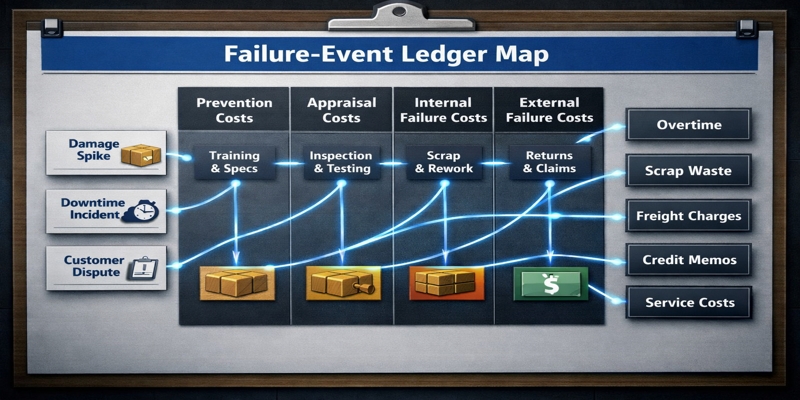
Building the Business Case for Packaging Quality: A CFO-Readable Justification Model for Operations and Finance
📌 Key Takeaways Finance rejects quality requests lacking definitional clarity, repeatable assumptions, and measurable controls—not because they oppose quality. Quality spend becomes defensible when failure events map to cost categories with measurement plans. Procurement managers and operations leads building CFO-ready quality cases will gain the justification framework and one-page template ... Read More
The “False Economy” of Low-Bid Corrugated Boxes: Why Unit Price Spikes Your TCO
📌 Key Takeaways Unit-price savings on corrugated boxes disappear when hidden failure costs—damage, downtime, rework, expediting—scatter across operations, customer service, and finance budgets procurement never sees. Decision-grade clarity beats accounting-grade precision when tiny exception-rate changes overwhelm unit-price differences. Procurement managers sourcing corrugated packaging will gain a defensible framework for justifying ... Read More
Stop Buying on Price: Why ‘Cheap’ Boxes Cost More in the Long Run
📌 Key Takeaways Unit price comparisons create a false economy when damage costs scatter across budgets that procurement never sees. Consistent data beats perfect data when all suppliers face the same evaluation standard. Procurement and engineering teams managing high-value electronics or appliances will gain a defensible framework here, preparing them ... Read More
How to Calculate Your True Box Usage to Avoid Stockouts
📌 Key Takeaways True box usage measures every carton consumed—including waste, rework, and internal pulls—not just customer shipments, preventing the phantom consumption that causes surprise stockouts. Hope is not an inventory strategy; math is. Food and beverage operations managers struggling with packaging continuity will gain a practical calculation framework here, ... Read More
Why ‘Cheap’ Boxes Cost More: The Hidden Economics of Damage Rates
📌 Key Takeaways Damage rates drive total packaging costs more powerfully than unit price, because each percentage point triggers replacement product, reshipping, returns handling, labor, and customer credits that multiply across every incident. Measure damage rate first, then write specifications that make it controllable. Procurement managers and operations leaders in ... Read More
Stop Panic Buying: A 4-Step System for Strategic Corrugated Box Sourcing
📌 Key Takeaways Decouple ordering from verifying—pre-qualify suppliers before urgency forces rushed decisions that cost 15-25% more in expedited freight and hidden failures. Verification before emergency = speed without gambling. Procurement managers and operations leads in food, beverage, and e-commerce will eliminate panic-buying cycles here, setting up the detailed four-step ... Read More
The Hidden Cost of Ad-Hoc Wholesale Paper Bag Buying
📌 Key Takeaways Ad-hoc paper bag buying creates hidden costs that exceed any unit-price savings through expedited logistics, emergency orders, artwork rework, quality failures, and lost supplier leverage. Structured sourcing converts scattered, invisible costs into controllable procurement variables. Procurement managers and operations teams sourcing wholesale paper bags will find actionable ... Read More
How to Calculate Landed Cost for Paper Bags
📌 Key Takeaways Landed cost calculation normalizes quotes to a single delivery basis, preventing invoice disputes and enabling defensible supplier comparisons. Normalized quotes eliminate hidden costs and turn procurement debates into evidence-based decisions. Procurement and logistics teams sourcing paper bags internationally will gain a repeatable worksheet for comparing mixed-basis quotes, ... Read More
Navigating Global Logistics: Duty and Freight Factors in Sourcing Paper Bags
📌 Key Takeaways Landed cost—not FOB price—determines which international paper bag supplier actually fits your budget. Compare to-door totals, not unit prices—clarity eliminates invoice disputes. Procurement managers sourcing paper bags internationally will gain a repeatable 30-minute normalization method here, preparing them for the detailed cost-component breakdown and copy-paste RFQ templates ... Read More
The Hidden Cost of Unverified Suppliers: Why “Cheap” Paper Bags Break Your Budget
📌 Key Takeaways Unit price without verification creates hidden costs that quietly erase savings and drain margins. Strategic sourcing beats transactional thinking when packaging touches every customer interaction. Small retail owners and foodservice operators managing tight margins will gain a practical risk framework here, preparing them for the supplier verification ... Read More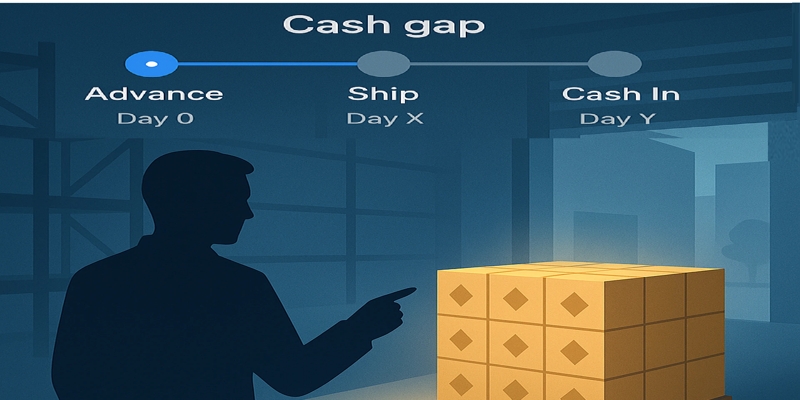
The “Cash Gap” Calculator for Paper Bag Buyers: How to Keep Working Capital Flowing
📌 Key Takeaways Paper bag procurement creates a cash gap—the time between paying suppliers and recovering money through customer sales—that could stretch 90 to 175 days. Calculate before you commit—rough numbers reveal hidden capital traps. E-commerce procurement managers, retail operations teams, and brand managers overseeing packaging decisions will gain a ... Read More
The ‘Inventory Trap’: Why Buying Mill Direct is Bankrupting Small Paper Converters
📌 Key Takeaways Mill-direct paper deals bankrupt small converters by locking working capital in warehouse inventory while cash flow drains. The inventory trap is structural mismatch, not incompetence—mill economics designed for giants suffocate small paper converters.. Small packaging converters and paper bag manufacturers managing tight margins will gain defensive sourcing ... Read More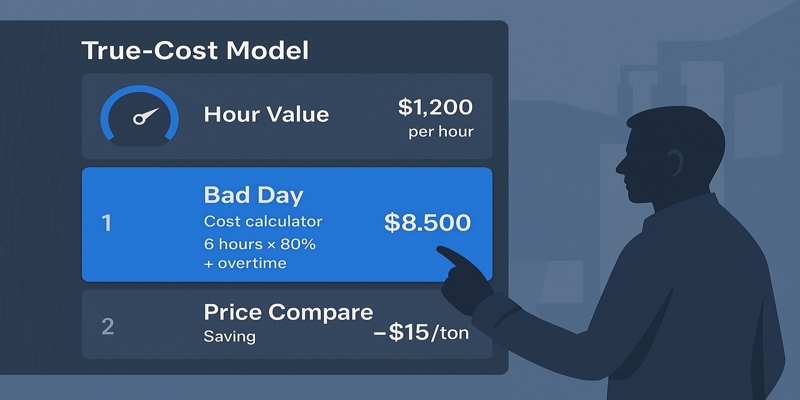
The High Cost of “Cheap” Paper: How Quality Variance Kills Production Margins
📌 Key Takeaways Quality variance in kraft paper erodes production margins through waste, downtime, and customer complaints that dwarf any headline price savings. Cheap paper costs most when machines stop running. SME paper bag manufacturers and packaging converters balancing tight margins with quality risk will find a practical three-step modeling ... Read More
Why ‘Insurance’ Isn’t a Strategy for Paper Importers: The Hidden Cost of Claim-Reliance
📌 Key Takeaways Insurance claims recover money but leave most damage costs—lost time, customer trust, and operational chaos—uncompensated. Insurance is a seatbelt, not a driving strategy. Small business paper importers and procurement managers will gain a practical framework for calculating true damage costs and shifting to prevention-first sourcing, preparing them ... Read More
A Comparative Decision Matrix for Low-Volume Sourcing: Marketplace vs. Mill Direct vs. Local Distributor
📌 Key Takeaways The MOQ Barrier forces small converters to choose between channels that don’t fit their reality—but a neutral decision matrix turns that problem into a documented, defensible sourcing strategy. Most sourcing decisions fail because they optimize for the wrong variable at the wrong time—this framework ensures your choice ... Read More