Navigate sourcing decisions with clarity and confidence.
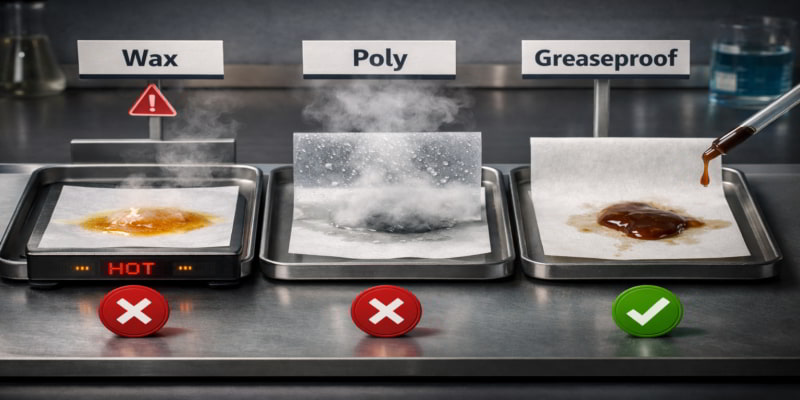
Poly vs. Wax vs. Greaseproof: Choosing the Right Coating for Food-Grade Paper Menus
📌 Key Takeaways Picking the right food wrap means matching the coating to your menu’s heat, grease, and hold time—not just grabbing whatever says “food safe.” The right coating protects food quality; the wrong one creates the complaints you’re trying to prevent. Food service operators and procurement managers sourcing packaging ... Read More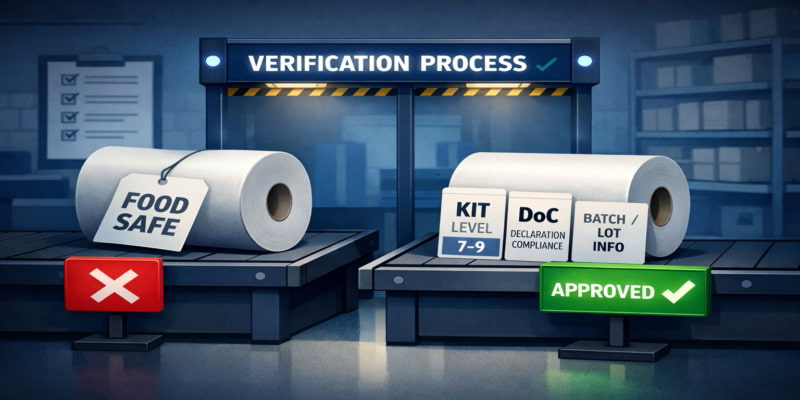
Why ‘Food Safe’ Isn’t Enough: The Hidden Risks of Generic Food Packaging Paper
📌 Key Takeaways “Food safe” is a marketing phrase, not a safety guarantee—real protection comes from matching paper specifications to your actual menu conditions. Match your specifications to your menu, not to a vague label. Food service operators scaling locations or expanding menus will gain a repeatable sourcing process here, ... Read More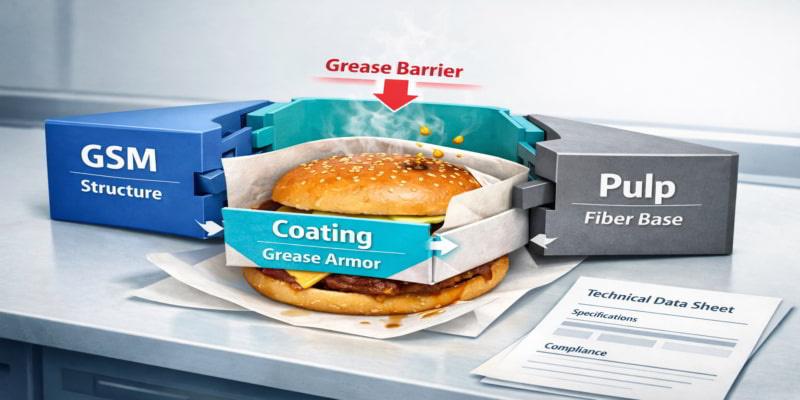
Food Packaging Paper Specifications 101: A Beginner’s Guide to GSM, Coatings, and Pulp
📌 Key Takeaways Knowing three specifications terms—GSM, coatings, and pulp—lets you order food packaging that actually protects your food. Match your specifications to your menu conditions—then document everything. Food service operators and procurement managers ordering packaging for hot or greasy items will gain confidence asking suppliers the right questions, preparing ... Read More
The Failure of Generic Sourcing in Food Packaging Paper: Using the Specifications-First Protocol to Build Brand Safety
📌 Key Takeaways “Food safe” labels tell you nothing about whether paper will survive hot, greasy food—only specifications reveal actual performance. Food service operators and procurement managers sourcing packaging materials will find actionable frameworks here, preparing them for supplier conversations that produce comparable, verifiable quotes. ~ ~ ~ ~ ~ ... Read More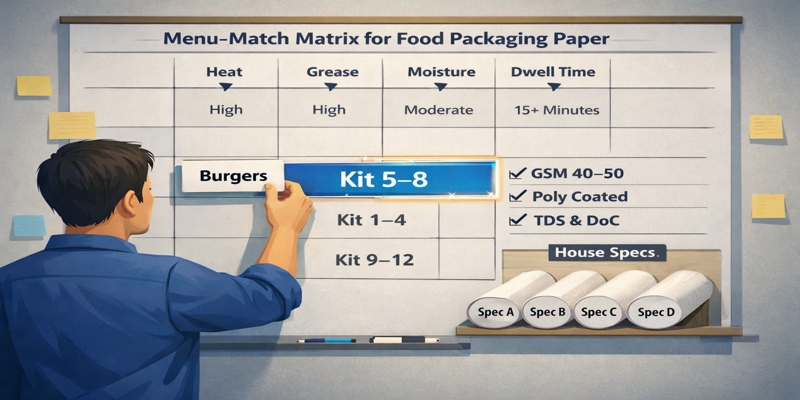
The Menu-Match Matrix for Food Packaging Paper: How to Match Your Menu with the Right Kit Level and Specifications
📌 Key Takeaways Matching paper specifications (specs) to your actual menu—not grabbing “food safe” labels—prevents grease stains, soggy wraps, and wasted money. Spec the paper to the food, and the packaging argument ends before it starts. Food service operators, restaurant procurement managers, and multi-location franchise buyers will gain a shared ... Read More
The Wax Paper Trap: Why Generic Wraps Fail High-Heat Tests
📌 Key Takeaways Wax paper fails on hot food because heat melts the coating—use greaseproof paper with documented specs for burgers, fries, and hot sandwiches. The right wrap protects your product; the wrong one becomes the problem. Food service operators and procurement managers sourcing food packaging for hot menu items ... Read More
Food Packaging Paper GSM Explained: How to Match Paper Weight to Your Menu Items
📌 Key Takeaways GSM tells you how heavy paper feels, not whether it blocks grease—those are two separate specs you need to set independently. Heavy paper that lets grease through is just expensive failure—spec both weight and barrier. Food service operators and procurement managers choosing packaging paper will gain clarity ... Read More
Food Packaging Paper Kit Levels 1–12: An Easy-to-Understand Guide to Grease Resistance
📌 Key Takeaways Grease resistance in food wrapping paper comes down to one number—the Kit level (1–12)—not paper thickness or weight. Right Kit level = clean hands and crisp food wrong Kit level = soggy mess and customer complaints Food service operators and food packaging paper buyers will gain clarity ... Read More
A Simple 5-Minute Grease Spot Test to Check Your Food Packaging Paper Supply
📌 Key Takeaways A five-minute oil drop test catches grease barrier failures before bad paper reaches your food line. Quick screening catches grease failures before customers do. Food service operators and QA teams managing incoming food packaging supplies will gain a practical receiving check here, preparing them for the detailed ... Read More
Stop Serving Soggy Food: The Operator’s Clear Guide to GSM and Kit Levels in Food Packaging Paper
📌 Key Takeaways Soggy food happens when paper specs don’t match your menu—fix the numbers, fix the complaints. Match the spec to the menu, and soggy complaints disappear. Food service operators and packaging buyers will find practical spec templates and supplier questions here, preparing them for menu-specific paper selection that ... Read More
Food Packaging Paper Sourcing Matrix: Balancing Safety Certification with Performance Specs
📌 Key Takeaways Stop judging suppliers on safety paperwork and performance specs separately—plot both on the same grid to see where your real risks are hiding. The right supplier sits where verified safety meets proven performance. Procurement managers and food service operators sourcing packaging paper will gain a clear framework ... Read More
Matching Corrugated Box Flute Profiles to Product Weight: A Technical Checklist for E-commerce
📌 Key Takeaways Packed weight alone misleads flute selection—footprint, height, and damage history determine whether boxes survive real distribution. Specifications matched to failure modes protect margins; specifications matched only to weight invite surprises. E-commerce operations managers and procurement professionals sourcing corrugated packaging will gain a decision framework here, preparing them ... Read More
Triple-Wall vs. Gaylord: Choosing the Right Bulk Container for Your Load
📌 Key Takeaways Container failures trace to format-load mismatch, not material weakness—match the container to how the load behaves and how it gets unloaded. The container that survives your supply chain is the one specified for your load, your handling, and your dock. Operations directors and procurement managers sourcing heavy-duty ... Read More
The Shield: A Definitive Guide to Heavy-Duty Corrugated Box Packaging
📌 Key Takeaways Heavy-duty industrial packaging prevents failures when grade selection matches actual load physics—weight, density, geometry, and environmental exposure—not visual confidence or single-spec assumptions. Right-grade packaging matched to threat—not over-specified caution or under-specified cost savings—delivers consistent protection. Procurement managers and packaging engineers sourcing corrugated containers for industrial loads will ... Read More
Why Standard Corrugated Boxes Fail: The Physics of Heavy-Duty Shipping
📌 Key Takeaways Heavy-duty box failures follow predictable physics—compression, moisture, and puncture—that proper specification prevents before the shipment leaves the dock. Specify for the load, not the catalogue. Procurement managers and operations leaders sourcing corrugated boxes for heavy industrial shipments will understand why standard packaging fails, preparing them for the ... Read More
Why Burst Strength Isn’t Enough: Understanding Corrugated Box ECT and Flute Profiles
📌 Key Takeaways Corrugated box specifications must match the actual failure mode—stacking collapse, puncture, or converting constraints—not default to a single strength number. Specification clarity eliminates preventable disputes and transfers risk appropriately. Procurement managers sourcing corrugated packaging from international suppliers will gain failure-mode specification frameworks here, preparing them for the ... Read More
The Quality Blueprint: Defining and Enforcing Corrugated Box Specs
📌 Key Takeaways Enforceable corrugated specifications prevent “meets spec” disputes by defining performance requirements, naming test methods with conditioning protocols, and establishing documented acceptance criteria before problems occur. Specification discipline transforms vague board-grade callouts into enforceable governance systems. Procurement managers and operations leaders sourcing corrugated packaging will gain copy-ready RFQ ... Read More
How to Read Corrugated Box Drop Test Reports: A Guide for Procurement Managers
📌 Key Takeaways A drop test report becomes usable procurement evidence only when it states the test method, exact configuration tested, drop schedule, and acceptance criteria—without these four elements, “PASSED” means nothing defensible. Comparable evidence beats vendor promises every time. Procurement managers qualifying corrugated box suppliers for electronics packaging will ... Read More
Molded Pulp vs. Die-Cut Corrugated: Which Cushioning Protects Better?
📌 Key Takeaways Protection depends on matching insert geometry to distribution hazards, then validating through testing—not on material superiority claims. Geometry, clearance, and validated testing determine protection—material choice follows from those decisions. Packaging engineers and procurement managers selecting cushioning for electronics shipments will gain decision frameworks and validation workflows here, ... Read More