
Build strong supplier relationships that deliver consistent value.

Why “Agility” is the New Scale: Rethinking Paper Procurement for SMEs
📌 Key Takeaways Chasing volume discounts through oversized MOQs drains working capital, locks inventory for months, and turns “scale” into a strategic trap for small converters. Small and mid-sized packaging converters, procurement managers, and business owners in the kraft paper converting industry will find their strategic framework here, preparing them ... Read More
Payment Terms Design for Kraft Paper Suppliers & Customers: Scripts You Can Use to Ask for Better Terms
📌 Key Takeaways Payment terms determine when cash moves, and a 15-day shift can materially change your working capital needs over a year. Terms that align with your cash cycle reduce overdraft reliance and free capital for growth. Kraft paper suppliers and buyers in B2B trade will find practical scripts ... Read More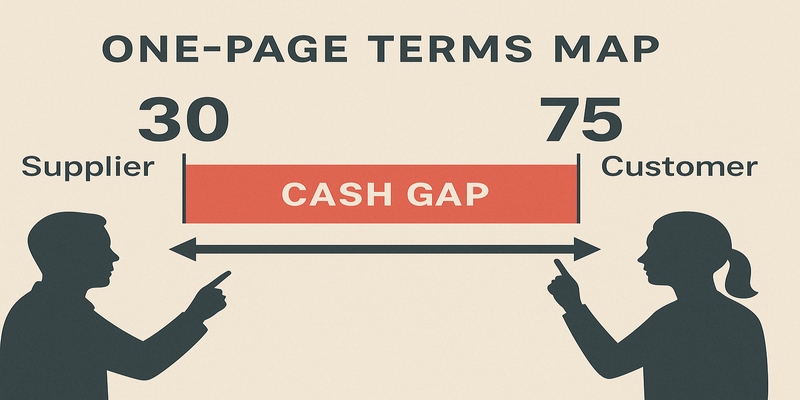
Payment Terms Design for Kraft Paper Suppliers & Customers: First Steps to List, Compare, and Spot Your Biggest Cash Flow Gaps
📌 Key Takeaways Payment terms with kraft paper suppliers and customers rarely align by accident—and that mismatch quietly drains working capital every month. Mapping precedes negotiation; clarity precedes control. Finance heads, CFOs, and procurement leads at SME packaging converters will find a practical diagnostic framework here, preparing them for the ... Read More
Limited Kraft Paper Negotiating Power: Five Simple Levers Beyond Just Asking for a Lower Price
📌 Key Takeaways When kraft paper price conversations feel one-sided, the real issue isn’t your tonnage—it’s walking in with only “give me a discount” as your plan. Walk in prepared, leave with control—even when your tonnage stays the same. Small and mid-size packaging converters buying kraft paper will find a ... Read MoreAligning Finance and Procurement Priorities: A Checklist for Reducing Working Capital Strain from Payment Terms
📌 Key Takeaways Working capital strain from payment terms turns month-end into a firefight when kraft paper bills come due weeks before customer payments arrive. Finance heads, procurement leaders, and owner-operators at SME packaging converters will find a practical framework here, preparing them for the detailed checklist and implementation guidance ... Read More
Working Capital Strain from Payment Terms: A Simple Guide to Seeing and Fixing Your Kraft Paper Cash Flow Gap
📌 Key Takeaways Cash flow problems aren’t always caused by poor sales—they’re often caused by poor timing between when you pay suppliers and when customers pay you. Map it once, measure it quarterly, adjust one lever at a time—that’s how converters move from overdraft anxiety to cash control. SME packaging ... Read More
Working Capital Strain from Payment Terms and Payment Terms Design: A Strategic Bridge Guide for SME Packaging Converters
📌 Key Takeaways Misaligned payment terms between kraft paper suppliers and customers create a structural cash flow gap that turns growth into a working capital crisis for SME packaging converters. Target improvements of 15-20 days in your cash conversion cycle = ₹12-15 lakh ($14-18K) freed for a typical ₹20 lakh ... Read More
Building Supplier Options When Your Kraft Paper Negotiating Power is Limited: How to Diversify Without Burning Bridges
📌 Key Takeaways When your converter depends on one or two kraft paper suppliers, every price increase feels like a threat you can’t negotiate but staged diversification over 6-12 months shifts the conversation from desperation to strategic discussion. Structured diversification isn’t about switching for price—it’s about reducing dependency so negotiations ... Read More
Integrating Limited Kraft Paper Negotiating Power and Price Volatility Budget Management: An Integration Playbook for SMB Converters
📌 Key Takeaways Price swings hurt more when you lack leverage, and weak leverage makes volatility more dangerous. Treating them as separate problems guarantees reactive firefighting instead of strategic control. The playbook shifts procurement from explaining margin collapses to presenting options grounded in data and deliberate design. Procurement and sourcing ... Read More
Exporter Reliability + Evidence Integrity: The Integration Score that De-Risks
📌 Key Takeaways International supply risk stems from evaluating price while ignoring two critical dimensions: whether the supplier can execute reliably and whether their quality claims rest on verifiable proof. Prepared = defensible shortlists and fewer post-award disputes. Small business procurement managers, converting operations leads, and QA professionals evaluating international ... Read More
From Onboarding to Ongoing Assurance: A Strategic Guide to Moving from Kraft Paper Supplier Pre-Qualification to Audit & Compliance
📌 Key Takeaways Pre-qualification questionnaires capture capability at a single moment, but consistent supplier performance demands a continuous verification system that connects initial requirements to ongoing monitoring and corrective action. Prepared suppliers with method-consistent testing and documented controls earn reduced oversight; gaps trigger immediate corrective protocols. Procurement managers, quality assurance ... Read More
Contract Clauses That Protect Against Off-Spec Kraft Paper Deliveries
📌 Key Takeaways Off-spec kraft paper doesn’t have to derail your production schedule or strain supplier relationships—if your contract establishes the rules before problems arise. Procurement and quality managers at packaging manufacturers will gain actionable contract clauses here, preparing them for the detailed clause-by-clause framework that follows. Delivery arrives. Lab ... Read More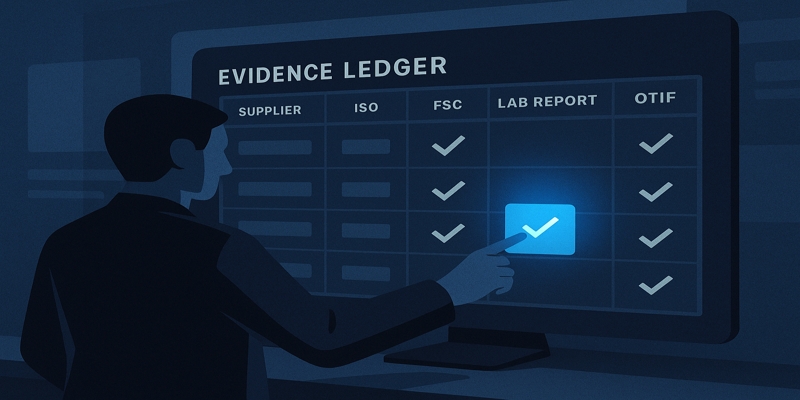
PQQ Template: Minimum Evidence Required from Kraft Paper Suppliers
📌 Key Takeaways Pre-qualification delays stem from undefined evidence requirements, not from supplier capability gaps. Clear evidence standards transform supplier qualification from detective work into systematic verification—faster onboarding, stronger compliance, fewer downstream failures. Procurement teams, sourcing managers, and QA leaders at packaging converters and corrugators will find the framework here, ... Read More
Designing CAPA Workflows for Kraft Paper Suppliers: From Finding to Fixing
📌 Key Takeaways When a kraft paper shipment fails a moisture or Cobb test, the speed and rigor of your response determine whether you contain a single incident or trigger a pattern of customer erosion. Fixed processes beat fast promises every time. Supplier QA managers building audit-ready systems and buyer ... Read More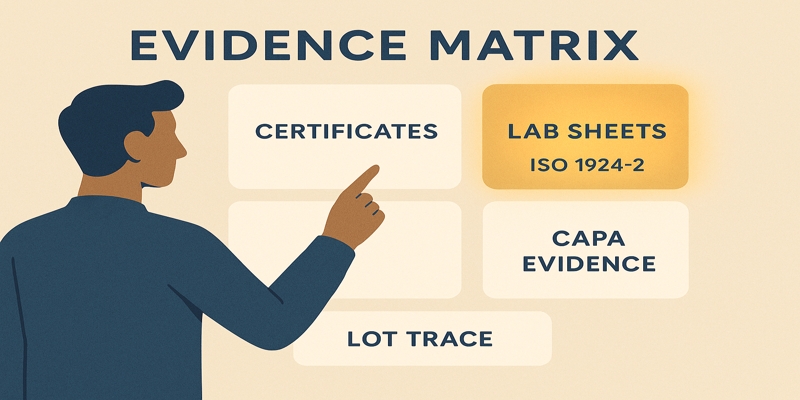
Checklist: What to Require in a Kraft Paper Supplier Audit Report
📌 Key Takeaways Audit reports turn supplier approval from subjective guesswork into a fast, defensible decision backed by structured proof. A structured checklist transforms audit evaluation from hours of review into minutes of verification. Procurement and quality managers evaluating kraft paper suppliers will find the evidence requirements and verification criteria ... Read More
Remote vs. On-site Supplier Audits for Kraft Paper: When Each Makes Sense
📌 Key Takeaways Choosing the right audit approach—remote, on-site, or hybrid—determines how quickly you gain confidence in a kraft paper supplier’s capability and compliance. Procurement managers, quality leads, and sourcing teams evaluating kraft paper suppliers will gain a structured framework here, preparing them for the detailed audit workflow and evidence ... Read More
Kraft Paper Supplier Audit & Compliance Program: A Practical Framework for Verifiable Supply
📌 Key Takeaways A reactive audit catches failures after they disrupt operations; a structured program prevents them before they reach your facility. Verified capability replaces reactive crisis management. Procurement managers, quality leads, compliance teams, and sourcing heads will find a complete program framework here, preparing them for the detailed implementation ... Read More