
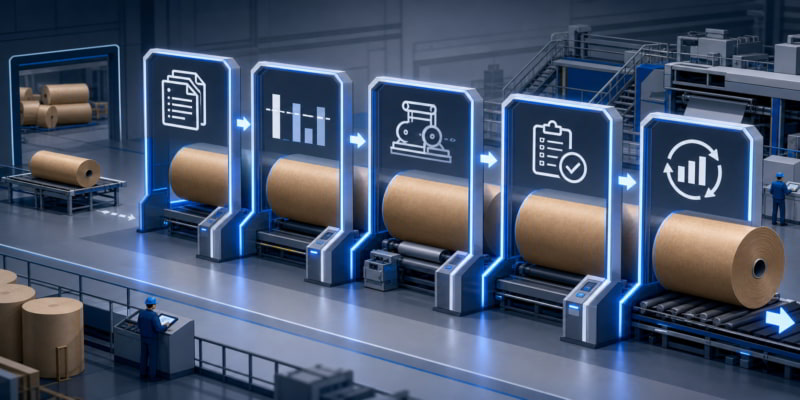
📌 Key Takeaways
A controlled trial on your own production line is the only real way to approve a new kraft paper supplier.
- Samples Can Mislead You: A clean-looking roll on a pallet may behave very differently once it hits your machines at full speed.
- Set a Baseline First: Record how your current material performs so you have an honest comparison, not a debate.
- Make It a Team Decision: Procurement, engineering, QA, production, and warehouse staff each catch risks the others miss.
- Document Everything During the Run: Without notes on machine settings, storage conditions, and adjustments, you can’t tell a supplier problem from a process problem.
- Approval Isn’t the Finish Line: Keep monitoring lot-by-lot performance, because quality can quietly shift after the first shipment passes.
Approve with evidence, not assumptions — and keep watching after you say yes.
Procurement and quality teams evaluating new kraft paper parent rolls will gain a clear, repeatable trial framework here, preparing them for the detailed guidance that follows.
~ ~ ~ ~ ~ ~ ~ ~ ~ ~ ~ ~ ~ ~ ~ ~ ~ ~
A polished sample can mislead.
The roll looks clean on the pallet. The supplier’s datasheet is tidy. The quote is attractive enough to make procurement ask, “Why not approve this and move faster?” Then the material reaches the corrugator or converting line, and the real test begins.
Before approving kraft paper jumbo rolls from a new supplier, you need more than a price, a grade name, and a promising sample. You need a controlled supplier trial that shows whether the paper performs in your actual receiving, storage, converting, corrugating, and end-use conditions.
A practical kraft paper supplier trial answers one question: can this supplier, grade, and specification perform within agreed limits without creating avoidable production or quality risk?
Why a Kraft Paper Supplier Trial Matters
Kraft paper parent rolls affect much more than purchasing cost. They influence runnability, web breaks, waste, moisture response, board quality, converting consistency, and customer complaints.
A supplier may meet basic commercial requirements and still create production risk. The material may look acceptable at receiving but behave differently during unwinding. A sample sheet may test well, yet regular supply may vary by lot, source, winding quality, moisture condition, or handling history.
That is why supplier approval should not rest on supplier claims alone — as we explore from claims to certificates, it should combine documentation, sample evaluation, baseline comparison, controlled trial runs, cross-functional review, and ongoing monitoring.
This is qualification, not guesswork.
Start With the Business Reason for the Trial
Do not start by asking, “Does the paper look good?”
Start by asking why the supplier is being tested.
Common trial triggers include cost reduction, supply continuity, dual sourcing, shorter lead times, replacement of an inconsistent supplier, a new grade or basis weight, improved durability, or a customer-specific packaging requirement. Each trigger changes the evidence you should request.
If the trial is driven by cost reduction, the team should check whether the lower-cost paper creates higher waste, downtime, rework, or complaints. If the trial is driven by supply continuity, consistency and traceability matter more. If the goal is better box performance, engineering and QA should define the relevant strength and application tests before production exposure.
A simple trial objective helps:
“This trial will confirm whether the proposed kraft paper parent rolls meet our technical, production, and customer-use requirements under normal plant conditions.”
That sentence keeps procurement, QA, engineering, and production aligned.
Request Supplier Evidence Before Accepting Samples
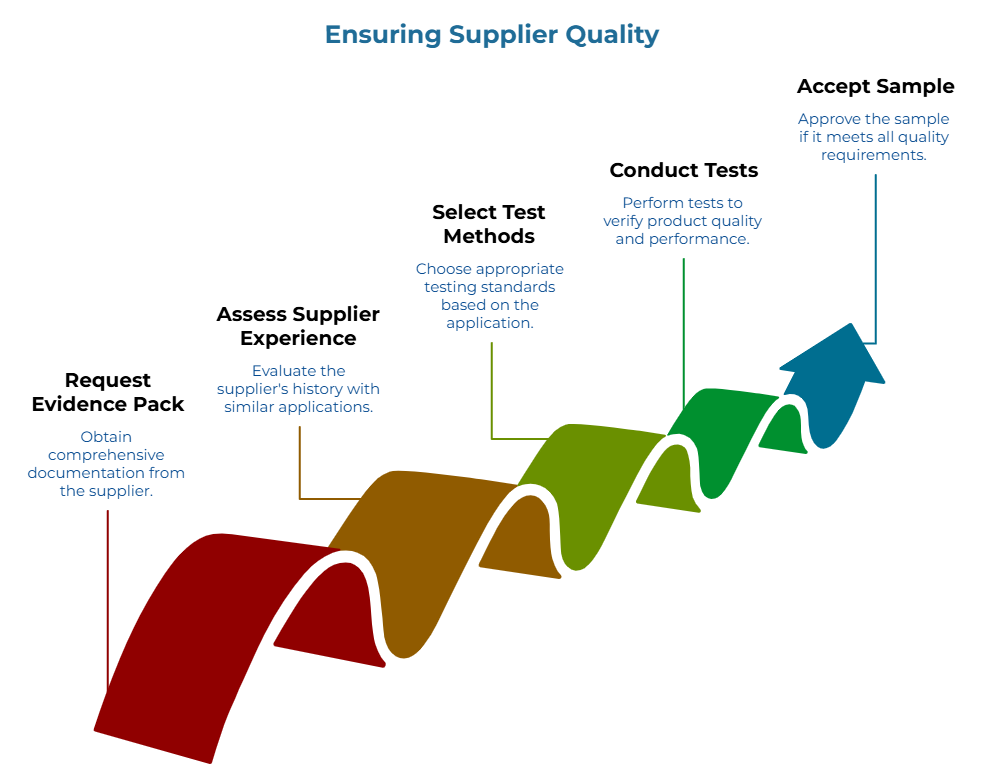
A sample without documentation is only a material preview. It is not proof of regular supply quality.
Before accepting sample rolls or planning a production trial, request a supplier evidence pack. This should include the product specification sheet, recent test reports, basis weight or grammage details, relevant strength data, moisture-related information where applicable, variation tolerances, production lot information, quality-system documentation, handling and storage recommendations, and the complaint or nonconformance response process.
Ask whether the supplier has supplied similar corrugated applications — and if you are sourcing for corrugated packaging, consider screening corrugated box sellers and kraft paper jumbo roll suppliers who already demonstrate end-use familiarity. This does not guarantee fit, but it helps the technical team judge whether the supplier understands the end use.
The exact test methods depend on your application. TAPPI is a recognized standards source for pulp, paper, packaging, and converting industries, while ISO 186 covers representative sampling from paper or board lots. FEFCO publishes corrugated board and packaging testing methods, and standards such as TAPPI T 494 or ISO 1924-3 generally cover the tensile properties of paper and paperboard. Use these references as method-selection support, not as automatic pass/fail rules.
Define the Baseline Before the Trial
A trial without a baseline becomes a debate.
Before running the new supplier’s material, capture what “normal” performance looks like for the current approved material. Use recent acceptable production runs, current grades, approved supplier records, internal tolerances, customer packaging requirements, and known complaint patterns.
Useful baseline inputs include roll condition on arrival, runnability, web breaks, waste, downtime, moisture behavior, board performance, converting consistency, operator observations, and downstream complaints.
The baseline does not need to make your current supplier look perfect. It needs to be honest. If the current material already causes occasional breaks on a specific line, record that. Otherwise, the new supplier may be blamed for an existing process issue.
Teams building baseline specifications from scratch may find a mill spec sheet guide helpful for defining the measurable parameters that matter most.
Evaluate Samples Before the Production Trial
A sample is the first evidence point. It is not supplier approved.
Confirm that the sample matches the proposed production specification. Record the grade, basis weight, roll ID, lot number, source or mill if available, and date received. Inspect visual condition, winding, edge damage, core condition, contamination, odor, moisture signs, and handling damage.
Then compare the physical sample against the documents. If the label, datasheet, and supplier explanation do not match, pause the trial and clarify the gap.
ISO 186 specifies a method for obtaining representative samples from paper or board lots to determine average quality — ensuring the samples evaluated are meaningful, not just convenient. For a broader view of which testing protocols to request during pre-qualification, align your sample evaluation with recognized method IDs from the outset. Be careful with one good sample. A sample may not represent regular production, and sample approval and production approval are not the same thing. During production, the team may discover more breaks, inconsistent winding, or moisture-related handling problems that a surface review never revealed. For high-velocity or critical-strength applications, request production-run specimens with verifiable batch traceability to ensure the sample reflects standard mill variance.
Build a Cross-Functional Trial Plan
Procurement should not approve kraft paper parent rolls alone.
A strong trial brings the right functions into one decision process:
| Function | Main Responsibility |
| Procurement | Supplier communication, commercial context, quote comparison, escalation route |
| Engineering | Application requirements, grade fit, performance risk, test relevance |
| QA | Inspection plan, acceptance criteria, test review, nonconformance handling |
| Production | Trial execution, machine behaviour, waste, stoppages, operator feedback |
| Warehouse | Receiving condition, storage, roll handling, moisture exposure observations |
| Sales or Customer-Facing Team | Customer-specific packaging expectations where relevant |
This is where procurement and engineering alignment matters. Procurement sees the commercial opportunity. Engineering sees the technical risk. QA sees the evidence trail. Production sees what happens at speed.
For a related approval workflow, we have a practical guide on aligning procurement and quality before approving a new kraft paper supplier.
Define Acceptance Criteria Before the Trial Starts
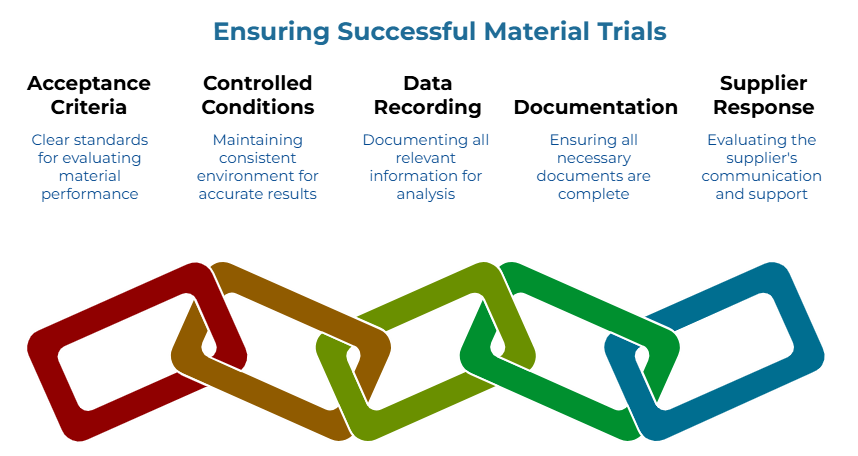
“Works fine” is not an acceptance criterion.
Set acceptance criteria before the material runs. The limits should come from internal specifications, customer requirements, supplier agreements, recognized test methods, or contract terms. Avoid universal thresholds unless your own specification supports them.
A practical trial should define criteria across documentation completeness, incoming roll condition, relevant paper properties, production runnability, waste, stoppages or breaks, board or package performance, customer-specific requirements, consistency across rolls or lots, and supplier response.
The point is not to prove that the new material is flawless. The point is to prove that variation is understood, documented, and manageable.
Run the Trial Under Controlled Enough Conditions
Most plants cannot create laboratory-perfect conditions during production. That is acceptable. The trial only needs to be controlled enough to interpret.
Record the date, shift, machine or line, trial quantity, roll IDs, lot numbers, operators or team, machine settings, storage conditions, comparison material, and adjustments made during the run. Capture stoppages, breaks, rejects, waste, quality holds, and operator comments.
If the new paper runs only after a machine adjustment, document the adjustment. If adhesive settings, flute profile, humidity exposure, speed, or storage conditions changed, document that too.
Without those notes, the team may confuse a process change with a supplier issue. Documented receiving checks for brown paper quality strengthen the trial record by establishing a consistent incoming inspection baseline.
Separate Supplier Issues From Process, Design, or Handling Issues
Durability complaints often create blame before evidence.
Production may blame the paper. Procurement may point to the supplier’s test report. Engineering may suspect the grade is not right for the design. QA may find that lot records or sample traceability are incomplete.
Use a neutral diagnostic method:
| Diagnostic Question | What It Helps Separate |
| Did the issue occur only with the new supplier’s material? | Supplier-specific pattern vs. general process issue |
| Did the same issue occur with the current approved material? | New material risk vs. existing line condition |
| Are affected rolls from the same lot or shipment? | Lot variation vs. broader supplier problem |
| Were settings, adhesive, storage, humidity, flute profile, or design changed? | Material issue vs. process or design change |
| Is there visible transit, edge, core, or handling damage? | Supplier production issue vs. logistics or warehouse issue |
| Do test results deviate from agreed specification? | Evidence-based nonconformance vs. opinion |
| Can the supplier provide retained-sample or related-lot evidence? | Supplier response quality and traceability |
No single symptom proves supplier fault. A broken web, weak board, or moisture complaint starts the investigation. It does not finish.
Avoid These Common Supplier Trial Mistakes
The most damaging mistakes are usually simple.
Approval based only on price, grade name, or availability creates hidden risk — a pattern explored further in our guide on why driver-based benchmarks create kraft paper procurement confidence. Treating supplier samples as proof of regular production quality does the same. Running a trial without a baseline makes the result subjective. Skipping operator feedback ignores the people closest to the line.
Other mistakes are quieter: using tests that do not match the application risk, ignoring receiving and storage conditions, blaming the supplier before checking process variables, failing to document trial settings, or approving a supplier without monitoring triggers.
The fix is not a bigger meeting. It is a clearer trial record.
Decide: Approve, Limit, Retest, or Reject
The trial should end with a written decision.
Possible outcomes include full approval, conditional approval, approval for limited applications, another trial, supplier corrective action, revised specification criteria, or rejection due to technical or quality risk.
A decision table keeps the result clean:
| Decision Area | Evidence | Possible Action |
| Documentation | Specs, test reports, lot data | Approve, hold, or request clarification |
| Incoming Condition | Receiving inspection | Approve, hold, or investigate |
| Trial Runnability | Production log | Approve, retest, or reject |
| Quality Results | QA tests and checks | Approve, investigate, or revise criteria |
| Commercial Fit | Procurement review | Approve, negotiate, or reject |
| Supplier Response | Corrective action and technical support | Approve with conditions or escalate |
Conditional approval is a legitimate outcome. A supplier may pass runnability and quality checks but need better roll labeling or lot traceability before broader release — a gap the kraft paper supplier onboarding checklist is designed to close through its verification gates. The team approves for limited use while requiring those gaps to be closed before a wider rollout.
Monitor the Supplier After Approval
Supplier approval is not the end of qualification.
Document the approved supplier, source, grade, specification, accepted tolerances, required shipment or lot documents, complaint contact, retesting triggers, review frequency, and requalification conditions.
ISO 9001 is a broad quality management systems standard used across sectors and supports general thinking around documented processes, customer requirements, supplier controls, and continual improvement. ISTA test procedures may also be relevant when the final package must survive transport conditions beyond paper-property testing alone.
For interpreting supplier reports after approval, see our procurement-friendly guide to kraft paper lab test reports. For longer-term supplier control, the guide on moving from kraft paper supplier pre-qualification to audit and compliance extends the same logic into ongoing assurance.
Frequently Asked Questions
What should you ask a kraft paper supplier before requesting a trial?
Ask for the product specification, recent test reports, lot traceability, relevant strength and moisture-related data, quality-system documentation, handling recommendations, similar-application history, and the supplier’s complaint response process. A PQQ template for kraft paper suppliers can standardize these requests into a single evidence pack.
Is a supplier sample enough to approve kraft paper parent rolls?
No. A sample can help screen the supplier, but approval should usually require a controlled internal trial, comparison against current material, and documented acceptance criteria.
Who should be involved in the trial?
Procurement, engineering, QA, production, and warehouse teams should be involved. Sales or customer-facing teams may also be needed when customer-specific packaging expectations affect approval.
What acceptance criteria should be used?
Use criteria for documentation, incoming condition, relevant paper properties, runnability, waste, defects, board or package performance, consistency, and supplier responsiveness. Specific thresholds should come from your internal specifications, customer requirements, contracts, or recognized methods.
How do you know if a durability issue is supplier-related?
Look for evidence. Check whether the issue appears only with the new supplier, whether affected rolls share a lot, whether test results deviate from specification, and whether process, storage, design, adhesive, or machine settings changed.
Should procurement lead the supplier trial?
Procurement should manage supplier communication and commercial context, but technical approval should involve engineering, QA, and production. A supplier trial is a shared approval decision.
What happens if quality changes after approval?
Use the monitoring plan. Check lot traceability, compare against retained evidence, review complaint patterns, retest if needed, and trigger requalification when material behaviour changes beyond agreed limits.
From Supplier Claim to Approval Confidence
A practical kraft paper supplier trial turns a risky approval into a documented decision.
The team starts with a supplier claim and ends with evidence: documents reviewed, samples inspected, baseline defined, trial conditions recorded, runnability observed, results checked, causes diagnosed, and approval limits agreed.
That is the difference between trying a roll and qualifying a supplier.
Approve with evidence. Monitor with discipline. Scale only when the material has earned the right to run.
Disclaimer:
This article is for educational and informational purposes only. It does not constitute professional, legal, or technical advice. Specific supplier qualification decisions should be based on internal specifications, customer requirements, applicable standards, and professional judgment.
Our Editorial Process:
Our expert team uses AI tools to help organize and structure our initial drafts. Every piece is then extensively rewritten, fact-checked, and enriched with first-hand insights and experiences by expert humans on our Insights Team to ensure accuracy and clarity.
About the PaperIndex Insights Team:
The PaperIndex Insights Team is our dedicated engine for synthesizing complex topics into clear, helpful guides. While our content is thoroughly reviewed for clarity and accuracy, it is for informational purposes and should not replace professional advice.