Optimize your sourcing strategy for competitive advantage.

From Vendor Sheets to Shortlist: A Five-Step Grade Selection Workflow Using the Match Matrix
📌 Key Takeaways Vendor spec sheets arrive in five different formats—but procurement decisions can’t wait for translation. Systematic validation beats price-first purchasing—10:1 time ROI through prevented jams, avoided rework, and eliminated specification disputes. Small-business packaging paper buyers and converting plant operators will find the complete grade selection workflow here, preparing ... Read More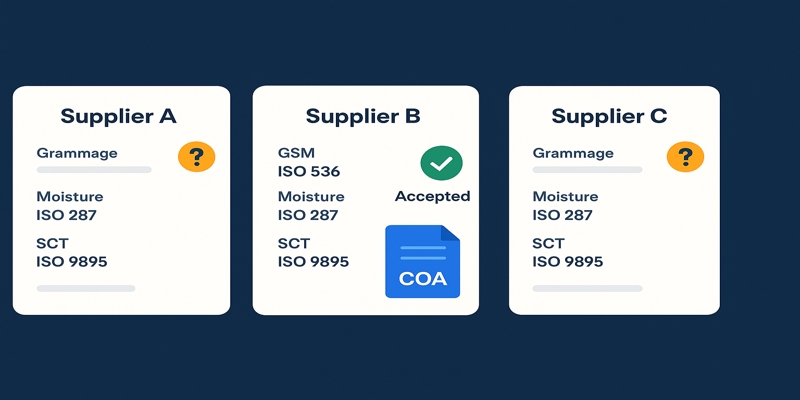
TAPPI/ISO in Plain English: Which Test Methods to Require in Your Kraft Paper RFQ (and Why)
📌 Key Takeaways Incomparable quotes kill procurement efficiency—method-named RFQs fix that. Clear specs = faster approvals and fewer surprises on the converting floor. Kraft paper buyers, procurement managers, quality assurance leads, and converting operations teams will find the complete methods-to-RFQ table and copy-ready clause blocks below, providing ready-to-implement guidance for ... Read More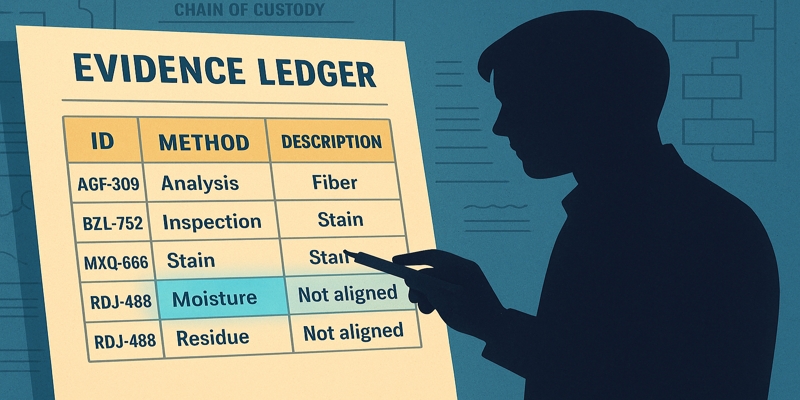
How to Interpret Lab Test Reports for Kraft Paper: A Procurement-Friendly Guide
📌 Key Takeaways A kraft paper lab report isn’t paper science—it’s a procurement decision tool that determines whether a shipment moves forward, triggers corrective action, or gets rejected. Master these five principles and you transform reactive shipment checks into a disciplined procurement workflow that catches problems before they reach your ... Read More
Kraft Paper Manufacturer Certifications: FSC, ISO & Food-Contact – A Verification Guide for Buyers (and Evidence Playbook for Suppliers)
📌 Key Takeaways Certificate validity determines whether a kraft paper supplier makes your shortlist or gets filtered out—expired FSC certificates halt production, ISO scope mismatches trigger re-qualifications, and missing food-contact proof exposes brands to regulatory risk. Certificate integrity creates defensible proof that you can legally sell products made from that ... Read More
Multi-Origin Sourcing with Exporters: Hedge Port Congestion and Rollover Risk
📌 Key Takeaways Port congestion and container rollovers aren’t emergencies—they’re predictable risks that demand proactive sourcing strategy. Prepared allocation beats reactive scrambling every time. Kraft paper procurement managers, logistics coordinators, and supply chain leaders evaluating international suppliers will find these principles essential here, setting the foundation for the detailed scorecard, ... Read More
Logistics Transparency Over Freight Myths: How to Evaluate Kraft Paper Exporters (with a Practical Scorecard)
📌Key Takeaways Freight headlines create noise; operational evidence creates clarity. Strategic procurement teams sourcing kraft paper internationally will find a repeatable framework here, preparing them for the detailed scorecard methodology, documentation checklists, and scenario modeling tools that follow. Freight headlines dominate supplier conversations. PSS announcements, GRI updates, and chatter about ... Read More
Acceptance Sampling Plans with Kraft Paper Manufacturers: Choosing AQL Levels to Minimize Rejection Risk
📌Key Takeaways AQL (Acceptable Quality Levels) decisions determine whether you protect your converting operations from defective kraft paper or waste resources rejecting acceptable material due to poorly designed sampling plans. Structure beats improvisation when incoming kraft paper quality determines your converting line efficiency. Procurement managers, QA leads, and converter operations ... Read More
The Price-to-Door Playbook: Integrating Driver-Based Benchmarks with a Landed-Cost Framework for Defensible Supplier Selection
📌 Key Takeaways Procurement teams waste weeks debating supplier quotes because they’re comparing incompatible data—mixed Incoterms, hidden freight legs, and prices without driver context create decision paralysis. Finance leaders, procurement managers, and logistics coordinators in converting operations can apply this four-step integration method to align cross-functional priorities around transparent, auditable ... Read More
Price Without Context Is Noise: Adopt a Spec-First, Lane-Aware Mindset for Paper Sourcing
📌 Key Takeaways Asking “What’s your price?” without defining specifications, lanes, and terms creates noise that leads to disputes and delays. Specification Completeness Eliminates Quote Variance: Performance metrics like ECT and RCT values with named test methods create apples-to-apples comparisons that basis weight alone cannot provide. Lane Definition Controls Landed ... Read More
The Landed-Cost Framework for Kraft Paper: From Incoterms to To-Door Comparability
📌 Key Takeaways Stop comparing kraft paper quotes until every offer uses the same to-door basis—anything less guarantees procurement chaos and internal friction. Map Every Cost Leg First: Convert all quotes to identical terms by documenting who pays for freight, insurance, handling, duties, and last-mile delivery under each Incoterm before ... Read More
Freight Scenarios That Flip Kraft Paper Supplier Rankings: When Ocean Rates Change the Winner
📌 Key Takeaways Freight rate volatility can silently reorder your supplier shortlist between quote and commitment, turning yesterday’s cost leader into today’s second choice. Normalize Before You Compare: Convert all supplier quotes to identical to-door totals (same Incoterms, same route, same duty basis) before ranking—ex-factory anchors mislead when freight, surcharges, ... Read More
Common Pitfalls in Landed-Cost Estimates of Kraft Paper (and How to Avoid Invoice Disputes)
📌 Key Takeaways Invoice disputes start long before the shipment arrives—they begin with inconsistent cost calculations that turn straightforward procurement into expensive guesswork. Normalize Everything to One Delivery Standard: Convert all supplier quotes to the same endpoint using visible equalization rows that show exactly which logistics legs you’re adding or ... Read More
Benchmark vs Quote: A Practical Method to Sanity-Check Supplier Kraft Paper Prices
📌 Key Takeaways Stop debating whether supplier quotes are “fair” and start using a systematic three-step method that transforms pricing uncertainty into defensible procurement decisions. Benchmarks Are Guardrails, Not GPS Coordinates: Use driver-based ranges to validate whether quotes fall within reasonable market bounds rather than trying to negotiate down to ... Read More
Incoterms for Kraft Paper Buyers: EXW vs FOB vs CIF vs DDP and What Changes in Your Total Cost
📌 Key Takeaways Stop guessing—turn every supplier quote into an apples-to-apples decision. Normalize to One Basis: Convert every offer to the same Incoterm, named place, and edition (e.g., Incoterms® 2020) so totals are truly comparable. Use the Right Term for the Mode: Reserve FOB/CFR/CIF for sea freight and use FCA/CPT/CIP ... Read More
Kraft Paper Price Intelligence: A Driver-Based Benchmarking Framework for Defensible Sourcing
📌 Key Takeaways Price opacity kills procurement confidence, but driver-based benchmarks transform chaotic quotes into defensible decisions. Replace Single Numbers with Smart Bands: Driver-based benchmarks use ranges tied to fiber, energy, freight, currency, and yield factors instead of brittle single-point estimates that break when markets shift. Map the Five Core ... Read More
Kraft Paper Prices: Driver-Based Benchmarks + To-Door Normalization (EXW/FOB/CIF/DDP)
📌 Key Takeaways Raw quotes mislead—the real cost emerges only after normalizing all delivery terms to your door. Five Drivers Trump Headlines: Fiber, energy, freight, foreign exchange, and yield variations explain price differences better than comparing raw numbers across suppliers. Normalize Before You Compare: Convert every EXW, FOB, CIF, and ... Read More
Aligning Finance and Logistics Priorities: A One-Page Decision Matrix for Approving Kraft Paper Price Targets
Read More