Optimize your sourcing strategy for competitive advantage.

Aligning Owner and Operations Priorities for Stronger Paper Negotiations
📌 Key Takeaways Internal friction costs more than supplier leverage ever will. Shared decision frameworks turn supplier negotiations from internal battles into coordinated strategy. Procurement and sourcing managers, for example, at small and mid-sized packaging converters will find a practical implementation roadmap here, preparing them for the step-by-step alignment framework ... Read More
Building Supplier Options When Your Kraft Paper Negotiating Power is Limited: How to Diversify Without Burning Bridges
📌 Key Takeaways When your converter depends on one or two kraft paper suppliers, every price increase feels like a threat you can’t negotiate but staged diversification over 6-12 months shifts the conversation from desperation to strategic discussion. Structured diversification isn’t about switching for price—it’s about reducing dependency so negotiations ... Read More
Kraft Paper Price Volatility: Why Small Packaging Converters Feel Every Price Spike More and How Budget Bands Reduce the Pain
📌 Key Takeaways Small packaging converters feel kraft paper price spikes more sharply than large buyers, not because of poor negotiation, but because of structural disadvantages in volume, contracts, and allocation priority. Budget bands give small converters a way to acknowledge market reality while maintaining financial discipline and emotional stability—walking ... Read More
Integrating Limited Kraft Paper Negotiating Power and Price Volatility Budget Management: An Integration Playbook for SMB Converters
📌 Key Takeaways Price swings hurt more when you lack leverage, and weak leverage makes volatility more dangerous. Treating them as separate problems guarantees reactive firefighting instead of strategic control. The playbook shifts procurement from explaining margin collapses to presenting options grounded in data and deliberate design. Procurement and sourcing ... Read More
Scenario Planning for Kraft Paper: Three Simple What-Ifs to Protect 2–3% Margin
📌 Key Takeaways Volatile kraft paper prices don’t have to erode your margins when you replace reactive guesswork with pre-planned decision corridors. Guardrails beat guesses every time. Procurement and sourcing managers at SMB packaging converters will find a practical framework here, preparing them for the detailed implementation guidance that follows. ... Read More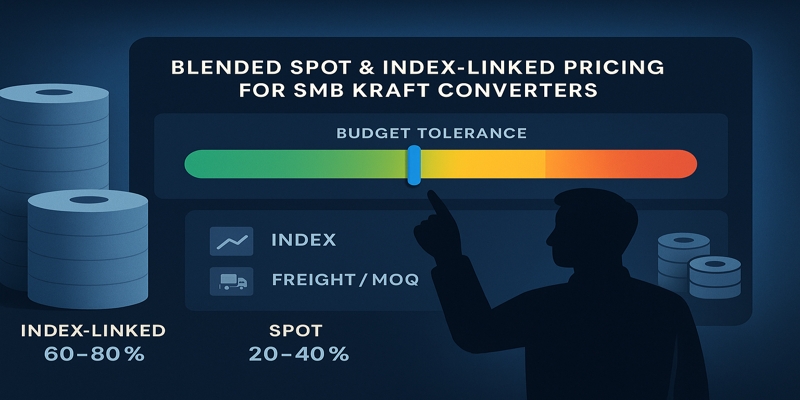
Spot Buying vs Index-Linked Pricing for SMB Kraft Converters: The Cost of Chasing Dips
📌 Key Takeaways Chasing spot-market dips might look like smart procurement, but the real cost isn’t in any single price—it’s in the variance that destabilizes budgets, disrupts quotes, and erodes stakeholder trust. Rules-based procurement de-personalizes decisions and accelerates approvals when markets test discipline. Procurement and sourcing managers at small and ... Read More
Budget Bands for Kraft Paper: Set Your 90-Day Cost Guardrails in 30 Minutes
📌 Key Takeaways Price volatility doesn’t have to trigger procurement chaos when you establish cost guardrails before the crisis hits. Prepared governance beats reactive firefighting: when suppliers announce increases, your documented baseline and pre-agreed triggers provide the fair, transparent framework that speeds approvals and stabilizes procurement operations. SMB packaging converters ... Read More
Kraft Paper Price Volatility & Budget Management: Simple Budget Bands, Scenarios, and Index-Linked Contracts
📌 Key Takeaways Budget overruns from kraft paper procurement don’t stem from bad luck—they come from comparing incomparable quotes and reacting to volatility without a plan. Budget bands, to-door normalization, and scenario playbooks protect 2-3% of margin by giving procurement teams decision speed when kraft markets move. For procurement teams ... Read More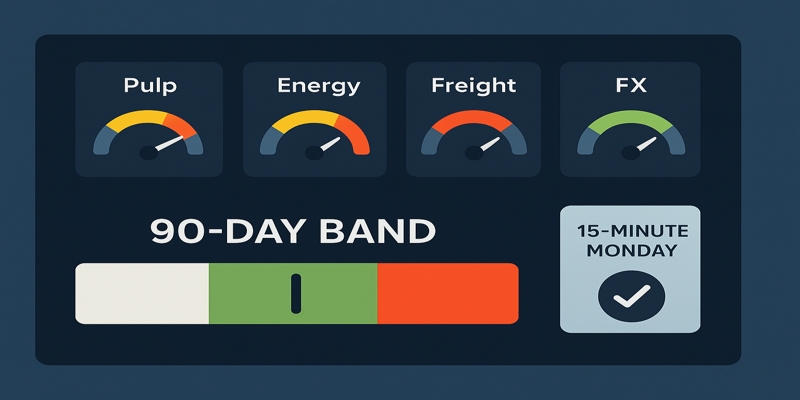
The SMB Packaging Converter Playbook: Turn Kraft Paper Volatility into Budget Stability
📌 Key Takeaways Kraft paper price volatility doesn’t have to mean budget chaos—systematic guardrails turn market noise into manageable corridors. Prepared bands, documented thresholds, and disciplined cadence deliver predictable margins and faster approvals with less internal friction. Procurement and sourcing managers at SMB packaging converters will find a practical implementation ... Read More
Change Control in Paper Contracts: A Simple Checklist to Manage Adjustments Without Surprises
📌 Key Takeaways Price changes don’t have to trigger panic when both parties know exactly how, when, and why adjustments happen. Prepared contracts with guardrails equal predictable landed costs and cleaner quarter-end closes. Procurement and finance leaders at converters and containerboard buyers will find actionable frameworks here, preparing them for ... Read More
Spot vs. Term Supply in Containerboard: When to Lock, When to Float, and How to Set Guardrails
📌 Key Takeaways Chasing the lowest spot price without a framework is exposure, not strategy. Price volatility demands objective guardrails and a hybrid approach. Lock-or-float isn’t a coin flip; it’s a discipline built on thresholds, cadence, and contract clarity. Procurement and sourcing professionals at packaging paper converters will find a ... Read More
Incoterms for Paper Supply: The Six Clauses That Change Your Delivered Price More Than You Think
📌 Key Takeaways Mixed Incoterms quotes hide true costs until you normalize every offer to your facility door. Standardize the named place, normalize to one basis, document assumptions—this sequence cuts sourcing cycle time and builds supplier trust. Procurement managers evaluating international paper suppliers and logistics coordinators managing cross-border shipments will ... Read More
From Volatility to Clarity: A Practical Playbook for Containerboard Cost & Contract Foundations
📌 Key Takeaways Containerboard landed costs remain stable only when explicit guardrails prevent quote confusion, freight surprises, and specification drift. Guardrails installed = volatility managed as bandwidth, not crisis. Procurement managers, finance controllers, and operations leaders at converters will find immediate implementation guidance here, preparing them for the detailed guardrail ... Read More
Guardrails, Not Guesswork: A Simple Mental Model for Stabilizing Containerboard Landed Cost
📌 Key Takeaways Landed cost shouldn’t trigger quarterly panic—five simple guardrails turn reactive scrambling into predictable, defensible decisions. Use these five controls, and renewals become routine process execution rather than detective work. Procurement and sourcing professionals at packaging converters will gain a complete mental model here, preparing them for the ... Read More
Containerboard MOQ and Lead Time Surprises: How to De-Risk Scheduling Before You Place Volume Orders
📌 Key Takeaways MOQ shifts and lead-time slips follow predictable patterns rooted in campaign economics, lane logistics, and documentation workflows—not supplier dishonesty. Prepared = predictable schedules and protected go-live dates. Procurement and sourcing professionals at packaging converters will find this framework essential here, preparing them for the detailed implementation guidance ... Read More
From Spec to Supplier: A Strategic Guide for Moving from Containerboard Grades to Proven Mill Capability
📌 Key Takeaways Grade labels tell you the category, not whether a specific mill can hold your tolerances at line speed. Spec clarity → capability proof → locked-in quality = fewer line stops and predictable costs. Procurement and sourcing teams at packaging converters will find a systematic framework here, bridging ... Read More
Reorder Cadence for Kraft Paper: Setting Intervals From Supplier-Confirmed Cycle Times
📌 Key Takeaways Guessing when to reorder kraft paper creates hidden costs—expedites, safety stock bloat, and supplier friction that erode margins quarter after quarter. Consistent intervals reduce firefighting, stabilize OTIF rates, and let planning teams operate with rhythm instead of reacting to chaos. Procurement managers, sourcing leads, operations planners, and ... Read More
The Kraft Paper Property–Application Match Matrix: A One-Glance Map From Spec to Successful Use
📌 Key Takeaways Specification drift—not true price differences—causes 15–20% quote variance that collapses to 3–5% when buyers name test methods and tolerance bands. Spec-first = comparable quotes, faster approval, and predictable line performance. Converters, QA teams, and procurement professionals sourcing kraft paper will find the application-to-property framework here, preparing them ... Read More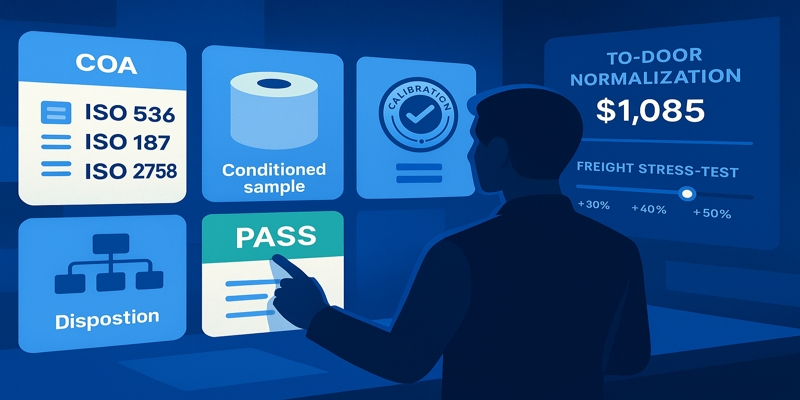
Spec Clarity Beats Price: A Pragmatic Framework for Kraft Paper Converting Success
📌 Key Takeaways Vague kraft paper specifications drain profits faster than low prices can save them. Prepared = comparable quotes, faster approval, and predictable landed cost. Converters, QA teams, and procurement professionals managing kraft paper sourcing will find the framework here, preparing them for the detailed specification-building process that follows. ... Read More