
Optimize your sourcing strategy for competitive advantage.

Understanding Kraft Paper Grades for Paper Bags: A Guide to Durability and Cost for Retailers
📌 Key Takeaways Kraft paper grade selection determines whether checkout bags fail publicly or quietly overspend on durability the store never needs. Grade clarity turns procurement from guesswork into risk management. Retail buyers and store managers responsible for packaging decisions will gain a practical framework for specifying kraft grades confidently, ... Read More
Inventory Management 101: Preventing Paper Bag Stockouts During Peak Retail Seasons
📌 Key Takeaways A reorder point formula eliminates stockout guesswork by calculating exactly when to place your next bag order based on usage, lead time, and safety buffer. Formula discipline replaces panic with predictable restocking. Small retail owners and operations managers responsible for checkout supplies will gain an immediately implementable ... Read More
The Hidden Cost of Unverified Suppliers: Why “Cheap” Paper Bags Break Your Budget
📌 Key Takeaways Unit price without verification creates hidden costs that quietly erase savings and drain margins. Strategic sourcing beats transactional thinking when packaging touches every customer interaction. Small retail owners and foodservice operators managing tight margins will gain a practical risk framework here, preparing them for the supplier verification ... Read More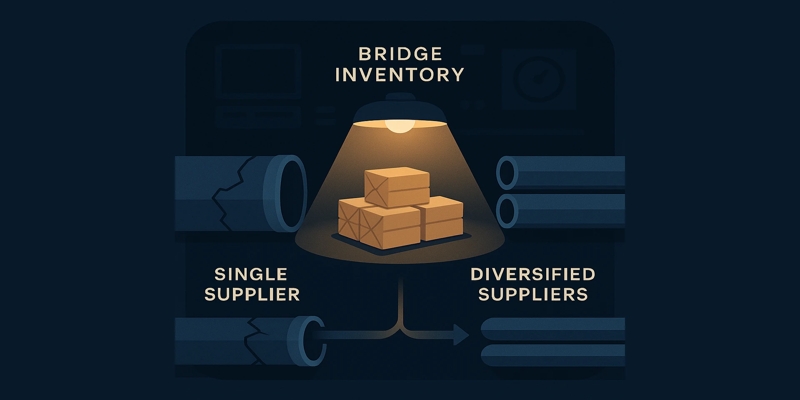
Panic Buying vs. Strategic Sourcing: How to Fix Paper Bag Stockout Crisis Fast
📌 Key Takeaways Stockouts reveal structural sourcing weaknesses that panic buying only deepens—strategic preparation transforms crises into resilience. One stockout exposes fragility; the response determines whether it’s the last one. Small retail owners and procurement managers sourcing wholesale paper bags will gain immediate crisis stabilization steps and a 90-day transformation ... Read More
From Fragile to Fortified: A Sourcing Strategy for Reliable Paper Packaging
📌 Key Takeaways Single-supplier dependency creates unacceptable operational risk; diversified, verified sourcing transforms packaging from a vulnerability into reliable infrastructure. Clear specs, verified partners, backup options—that’s what separates fragile from fortified. Small retail operators managing packaging procurement will gain a practical framework here, preparing them for the detailed supplier evaluation ... Read More
How to Source Small Lots of Kraft Paper Without Compromising on Quality
📌 Key Takeaways Small-lot kraft paper sourcing protects cash flow and machine uptime when you verify suppliers systematically before committing. Systematic vetting converts small-lot sourcing from gamble to repeatable capability. Paper bag manufacturers struggling with mill MOQs and working capital constraints will gain immediate process clarity here, preparing them for ... Read More
The ‘Inventory Trap’: Why Buying Mill Direct is Bankrupting Small Paper Converters
📌 Key Takeaways Mill-direct paper deals bankrupt small converters by locking working capital in warehouse inventory while cash flow drains. The inventory trap is structural mismatch, not incompetence—mill economics designed for giants suffocate small paper converters.. Small packaging converters and paper bag manufacturers managing tight margins will gain defensive sourcing ... Read More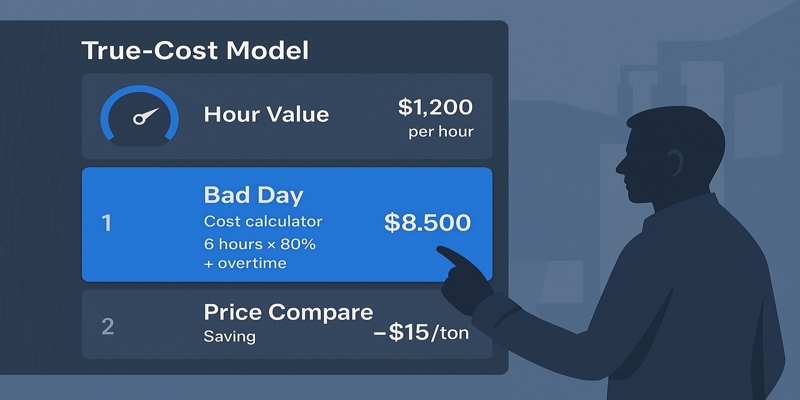
The High Cost of “Cheap” Paper: How Quality Variance Kills Production Margins
📌 Key Takeaways Quality variance in kraft paper erodes production margins through waste, downtime, and customer complaints that dwarf any headline price savings. Cheap paper costs most when machines stop running. SME paper bag manufacturers and packaging converters balancing tight margins with quality risk will find a practical three-step modeling ... Read More
Understanding GSM and Burst Factor: A Specifier’s Guide to Paper Bag Strength
📌 Key Takeaways Specifying GSM alone leaves bag strength to chance; pairing it with Burst Factor protects both product and margins. Heavy paper doesn’t guarantee strong bags—measured strength does. Paper bag manufacturers and packaging converters managing specifications across product lines will gain immediate clarity on cost-versus-strength trade-offs, preparing them for ... Read More
Kraft Paper for Making Paper Bags: A Strategic Guide to Grade Selection and Procurement
📌 Key Takeaways Kraft paper grade selection protects production uptime and cash flow better than chasing the lowest price per ton. The most expensive paper is the one that stops the machine. Small and mid-sized bag plant operators balancing cost pressure with quality requirements will gain a structured grade-selection framework ... Read More
A Comparative Decision Matrix for Low-Volume Sourcing: Marketplace vs. Mill Direct vs. Local Distributor
📌 Key Takeaways The MOQ Barrier forces small converters to choose between channels that don’t fit their reality—but a neutral decision matrix turns that problem into a documented, defensible sourcing strategy. Most sourcing decisions fail because they optimize for the wrong variable at the wrong time—this framework ensures your choice ... Read More
A Shared Framework for Supply Agility: Aligning The Pragmatic Business Owner and The Procurement Manager
📌 Key Takeaways Internal friction between business owners and procurement managers often costs more than supplier complexity—delaying decisions until crisis forces expensive reactive choices. Structured alignment protects both cash and customer service simultaneously. SME packaging converters and kraft paper buyers managing MOQ barriers will find this framework actionable here, preparing ... Read More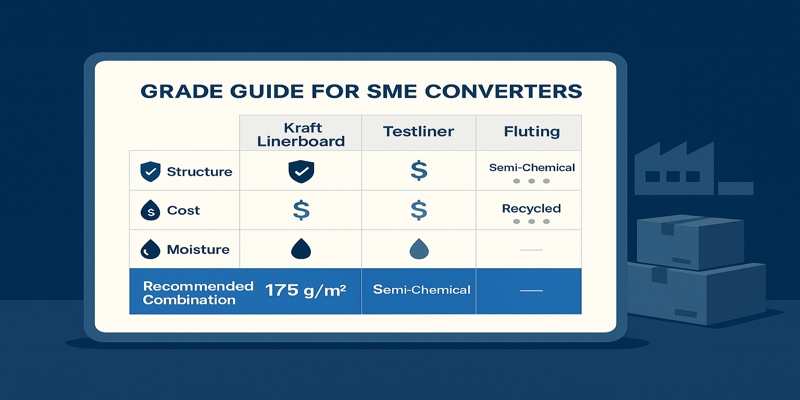
Kraft Paper Grade Guide for SME Converters: Choose the Right Grade for Every Job
📌 Key Takeaways Grade confusion costs SME converters money in over-specified materials and lost customers from under-specified failures. Clear grade specifications prevent MOQ traps and inventory bloat while enabling confident supplier negotiations. SME packaging converter owners and procurement managers will find a systematic framework here, preparing them for the detailed ... Read More
How to Source Low-MOQ Kraft Paper When Your Cash Flow is Tight
📌 Key Takeaways High minimum order quantities trap small converters in a costly squeeze between rigid supplier requirements and scarce working capital—forcing choices between over-buying inventory or walking away from profitable orders. Prepared = protected capital and operational agility. Small and medium-sized packaging converters managing tight working capital will gain ... Read More
Is “Inventory Overload” the Silent Killer of Your Working Capital?
📌 Key Takeaways The warehouse is full, but the bank account is empty—a pattern that quietly destroys working capital for small packaging converters. Strategic purchasing decisions require balancing three objectives simultaneously: competitive pricing, operational flexibility, and healthy working capital. SME packaging paper converters and procurement managers will gain practical frameworks ... Read More
Why “Agility” is the New Scale: Rethinking Paper Procurement for SMEs
📌 Key Takeaways Chasing volume discounts through oversized MOQs drains working capital, locks inventory for months, and turns “scale” into a strategic trap for small converters. Small and mid-sized packaging converters, procurement managers, and business owners in the kraft paper converting industry will find their strategic framework here, preparing them ... Read More
From Volume Constraints to Agility: A Guide to Overcoming the MOQ Barrier
📌 Key Takeaways High minimum order quantities in kraft paper force small converters to choose between volume discounts and operational flexibility—a choice that quietly drains working capital and warehouse space. Small and mid-sized packaging converters managing 20-50 tons of monthly kraft paper consumption will find this framework immediately applicable, preparing ... Read More
Limited Kraft Paper Negotiating Power: Five Simple Levers Beyond Just Asking for a Lower Price
📌 Key Takeaways When kraft paper price conversations feel one-sided, the real issue isn’t your tonnage—it’s walking in with only “give me a discount” as your plan. Walk in prepared, leave with control—even when your tonnage stays the same. Small and mid-size packaging converters buying kraft paper will find a ... Read More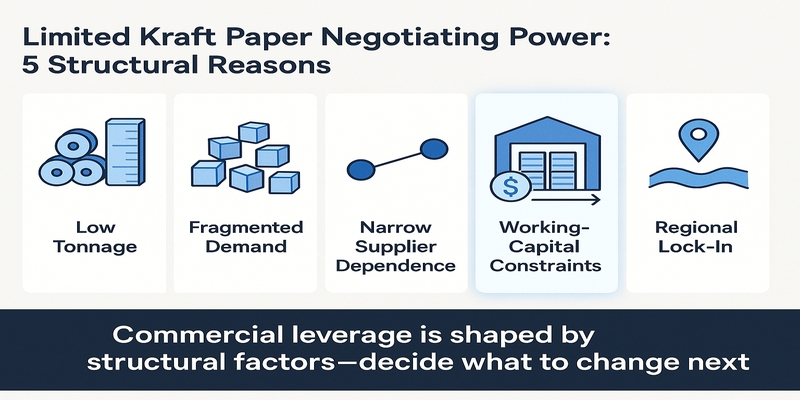
Limited Negotiating Power with Kraft Paper Suppliers: Five Structural Reasons Small Converters Feel Cornered
📌 Key Takeaways Your negotiating power isn’t weak because of poor skills—it’s constrained by five structural realities that shape every kraft paper conversation before you even pick up the phone. Procurement and sourcing managers at small and mid-sized packaging converters will find the framework here, preparing them for the detailed ... Read More