
Assess suppliers systematically and make confident sourcing decisions.

How to Vet Wholesale Paper Bag Suppliers: A Remote Audit Checklist
📌 Key Takeaways Remote vetting filters out problematic wholesale paper bag suppliers before you commit significant orders or long-term contracts. Structured verification catches obvious problems before they become expensive ones. SMB buyers sourcing paper bags internationally will gain a repeatable qualification method, preparing them for the detailed five-step audit framework ... Read More
The Hidden Cost of Unverified Suppliers: Why “Cheap” Paper Bags Break Your Budget
📌 Key Takeaways Unit price without verification creates hidden costs that quietly erase savings and drain margins. Strategic sourcing beats transactional thinking when packaging touches every customer interaction. Small retail owners and foodservice operators managing tight margins will gain a practical risk framework here, preparing them for the supplier verification ... Read More
The Retailer’s Guide to Sustainable Packaging Compliance: Navigating Bans and Certifications
📌 Key Takeaways Sustainable packaging compliance functions as a retailer’s license to operate: without documented proof that bags and packaging meet environmental rules in every market, the ability to trade can disappear overnight. Proactive compliance costs less than emergency reprints, stock write-offs, and reputational damage combined. Retail buyers, operations leaders, ... Read More
From Fragile to Fortified: A Sourcing Strategy for Reliable Paper Packaging
📌 Key Takeaways Single-supplier dependency creates unacceptable operational risk; diversified, verified sourcing transforms packaging from a vulnerability into reliable infrastructure. Clear specs, verified partners, backup options—that’s what separates fragile from fortified. Small retail operators managing packaging procurement will gain a practical framework here, preparing them for the detailed supplier evaluation ... Read More
The Sourcing & Compliance Integration Checklist: How to Buy Compliant Paper Bags
📌 Key Takeaways Compliance requirements must filter supplier decisions from the start, not validate them at the end. Integration catches problems when options are plentiful; separation catches them when options are scarce. SMB retail procurement teams balancing speed and regulatory risk will gain a practical implementation framework here, preparing them ... Read More
Verifying International Paper Bags Suppliers: A Checklist for Safe Online Sourcing
📌 Key Takeaways Verify international suppliers through seven desk-based checkpoints before wiring payment to filter out scams, quality risks, and delivery failures. Informed trust replaces blind trust when verification precedes payment. Procurement and operations leaders sourcing wholesale paper bags internationally will gain a repeatable risk-reduction process here, preparing them for ... Read More
How to Source Small Lots of Kraft Paper Without Compromising on Quality
📌 Key Takeaways Small-lot kraft paper sourcing protects cash flow and machine uptime when you verify suppliers systematically before committing. Systematic vetting converts small-lot sourcing from gamble to repeatable capability. Paper bag manufacturers struggling with mill MOQs and working capital constraints will gain immediate process clarity here, preparing them for ... Read More
The ‘Inventory Trap’: Why Buying Mill Direct is Bankrupting Small Paper Converters
📌 Key Takeaways Mill-direct paper deals bankrupt small converters by locking working capital in warehouse inventory while cash flow drains. The inventory trap is structural mismatch, not incompetence—mill economics designed for giants suffocate small paper converters.. Small packaging converters and paper bag manufacturers managing tight margins will gain defensive sourcing ... Read More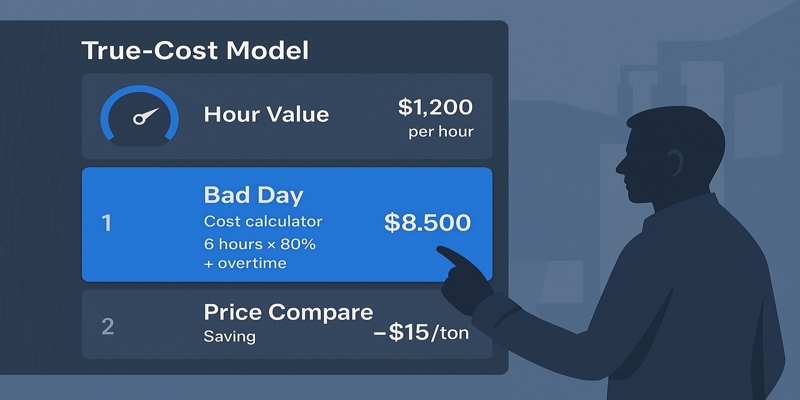
The High Cost of “Cheap” Paper: How Quality Variance Kills Production Margins
📌 Key Takeaways Quality variance in kraft paper erodes production margins through waste, downtime, and customer complaints that dwarf any headline price savings. Cheap paper costs most when machines stop running. SME paper bag manufacturers and packaging converters balancing tight margins with quality risk will find a practical three-step modeling ... Read More
Understanding GSM and Burst Factor: A Specifier’s Guide to Paper Bag Strength
📌 Key Takeaways Specifying GSM alone leaves bag strength to chance; pairing it with Burst Factor protects both product and margins. Heavy paper doesn’t guarantee strong bags—measured strength does. Paper bag manufacturers and packaging converters managing specifications across product lines will gain immediate clarity on cost-versus-strength trade-offs, preparing them for ... Read More
Kraft Paper for Making Paper Bags: A Strategic Guide to Grade Selection and Procurement
📌 Key Takeaways Kraft paper grade selection protects production uptime and cash flow better than chasing the lowest price per ton. The most expensive paper is the one that stops the machine. Small and mid-sized bag plant operators balancing cost pressure with quality requirements will gain a structured grade-selection framework ... Read More
The Total Protection Protocol: Integrating Moisture & Physical Defense for Paper Imports
📌 Key Takeaways Moisture defense and physical packaging must be selected together based on route risk—not negotiated separately as independent line items. Integrated protection turns reactive damage management into a repeatable, defensible standard. Paper importers and procurement managers responsible for transit risk will gain a systematic framework for coordinating moisture ... Read More
Driver-Based Benchmarks: Factoring Packaging Costs into Your Paper Supplier Quotes
📌 Key Takeaways Comparing supplier quotes on price alone hides the packaging and moisture protection costs that determine whether paper arrives usable or damaged. The cheapest quote becomes the most expensive when damage costs surface after arrival. Small importers managing paper procurement will gain a systematic framework for risk-adjusted supplier ... Read More
How to Source Low-MOQ Kraft Paper When Your Cash Flow is Tight
📌 Key Takeaways High minimum order quantities trap small converters in a costly squeeze between rigid supplier requirements and scarce working capital—forcing choices between over-buying inventory or walking away from profitable orders. Prepared = protected capital and operational agility. Small and medium-sized packaging converters managing tight working capital will gain ... Read More
How to Verify International Suppliers Without Travel: A Five-Step Checklist
📌 Key Takeaways Verifying international suppliers remotely isn’t optional. It’s the discipline that separates confident procurement leaders from converters stuck in inflexible, high-MOQ relationships. Prepared verification replaces fear with repeatable process, turning remote checks into negotiating leverage. Small and medium packaging converters managing tight working capital will find a systematic ... Read More
From Volume Constraints to Agility: A Guide to Overcoming the MOQ Barrier
📌 Key Takeaways High minimum order quantities in kraft paper force small converters to choose between volume discounts and operational flexibility—a choice that quietly drains working capital and warehouse space. Small and mid-sized packaging converters managing 20-50 tons of monthly kraft paper consumption will find this framework immediately applicable, preparing ... Read More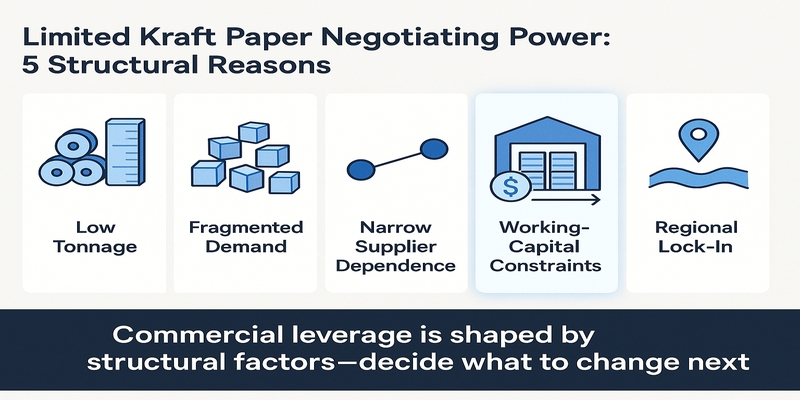
Limited Negotiating Power with Kraft Paper Suppliers: Five Structural Reasons Small Converters Feel Cornered
📌 Key Takeaways Your negotiating power isn’t weak because of poor skills—it’s constrained by five structural realities that shape every kraft paper conversation before you even pick up the phone. Procurement and sourcing managers at small and mid-sized packaging converters will find the framework here, preparing them for the detailed ... Read More
Vendor Data to Request Before You Lock Specs: COAs, Machine Conditions, and Variation Bands That Matter to Packaging Paper Converters
📌 Key Takeaways Lock specifications only after you’ve reviewed verifiable evidence—not vendor promises. Verifiable evidence transforms procurement from promise-based negotiations into data-driven decisions. Procurement professionals and quality managers at packaging converters will find this framework here, preparing them for the detailed evidence collection and vendor qualification processes that follow. This ... Read More
The Micrometer on Money: Spec Discipline for Containerboard Converters for Predictable Per-Order Cost
📌 Key Takeaways Unpredictable per-order costs stem from vague specifications that invite interpretation, rework, and post-award negotiations—not from market volatility. Spec discipline converts micrometer-level technical precision into predictable financial outcomes through enforceable contract language and systematic evidence verification. SMB containerboard converters, procurement managers, and quality leads responsible for kraft paper ... Read More