
Identify and mitigate risks in cross-border business transactions.
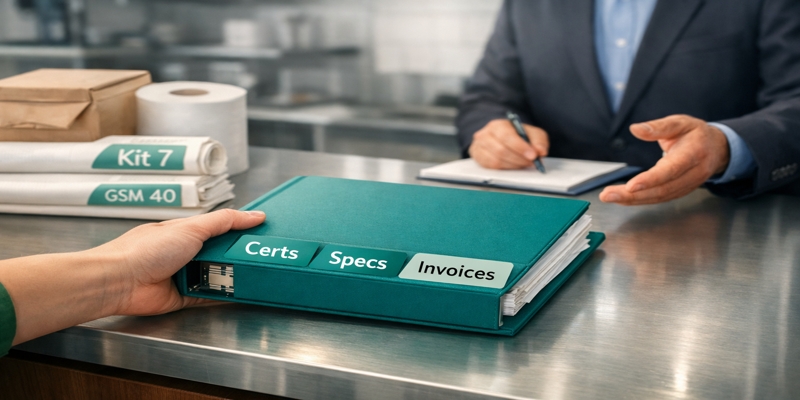
Beyond the Fine: The Reputation Risk of Non-Compliant Food Packaging Paper
📌 Key Takeaways A packaging failure costs far more in lost trust than any fine—customers see grease stains as food safety problems. The fine is a line item; the reputation is the business. Restaurant operators, food service managers, and procurement teams responsible for food packaging sourcing will find practical checklists ... Read More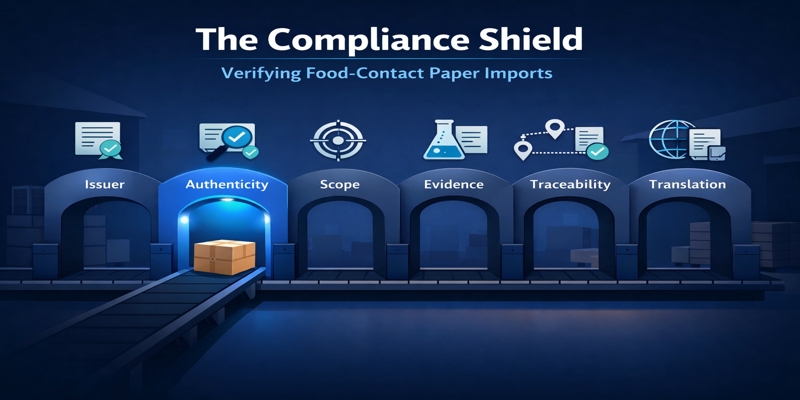
Importing Food Packaging Paper? How to Verify International Safety Certifications
📌 Key Takeaways A certificate on file doesn’t equal compliance—only verified scope, test evidence, and lot traceability prove your packaging is safe. Verified = protected. Assumed = exposed. Procurement managers and compliance teams sourcing international food-contact packaging will gain a ready-to-use verification workflow here, preparing them for the detailed checklist ... Read More
Why Food Packaging Paper Suppliers Fail Food Contact Compliance Verification Protocol
📌 Key Takeaways Most suppliers fail food contact compliance verification not because their materials are unsafe, but because they cannot produce audit-grade evidence when it matters. Structured evidence packs separate verifiable suppliers from those who merely appear compliant. Procurement and quality assurance professionals sourcing food-contact packaging will gain a repeatable ... Read More
Why Food-Safe Labels Fail: How Compliance Decay Happens in Food-Grade Packaging Paper
📌 Key Takeaways Certificates capture a moment in time, not an ongoing state—compliance decay happens silently when documentation lags behind supply chain changes. Verification is a habit, not a filing cabinet—compliance confidence is earned through ongoing attention. Procurement managers and QA professionals responsible for food-contact packaging will gain a repeatable ... Read More
How to Verify Food Contact Compliance Beyond Certificates: A Supplier Shield Model
📌 Key Takeaways Certificates prove a supplier’s claims at one moment—ongoing verification systems prevent compliance drift as formulations, sites, and regulations change. Verification systems confirm what certificates actually cover—today, not when you first approved them. Procurement managers and QA professionals responsible for food-contact packaging will find a stage-gate framework and ... Read More
The “Remote Audit” Paradox in Corrugated Boxes: Verifying Heavy-Duty Capabilities Without Travel
📌 Key Takeaways Remote supplier verification works when buyers request traceable evidence—method-named test reports, live demonstrations, and lot-linked documentation—rather than collecting polished presentations and generic certificates. A consistent evidence trail is more defensible than a perfect presentation. Procurement managers and operations leaders evaluating heavy-duty corrugated box suppliers without travel budgets ... Read More
Handling Corrugated Box Vendor Non-Compliance Disputes: How to Use Data to Enforce Specs
📌 Key Takeaways Vendor disputes are resolved by structured evidence—spec references, named test methods, and traceable documentation—not by persuasion or negotiation. Disputes are process, not persuasion—structure your evidence and the conversation resolves itself. Procurement managers and QA leads handling off-spec corrugated box shipments will gain a ready-to-use workflow here, preparing ... Read More
When Supply Chains Break: Mitigating Risk with Multi-Regional Corrugated Box Sourcing
📌 Key Takeaways Multi-regional sourcing prevents packaging crises by building qualified supplier alternatives across independent geographies before disruptions force emergency switches. The work happens before the crisis, not during it. Packaging procurement managers and operations leaders responsible for corrugated box supply chains will gain a systematic qualification framework here, preparing ... Read More
The Hidden Risk of Unverified Suppliers: Protecting Your Pharmaceutical Supply Chain
📌 Key Takeaways Supplier verification failures surface during QA release or audits when evidence cannot be produced—not during initial procurement decisions. Structured onboarding, documented evidence, and continuous monitoring prevent downstream failures before they reach production lines. Procurement managers and quality professionals in pharmaceutical packaging will gain practical verification workflows here, ... Read More
Why PaperIndex Is the Switzerland of the Paper Trade
📌 Key Takeaways Platform business models determine whether incentives align with yours—commission-based structures can bias supplier visibility, while non-transactional connectors eliminate that conflict. Neutral ground plus clear rules equals fairer direct trade. Procurement managers and sourcing professionals evaluating B2B marketplaces will gain a framework for auditing platform incentives, preparing them ... Read More
Invoice/Label Mismatches in Pharma Logistics: How to Catch Them Before They Trigger Quarantine
📌 Key Takeaways Invoice/label mismatches break traceability chains in pharma logistics, triggering quarantine holds until documentation integrity can be restored through systematic verification. Traceability breaks caught at receiving are inconveniences; breaks caught at audit are compliance findings. Procurement managers and quality teams in regulated industries will find the five-step response ... Read More
The Cost of Non-Compliance in Pharma Packaging: Why Cheap Corrugated Boxes Become Expensive
📌 Key Takeaways In pharmaceutical packaging, a low corrugated box price often signals hidden compliance risks that surface as audit findings, shipment holds, and production interruptions. Qualification discipline protects patient safety; unit price comparisons do not. Pharmaceutical procurement professionals and packaging engineers managing supplier qualification will gain a practical verification ... Read More
Why Traditional RFQs Fail: The Hidden Cost of Opacity in Pharma Packaging Procurement
📌 Key Takeaways Traditional pharma packaging RFQs fail because they hide compliance-critical supplier signals behind unstructured responses, creating audit risk that far exceeds any unit-cost savings. Defensible sourcing decisions require asking different questions and treating supplier evidence as a deliverable, not an afterthought. Pharma packaging procurement managers facing audit anxiety ... Read More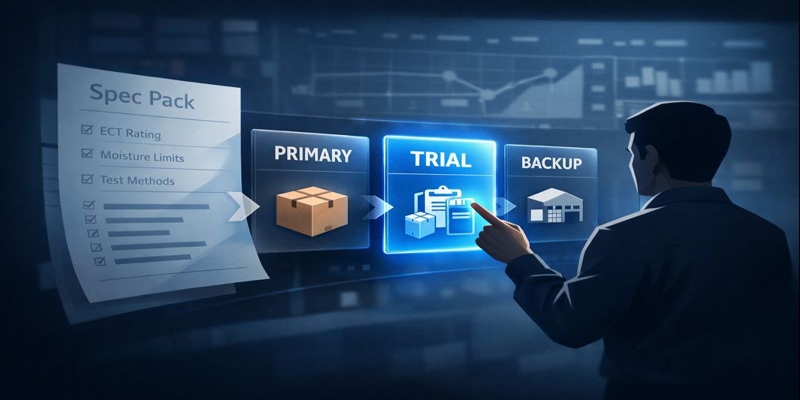
The Hidden Cost of Single-Sourcing: How to Diversify Your Corrugated Packaging Supply Chain
📌 Key Takeaways Single-source corrugated box suppliers create hidden risks—missed shipments, quality drift, and lost negotiation power—that expedited freight and emergency orders cannot fix. Diversification means building controlled qualification systems, not collecting vendor names. Procurement managers and packaging engineers sourcing corrugated boxes will gain a practical roadmap for building supply ... Read More
Seven Questions to Ask a New Supplier (That Scammers Can’t Answer)
📌 Key Takeaways Specific questions requiring verifiable proof disqualify fraudulent suppliers in minutes while legitimate partners answer confidently. Proof-first supplier vetting protects working capital and prevents costly restarts. Procurement managers qualifying international packaging suppliers will gain a ready-to-send verification script here, preparing them for the risk-mitigation frameworks that follow. You ... Read More
Fake FSC, PEFC, ISO Certificates vs. Real Ones: A Visual Spotter’s Guide
📌 Key Takeaways Professional-looking certificates can be expired, out of scope, or belong to different entities than the supplier sending them. Visual screening plus registry verification separates confident procurement from hopeful guessing. Procurement professionals and quality managers sourcing certified materials will gain actionable verification steps here, preparing them for the ... Read More
The ‘Relay Baton’ Test for Chain-of-Custody Verification
📌 Key Takeaways Certificates confirm an entity holds certification, but paperwork proves the specific material carries that claim through every handoff. Documentation gaps cost more than requesting proof. Procurement professionals sourcing certified paper products will gain immediate verification protocols here, preparing them for the detailed implementation playbook that follows. The ... Read More
The Zero-Trust Sourcing Model: How to Verify Overseas Suppliers Without Travel
📌 Key Takeaways Remote supplier verification uses systematic evidence gates to confirm identity, capability, and compliance before deposits move—making travel optional for most sourcing decisions. Verification discipline makes travel an escalation tool, not a default requirement. Procurement managers sourcing internationally without factory visit budgets will gain systematic protocols here, preparing ... Read More
Sourcing Safety Checklist: When to Audit vs. When to Trust
📌 Key Takeaways Supplier verification should match transaction risk using a three-tier ladder—digital checks, remote validation, or third-party audit—determined by scoring four risk levers in under two minutes. Repeatable frameworks transform 7:00 AM urgency decisions into documented, defensible processes. Procurement leads and operations managers sourcing corrugated packaging will gain an ... Read More