Assess suppliers systematically and make confident sourcing decisions.
What Proof to Request at RFQ Stage for Folding Cartons
📌 Key Takeaways Defining what proof you need before suppliers respond prevents false comparisons and wasted time. Proof discipline turns supplier selection from persuasion into evidence. Procurement managers and packaging engineers sourcing folding cartons will gain a clear framework for structuring RFQ evidence requests, preparing them for the detailed specification ... Read More
Why Folding Carton Clarity Matters Before Supplier Review Starts
📌 Key Takeaways Supplier quotes that look comparable often rest on different assumptions because the carton requirements weren’t clear before review started. Define the blueprint before you compare the bids. Procurement managers, packaging engineers, and brand operations leads coordinating folding carton sourcing will find a practical alignment framework here, preparing ... Read More
From Claims to Proof: A Practical Guide to Supplier Evidence Packs for Folding Cartons
📌 Key Takeaways Supplier documents look complete but prove nothing until they answer your specific requirements. Documents without requirement links are just paper—proof with purpose is what earns trust. Procurement managers, packaging engineers, and brand operations teams qualifying folding carton suppliers will find a ready-to-use proof-pack builder here, preparing them ... Read More
How to Build Quote-Ready Folding Carton Fields Without Making Suppliers Guess
📌 Key Takeaways Quote chaos starts when suppliers guess what you meant—name every field before sending the RFQ. Clear fields = comparable quotes = real decisions. Procurement managers and packaging teams sourcing folding cartons will gain a ready-to-use field structure here, preparing them for supplier outreach that reduces clarification churn. ... Read More
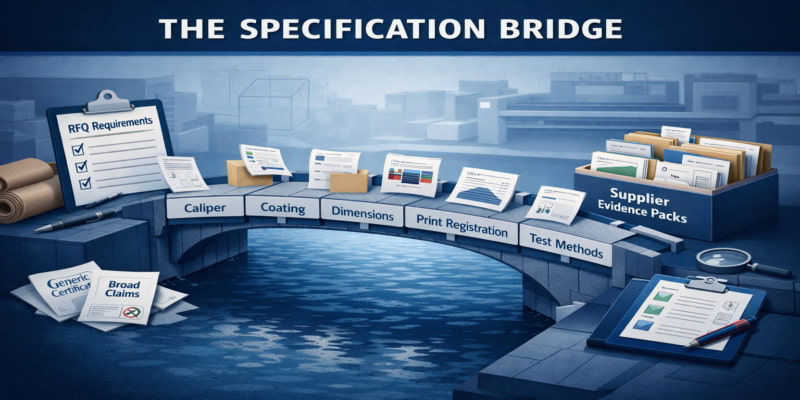
The Specification Bridge: A Practical Blueprint for Folding Carton Requirements Across Multiple SKUs
📌 Key Takeaways Supplier quotes look comparable but often aren’t—teams must define shared folding carton specifications before comparing prices. Better definition beats louder negotiation. Procurement managers, packaging engineers, and brand operations teams managing multi-product portfolios will find a practical alignment framework here, preparing them for the detailed specification guidance that ... Read More
Beyond Basic Certifications: Auditing the Lifecycle Ecosystem of Your Sustainable Folding Cartons
📌 Key Takeaways Certifications prove a supplier joined a system—they don’t prove the supplier can survive a full lifecycle audit. A certificate proves participation—a lifecycle audit proves readiness for scrutiny. Procurement leaders and sustainability directors sourcing folding cartons for strict EPR markets will gain a concrete audit framework here, preparing ... Read More
The Mistake Most Teams Make With Green Folding Cartons (and How Verification Fixes It)
📌 Key Takeaways Green claims on supplier brochures don’t prove compliance—only neutral, buyer-controlled verification does. Verification turns compliance anxiety into documented control. Procurement and sustainability teams sourcing folding cartons for regulated markets will find a ready-to-use verification workflow here, preparing them for supplier review conversations that follow. ~ ~ ~ ... Read More
How to Translate Environmental Mandates into Sustainable Folding Carton Specifications
📌 Key Takeaways Legal terms like “recyclable” and “compliant” cannot be pasted into supplier specifications—they must be translated into measurable fields with clear evidence requirements. Translate the mandate, or suppliers will translate it for you. Procurement managers, packaging engineers, and compliance leads working on folding carton sourcing will find a ... Read More
The First 72 Hours: Baselining Your Sustainable Folding Carton Supply Chain
📌 Key Takeaways Before rushing to find new packaging suppliers, spend 72 hours documenting what you can actually prove about your current materials. A neutral baseline today prevents months of supplier chaos tomorrow. Procurement managers and sustainability directors preparing for EU packaging compliance will find a clear 72-hour action plan ... Read More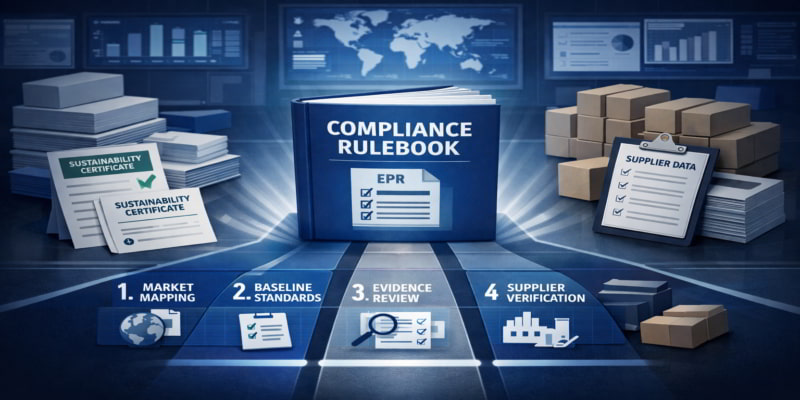
The Compliance Problem in Global Sourcing: A Methodology-First Approach for Sustainable Folding Cartons
📌 Key Takeaways Sustainable packaging compliance starts with knowing what the law requires—not with what suppliers claim to offer. Method beats marketing when compliance is on the line. Packaging buyers and sustainability managers navigating global EPR requirements will gain a clear verification framework here, preparing them for the detailed four-phase ... Read More
A Shared Framework for Sustainable Folding Carton Sourcing: Aligning Sustainability Directors and Procurement Managers
📌 Key Takeaways Sustainable packaging sourcing stalls when Sustainability and Procurement use separate rulebooks—one shared method fixes the bottleneck. One checklist, two departments, shared proof—compliance becomes a shield when both teams hold it together. Sustainability Directors and Procurement Managers navigating EPR requirements will gain a ready-to-use alignment framework here, preparing ... Read More
The Truth Decay of Data Sheets: Why Relying on Supplier Specifications Ruins Folding Carton Specifications
📌 Key Takeaways Supplier data sheets describe what a supplier makes—they don’t define what you should accept, and that gap causes folding carton failures. Supplier sheets collect data; buyer-owned specifications create control. Packaging engineers, procurement managers, and converting operations teams managing multi-SKU portfolios will find a practical framework for building ... Read More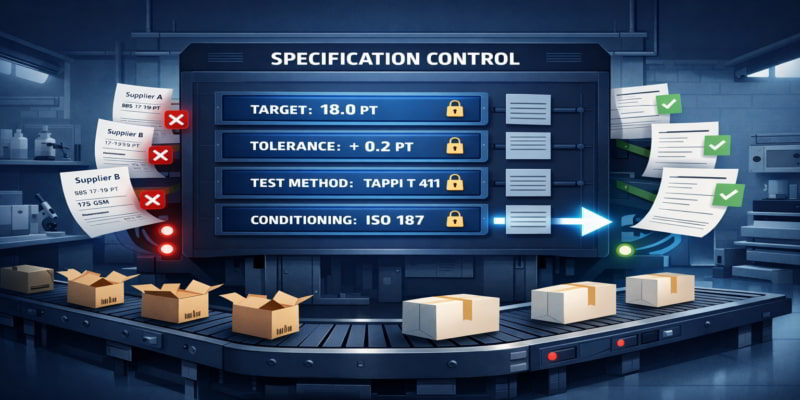
Board Grade Tolerances Explained: Securing Folding Carton Specifications Across Suppliers
📌 Key Takeaways A board grade name is not a specification—without tolerance boundaries, every supplier interprets the same label differently. Tolerance discipline turns label confusion into measurable accountability. Packaging engineers and procurement managers sourcing folding cartons will find practical clause templates and verification frameworks here, preparing them for the detailed ... Read More
Cross-SKU Material Standardization: Preventing Folding Carton Collapse During Product Expansion
📌 Key Takeaways Folding Carton collapse during product expansion happens because each new SKU inherits different material assumptions—not because of bad suppliers or weak boxes. Same portfolio, same baseline logic—that’s how you stop quiet exceptions from becoming production halts. Packaging managers and procurement teams scaling product lines will find a ... Read More
The Baseline Packaging Parameter Checklist: Structuring Your Folding Carton Specification Requirements
📌 Key Takeaways Control your folding carton specifications before asking suppliers to quote—otherwise you’re comparing guesses, not offers. When you own the specification, you own the outcome. Procurement managers and packaging engineers preparing RFPs for new product lines will find a ready-to-use framework here, setting up the parameter-by-parameter details that ... Read More
The Danger of Vendor-Led Data Sheets: Establishing Rigid Folding Carton Specification Requirements
📌 Key Takeaways Letting suppliers define your packaging specs means you’re comparing quotes that were never truly comparable in the first place. Chaos thrives when no one owns the baseline—change the owner and comparability follows. Packaging procurement managers and operations teams scaling multi-SKU portfolios will gain a practical framework here, ... Read More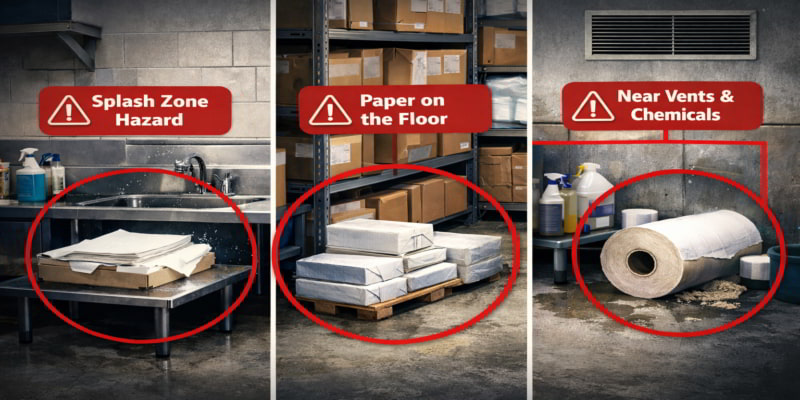
Simulated Audit: Three Food Packaging Paper Storage Failure Scenarios and How to Fix Them
📌 Key Takeaways Storage conditions—not suppliers—cause most food-packaging paper failures that show up in audits. Treat packaging paper like a food ingredient that fails when its storage environment fails. Operations managers and food-safety leads in facilities handling food-contact packaging will find a ready-to-use mock-audit checklist and walkthrough route below, preparing ... Read More
The Loading Dock Integrity Test for Food Packaging Paper
📌 Key Takeaways A three-minute inspection at the loading dock stops most food paper failures before they reach storage. Separate before you store—quarantine beats regret. Food safety coordinators and receiving managers facing audit pressure will gain a practical protocol here, preparing them for the detailed step-by-step inspection guide that follows. ... Read More
The Lowest Bidder Trap: Why the Cheapest Food-Safe Packaging Paper Destroys Operational Margins
📌 Key Takeaways Cheap “food safe” paper that fails under real kitchen heat and grease costs more than reliable paper that performs. The lowest bidder often becomes the most expensive choice once you count every extra wrapper. Food service operators and procurement managers sourcing packaging will gain a clear framework ... Read More