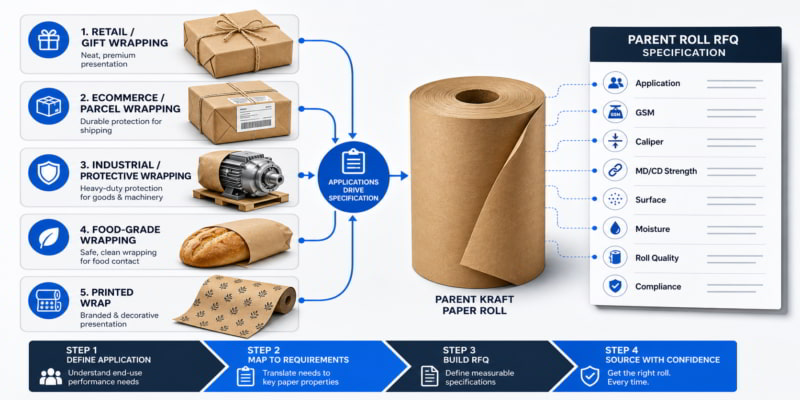
Assess suppliers systematically and make confident sourcing decisions.

A Production Manager’s Kraft Paper Grade Checklist Before Approving a New Jumbo Roll
📌 Key Takeaways A new kraft paper roll earns production approval only when real machine data — not just a supplier spec sheet — proves it can run. Evidence-led approval protects output, not just material cost. Production managers and converting-line supervisors evaluating new kraft paper grades will gain a repeatable ... Read More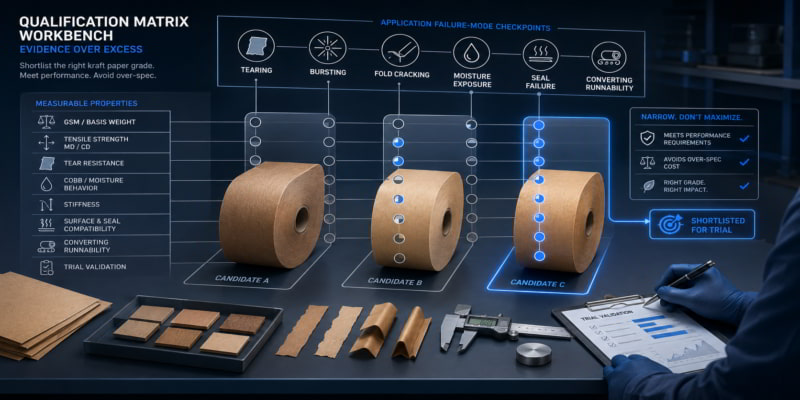
A Packaging Engineer’s Framework for Shortlisting Kraft Paper Grades Without Over-Specifying
📌 Key Takeaways The right kraft paper grade is the one that survives your specific packaging job — not the heaviest or cheapest option on the quote. The best grade meets your critical needs with enough safety margin — without paying for strength you don’t need. Packaging engineers and procurement ... Read More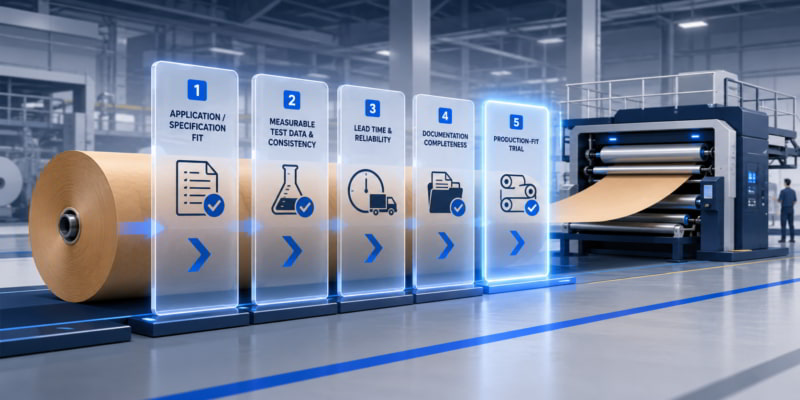
Beyond Price: A Practical Framework for Comparing Local and Imported Kraft Paper Parent Rolls
📌 Key Takeaways The cheapest kraft paper quote often costs more once waste, downtime, and delays hit the production floor. The strongest supplier is the one that delivers repeatable results, not the lowest price tag. Kraft paper buyers and converters evaluating local or imported parent roll suppliers will gain a ... Read More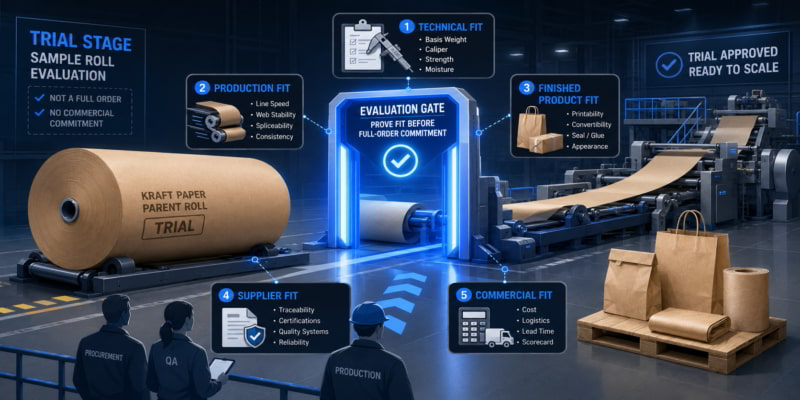
Kraft Paper Sample Trials: How to Prove Parent Roll Fit Before a Full-Order Commitment
📌 Key Takeaways A kraft paper sample that looks good on your desk can still fail on your production line — structured trials close the gap between promise and proof. One good sample roll is evidence — not a guarantee of consistent commercial delivery. Procurement managers, QA leads, and production ... Read More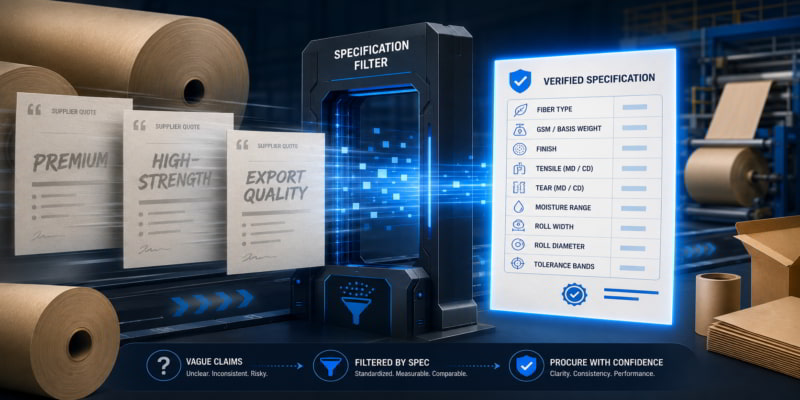
What to Ask a Kraft Paper Supplier When Grade Descriptions Are Too Vague
📌 Key Takeaways Kraft paper grade names like “premium” or “high-strength” mean different things at different mils. Always ask for measurable specs behind the label. The supplier who answers clearly up front is the one least likely to surprise you on the production floor. Procurement managers and packaging engineers evaluating ... Read More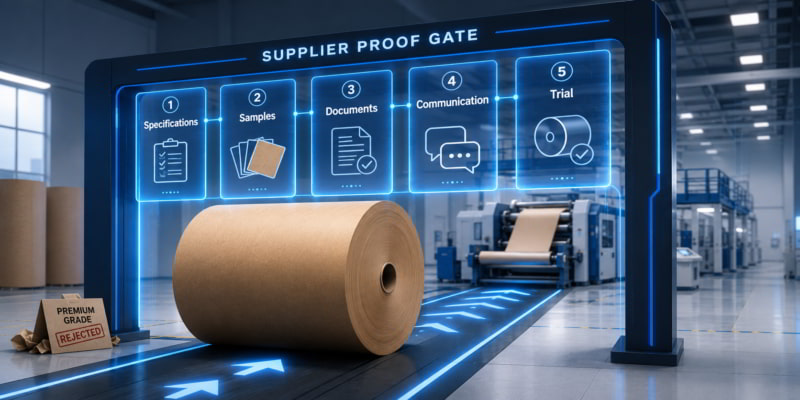
How Small Converters Can Evaluate Kraft Paper Suppliers Before Placing Parent Roll Orders
📌 Key Takeaways Small converters can avoid costly parent roll failures by testing suppliers on specifications, samples, communication, and documents before committing volume. The supplier who earns your volume is the one who proves consistency before the first full order ships. Procurement managers, QA leads, and small-converter buyers will gain ... Read More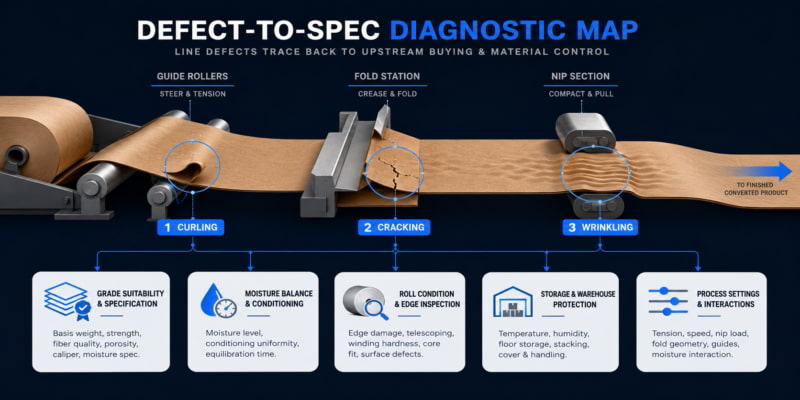
Why Kraft Paper Curls, Cracks, or Wrinkles During Conversion and the Buying Checks That Prevent It
📌 Key Takeaways Most kraft paper converting failures trace back to buying decisions, not machine settings. Specify what you test, test what you specify—and document everything in between. Technical buyers and packaging converters dealing with repeat line stoppages will find a clear path from symptom to root cause here, preparing ... Read More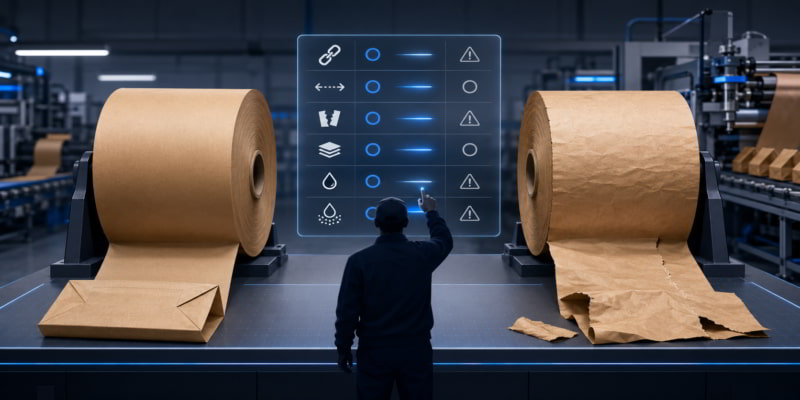
Signs You Chose the Wrong Kraft Paper Grade for Bag Conversion and What to Check Before Blaming the Machine
📌 Key Takeaways Most bag conversion problems trace back to the paper grade, not the machine — and the fix starts with comparing paper properties against a lot that ran well. When the paper fits the bag, the machine has room to tune — when it doesn’t, every adjustment is ... Read More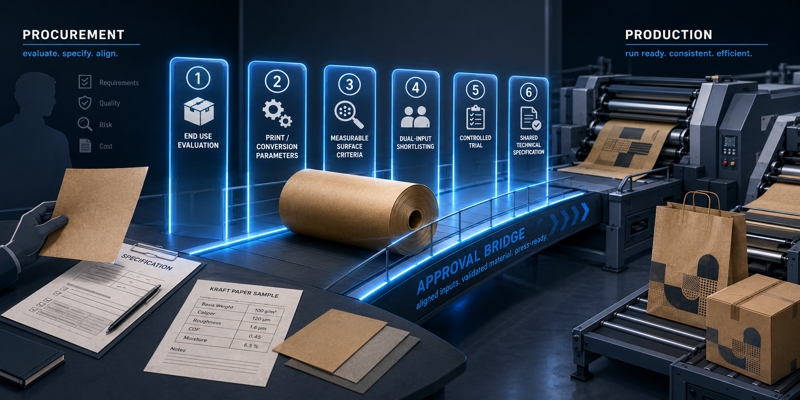
Print-Ready Kraft Paper: How Buyers and Production Teams Can Choose the Right Grade Before It Hits the Press
📌 Key Takeaways Kraft paper that looks right on a desk sample can still fail on press — involve production teams before you buy. Aligning procurement and production before the purchase order prevents waste, rework, and customer rejections. Kraft paper buyers and production managers handling printed or branded packaging will ... Read More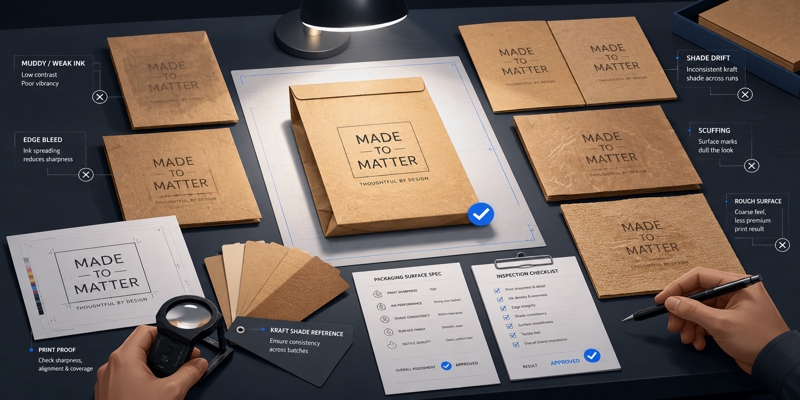
Before You Buy Kraft Paper for Customer-Facing Packaging: Questions That Protect Print Quality, Brand Perception, and Surface Consistency
📌 Key Takeaways Kraft paper for branded packaging needs print, surface, and shade testing — not just weight and price checks. The cheapest quality control happens before the purchase order — not after the first customer complaint. Procurement managers, packaging buyers, and brand owners sourcing kraft paper for customer-facing applications ... Read More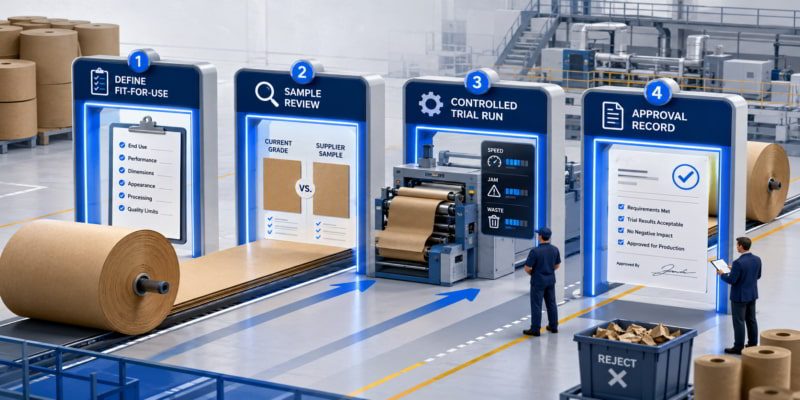
A Simple Approval Process for Changing Kraft Paper Grades Without Disrupting Production
📌 Key Takeaways A simple approval process — define the job, run a trial, collect feedback, record the decision — stops kraft paper grade changes from disrupting production. The right grade is the one that runs reliably, meets the actual use case, and protects margins — not the one with ... Read More
When a Cheaper Kraft Paper Becomes More Expensive in Production
📌 Key Takeaways The cheapest kraft paper roll often costs more once you count waste, downtime, rejects, and rework on the shop floor. Buy the lowest-cost grade that reliably produces saleable output — not the cheapest, not the strongest. Kraft paper converters and procurement teams balancing material cost against production ... Read More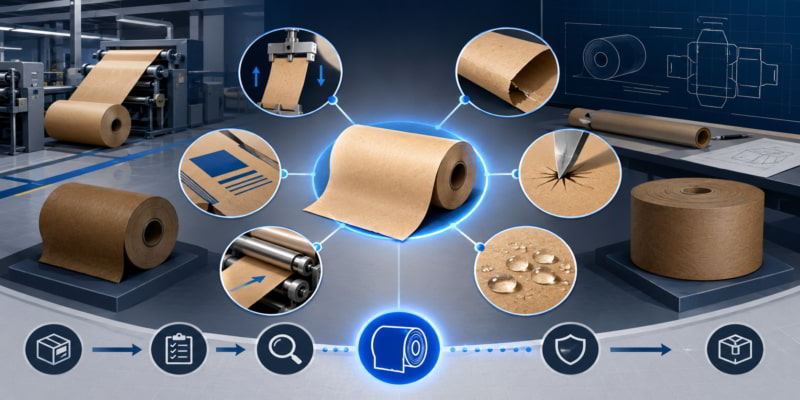
Right-Specification Kraft Paper: How Small Converters Can Avoid Paying for Strength They Don’t Need
📌 Key Takeaways The best kraft paper isn’t the strongest; it’s the lightest grade that still passes the job’s real-world tests. Buy the grade the job needs, not the grade that feels safest. Small-scale converters and packaging buyers looking to cut material costs without adding production risk will find a ... Read More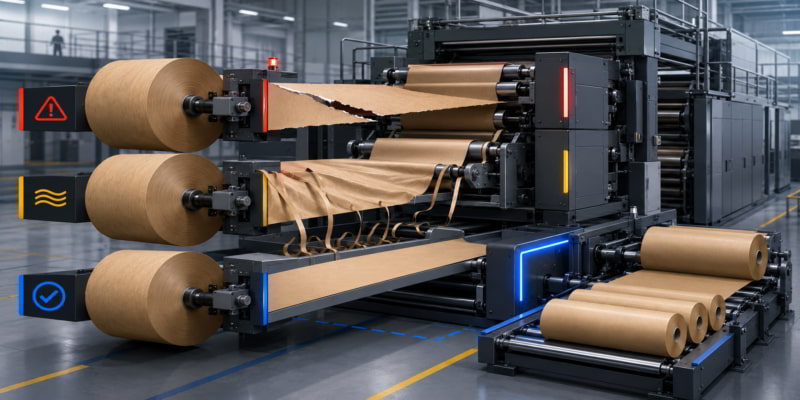
Beyond Grade Names: How to Compare Kraft Paper Parent Roll Offers for Better Converting Performance
📌 Key Takeaways Comparing kraft paper parent rolls by grade name or GSM alone hides the differences that cause real problems on the converting floor. The best parent roll is the one with enough evidence to trust — not the lowest price or the most familiar name. Kraft paper procurement ... Read More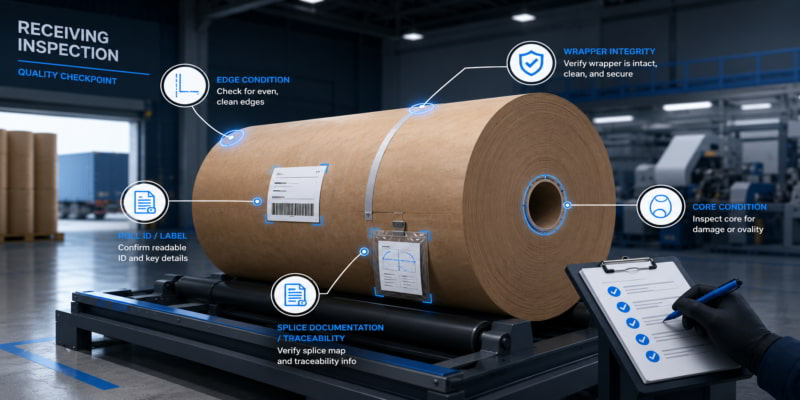
Kraft Paper Jumbo Roll Quality Checklist for Small Converters: Buying Criteria That Prevent Breaks, Waste, and Downtime
📌 Key Takeaways A kraft paper roll can match the quoted grade and still cause breaks, waste, and downtime if buyers skip roll condition, winding, splices, edges, packaging, and documentation checks. The cheapest roll on the invoice is rarely the cheapest roll on the production floor. Small converting teams sourcing ... Read More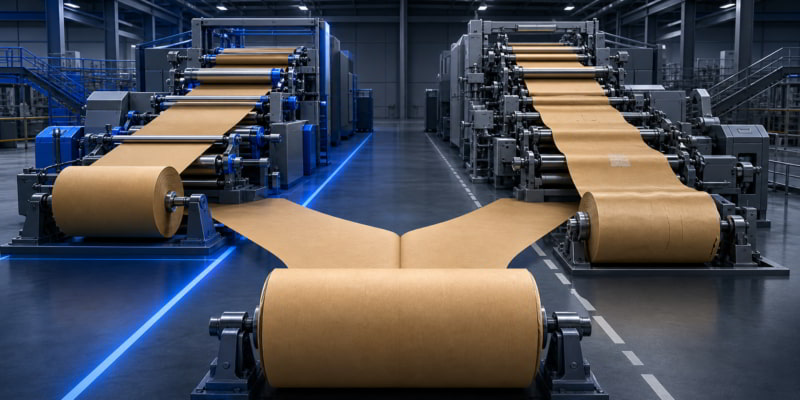
Why the Same Kraft Paper Mother Roll Runs Well on One Converting Machine — and Poorly on Another
📌 Key Takeaways A kraft paper roll that passes every lab test can still fail on your converting line if the machine fit is wrong. The roll that runs well is the roll that matches the line — not just the order. Production managers, procurement teams, and QA leads at ... Read More
Beyond GSM: Parent Roll Buying Criteria That Prevent Breaks, Waste, and Downtime in Kraft Paper Converting
📌 Key Takeaways Buying kraft paper parent rolls on GSM and price alone leads to breaks, waste, and downtime that cost more than the savings. The cheapest roll on the invoice is often the most expensive roll on the line. Kraft paper converters, procurement teams, and QA managers evaluating parent ... Read More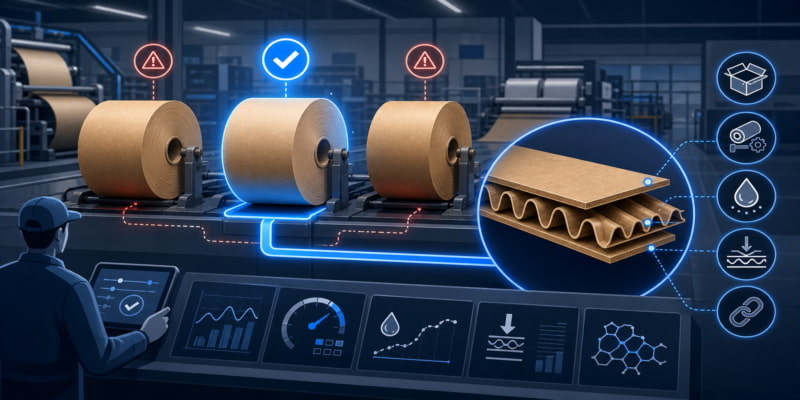
Kraft Paper Grade Fit for Corrugated Input Sourcing: How to Match Paper to End Use, Process, and Failure Risk
📌 Key Takeaways Choosing kraft paper for corrugated boxes is a risk decision, not a price decision — the grade must fit the job, the machine, and the failure you can least afford. The right grade matches the risk — not the lowest price tag. Procurement teams, production managers, and ... Read More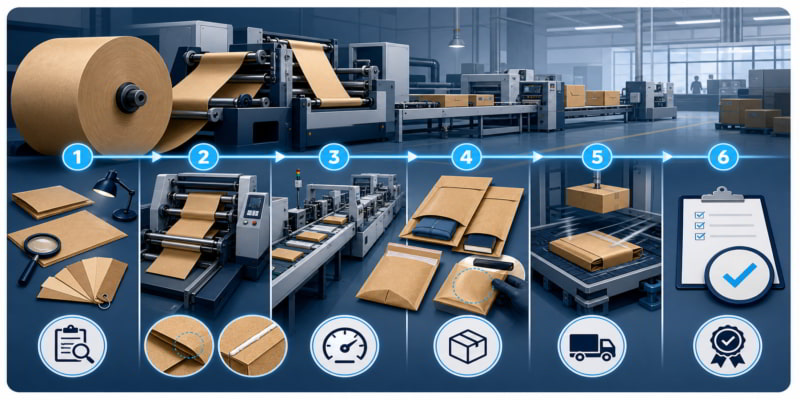
How to Choose the Right Kraft Paper Grade for Mailer Manufacturing
📌 Key Takeaways The right kraft paper grade is the one that works on your machines, survives shipping, and looks good when your customer opens it — not the cheapest option on the quote sheet. Specify it. Test it. Document it — then scale. Converters and packaging procurement teams choosing ... Read More